
Gold and silver prices fell sharply on Monday, extending their recent weakness amid pressure from global cues and growing expectations of higher interest rates in the US.
On the Multi Commodity Exchange (MCX), gold futures for October 5 expiry opened at Rs 1,52,225 per 10 grams, down Rs 542 from the previous close of Rs 1,52,767 on Friday.
Gold has now declined by more than Rs 4,000 over six trading sessions. The October contract had settled at Rs 1,56,281 per 10 grams on August 28, making the latest opening level Rs 4,056 lower than that closing price.
Silver witnessed a sharper decline. Silver futures fell Rs 1,235 per kg to Rs 2,36,423 per kg at the opening, compared with the previous close of Rs 2,37,658.
The latest fall has taken silver significantly below its lifetime high of Rs 4,20,048 per kg, recorded in the final week of January. At Monday’s opening price, silver was Rs 1,83,625 per kg below its record level.
Why are gold and silver prices falling?
The decline in precious metals comes amid stronger-than-expected US jobs data, which has increased expectations that the US Federal Reserve could raise interest rates this month. Higher interest rates and rising bond yields generally put pressure on non-yielding assets such as gold and silver.
Investors are also keeping a close watch on upcoming US inflation data, including producer and consumer price figures, for further clues on the Federal Reserve’s monetary policy.
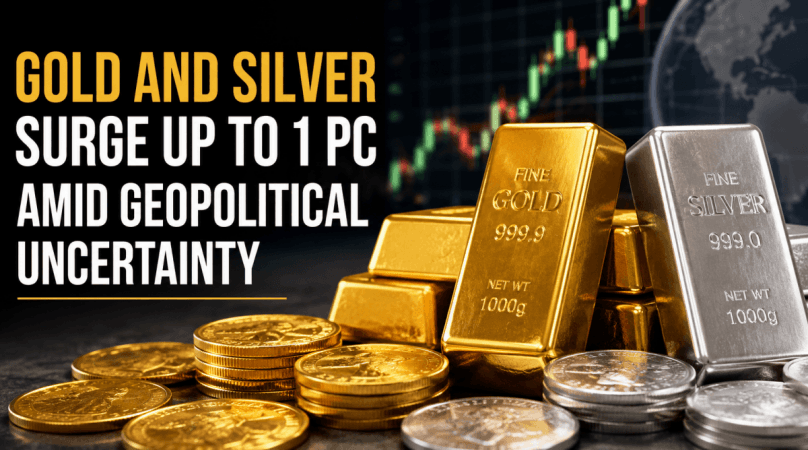
Meanwhile, rising crude oil prices and renewed geopolitical tensions have added to inflation concerns. Brent crude rose above $97 a barrel on Monday amid escalating tensions in the Middle East, adding another layer of uncertainty for global markets.
Despite the recent correction, gold and silver remain highly sensitive to geopolitical developments, currency movements, interest-rate expectations and global inflation trends. Market participants are likely to track upcoming US economic data closely for further direction.
The sharp correction in silver has also brought prices considerably lower than their January peak, although the metal continues to trade at historically elevated levels compared with a year ago.
Why could gold prices rise further?
Several factors could support gold prices over the long term, including inflation, a weakening rupee, geopolitical uncertainty and rising demand from central banks.
Countries including China, Russia and India have increased their gold holdings, while continued economic uncertainty could further support demand for the precious metal. Gold’s role as a hedge against inflation and financial instability could also remain important in the coming decades.
Some projections suggest that international gold prices could reach $5,000-$10,000 per ounce by 2030 and potentially move above $10,000 by 2050. More bullish estimates place the price in the $15,000-$20,000 range by 2050. However, these are projections, and actual prices could vary considerably depending on global economic and market conditions.
What could gold cost in India by 2050?
If gold continues to grow at an average annual rate of 10 per cent, the price of 10 grams of 24-carat gold could potentially reach around Rs 14-15 lakh by 2050.
At a 12 per cent annual growth rate, the same quantity could be worth around Rs 21-22 lakh. For 22-carat gold, estimates based on similar growth rates put the potential price at around Rs 12.8 lakh at a 10 per cent CAGR.
What could Rs 1 lakh invested in gold today become?
A Rs 1 lakh investment in gold today could potentially grow substantially over the next 24 years if gold maintains strong annual returns.
Based on a 10 per cent annual growth rate, Rs 1 lakh could grow to around Rs 9.85 lakh by 2050. At an annual growth rate of 12 per cent, the investment could potentially reach around Rs 15 lakh.
For comparison, a Rs 1 lakh fixed deposit earning around 6 per cent annually could grow to approximately Rs 4.17 lakh over the same period, while a higher 7 per cent return would result in around Rs 5.29 lakh.
However, these calculations are based on assumed rates of return and should not be treated as guaranteed outcomes. Gold prices can fluctuate significantly, and future returns could be lower or higher than historical averages.
Should investors put all their money in gold?
Despite its long-term potential, financial experts generally caution against putting all investments into a single asset. Gold can form part of a diversified portfolio, but investors should consider their financial goals, investment horizon and risk tolerance before making investment decisions.
The 2050 projections highlight the potential of gold as a long-term wealth-preservation asset, but actual returns will depend on factors such as inflation, interest rates, currency movements, central-bank demand, geopolitical developments and global economic conditions.
For investors considering gold as a long-term asset, diversification remains important rather than relying entirely on projections of a future price surge.