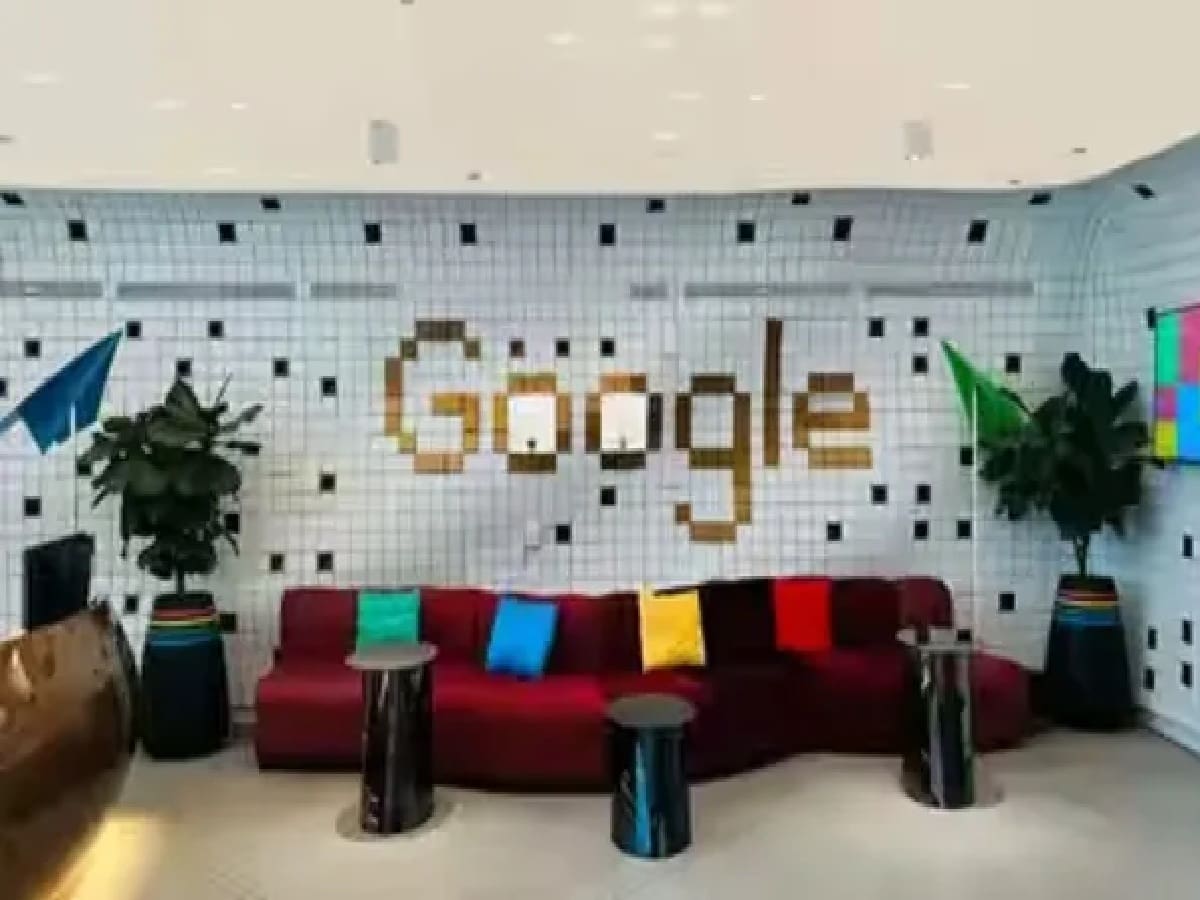
Google, the most popular search engine that organizes information around the world and gives a new direction to the Internet world, is celebrating its 28th birthday today. This small tech project, started in 1998 by two Stanford University students, Larry Page and Sergey Brin, from a simple garage in Menlo Park, California, has today established its giant network in more than 200 major cities on 6 continents. Google is not just a tech firm but has become an essential part of modern human civilization's daily life, research, communication and Artificial Intelligence (AI). During the company's unprecedented journey of 28 years, its global campuses, data centers and engineering labs have presented a unique blend of local culture, unique architectural design, sustainability and cutting-edge technology that is rare in the corporate world. From the dinosaur skeleton standing in the middle of its Mountain View headquarters to the fun project of opening an office on the moon announced in 2007, Google has dozens of such aspects of history that still thrill tech lovers around the world. 'Stan' Dinosaur at Headquarters and Plans for a Lunar Base on the Moon: Google's Historical Tales As soon as visitors enter the courtyard of Google's main headquarters in California, 'Googleplex', visitors are greeted by the skeleton of a huge bronze Tyrannosaurus Rex (T-Rex) dinosaur, affectionately named 'Stan'. The company's founders installed this ancient fossil symbol in the middle of the headquarters so that it could remind every engineer and employee every day that if the company did not change itself with the times, did not innovate and did not grow rapidly with technology, it too could face the same fate as extinction of the dinosaurs. This Stan dinosaur has become a corporate symbol of constant change and awareness. The most interesting and long drawn incident in the history of Google is its so-called 'Moon Base Project'. In the year 2007, the company had with great enthusiasm outlined the 'Google Copernicus Hosting Environment and Experiment in Search Engineering' i.e. GCHEESE project, the objective of which was to establish the world's first lunar data center and research office on the surface of the Moon. Although the plan is well behind schedule, Google's engineering teams today say on a lighter note that they are taking one small step at a time and continuing to open the door to Internet infrastructure in space. The unique ecosystem of the US campus: dragonscale roofs, beehives and 7.6 million miles of GBikes Google's corporate offices are not just concrete buildings but a self-sustaining environmental model in itself. In 2010, the company installed several beehives around its Mountain View headquarters. The project had a dual purpose: to support pollination and declining bee populations in the local environment of Silicon Valley, as well as to provide 100% pure, organic, and local honey for Google's cafeterias and kitchens. Red, blue, yellow and green 'GBikes' were introduced in 2007 to allow employees to move quickly from one building to another on the sprawling campus. By 2019, these bicycles had completed 1.9 million trips, equivalent to covering a total distance of 765,000 miles—about the distance of 31 complete rotations of the Earth. In terms of environmental protection, the roof of the Bay View Campus in California is considered an architectural wonder for the whole world. on its roof "dragonscale" (Dragonscale) solar canopy design has been prepared, which has more than 90,000 special solar panels. This spectacular roof not only powers the interior of the building but also stores clean energy, which is the best example of modern green energy. Additionally, 10 percent of the total parking space at the US headquarters has been directly equipped with state-of-the-art electric vehicle (EV) charging stations so that employees can switch to green transportation without fossil fuels. Global Workplace Culture: A Confluence of Local Art, Heritage and Modernity across 6 Continents In terms of global expansion, Google established its first international office in Tokyo (Japan) in 2001 and the second in Hamburg (Germany). Today, the company has a presence from its Tokyo Stream office atop Tokyo's busy Shibuya Scramble Crossing to the desert shores of Africa. A huge art installation, handcrafted by local women artisans, has been installed in the Johannesburg (South Africa) office, which is painted in the local language. "Howzit" is written, which means "How are you?" It happens. The Montreal (Canada) office features works by renowned local artists such as Karen Desparois and Nadia Myre, while the Mexico City office features intricately carved Mexican folk art. "papel picado" The walls give a living introduction to Latin culture. Located in the Atlanta office, the WERD Café pays homage to America's first black-owned and black-operated historic radio station. On the other hand, more than 200 Google employees at London's 6 Pancras Square office have created a unique art gallery from colorful sticky-notes in which popular pop-culture characters like Pikachu, Super Mario and 'Doctor Who' are seen smiling. Google's office in Paris (France) was 'Hôtel de Vatry', an ancient French palatial house of the 19th century, which was later used by the railway company as its headquarters. Keeping that heritage safe, Google has preserved the names of those historical railway stations of western France on the roof even today. Sustainability, Hydropower and Latin America's First Urban Farm Google has started working on an 'Adaptive Reuse' policy to bring its entire global value chain and daily operations to the level of 'net-zero carbon emissions' by the year 2030. Under this, instead of constructing new buildings, 150-year-old industrial buildings are revived, the biggest proof of which is the modern tech office built in the historic flour mill building of Boland Mills in Dublin (Ireland). The massive corporate office in New York City has been fully connected to a recently upgraded hydropower system, ensuring clean energy consumption and eliminating dependence on conventional thermal power plants. The interior design of the Google office in Belo Horizonte, Brazil is decorated with rare trees and plants from the Cerrado biome, the second largest after the Amazon. More than 360 rare orchid plants are grown here in a controlled environment so that no disease spreads. The most interesting thing is that this office is located in the same building with the first 'urban farm' in Latin America, and the fresh salad served in the cafeteria of Google employees comes directly from this farm to the table. In 2010, the company established the world's first state-of-the-art data center in Saint Ghislain, Belgium, which is cooled by natural air and water evaporation without any traditional refrigeration system. From disability-friendly inclusive design to Accra's AI Labs to humanitarian initiatives, Google's workplace is not just limited to technological innovation but also prioritizes social inclusion. When a new floor was constructed in the Seoul office of South Korea, the suggestions of the disabled employees associated with the company's 'Disability Alliance' group were implemented exactly. It included tactile Braille signage for the visually impaired, wide aisles for wheelchair-accessibility and sensorized sliding doors that open automatically without touch. The UAE office in Dubai reflects the sandy theme of the desert and the diversity of Middle Eastern culture in the names of the meeting rooms. Google launched its first dedicated 'Artificial Intelligence (AI) Research Center' in Ghana's capital Accra in 2018 to democratize technology on the African continent. This lab is engaged in accurate mapping of buildings through satellites and finding solutions to regional problems to improve electricity distribution in remote African villages. Operating since 2019 at the Singapore campus, the 'Developer Space' has been providing mentorship to startups and young coders across South-East Asia. Taiwan, which started with just one employee in 2006, has today become Google's largest hardware engineering hub outside the US, where the future of Pixel phones and smart devices is shaped. On its 28th birthday, Google still stands firmly on the threshold of the future of generative AI and quantum computing, solving search queries from around the world.