
Government Employees: Narendra Modi’s announcement will affect the salary of government employees; What exactly is true?

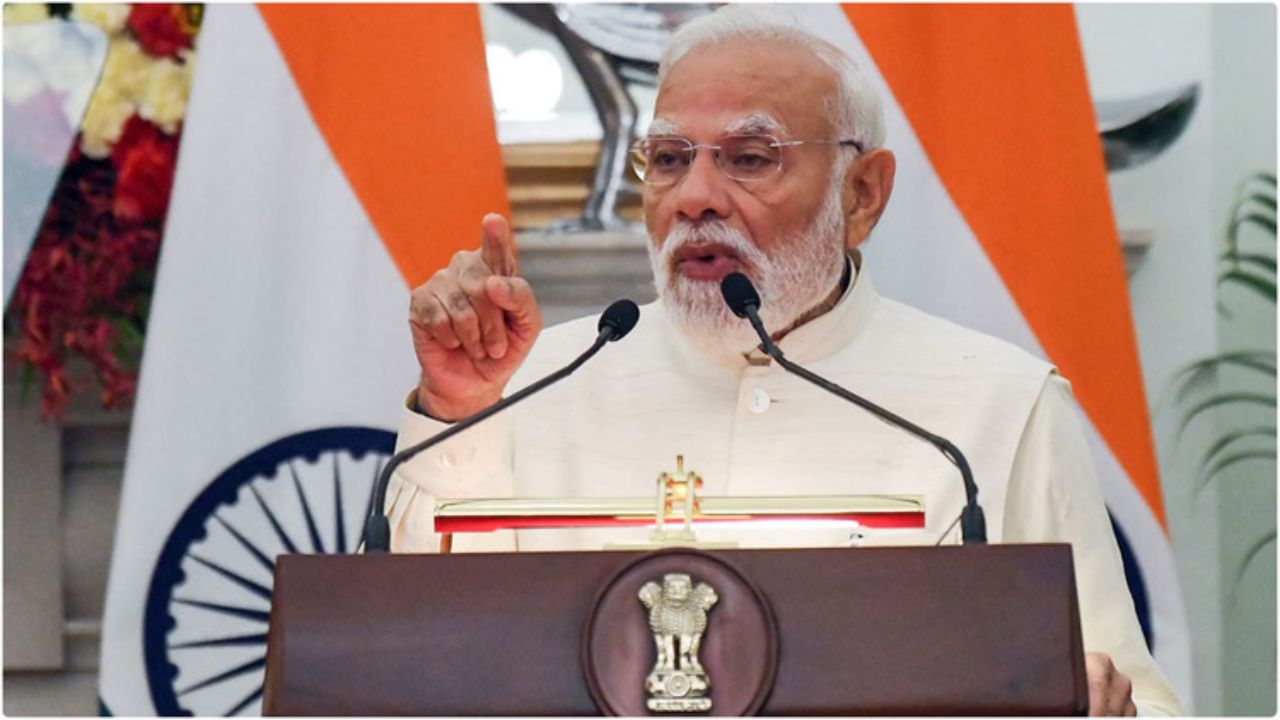
Government Employees: Prime Minister Narendra Modi has recently appealed to citizens to reduce the consumption of petrol-diesel, gas and avoid buying gold for some time. Stating that the increasing import bill on the country is creating stress on the economy, he called for emphasis on savings. However, after this statement, there has been an atmosphere of concern among the government employees regarding the 8th Pay Commission.
During the Corona period, the central government had stopped the dearness allowance (DA) for 18 months citing financial stress. The issue of arrears continues even today and many employees have not received the amount yet. So, once again the pressure on the economy has been mentioned, and the government employees are afraid of the impact of the implementation of the 8th Pay Commission.
PM Narendra Modi: “Work from Home, Save Petrol-Diesel”; India does not have big oil wells, Modi’s clear statement
Concern over rising import bill
Prime Minister Modi in his address mentioned that the economic burden on the country is increasing due to import of petrol-diesel, gas and gold. He urged citizens to save fuel and if possible avoid buying gold throughout the year. Due to this statement, a discussion has started that the central government may adopt a policy of cost reduction.
Against this backdrop, confusion has arisen among government employees and employee unions regarding the recommendations of the 8th Pay Commission.
Reminding the employees of the corona period
In March 2020, during the Kovid-19 pandemic, the central government suspended dearness allowance of central employees for 18 months, citing financial stress. At that time, the government had said that there was a huge pressure on the revenue. However, even after the economic growth of the country improved, exports increased and foreign exchange reserves strengthened, the employees did not receive the DA due.
This brought up the issue of financial pressure again, “If there was a problem in paying dearness allowance then, what decision will the government take now regarding the heavy financial burden of the Pay Commission?” Such a question is being raised by the employees.
PM Modi on Work From Home: Narendra Modi’s call for ‘work-from-home’! Austerity or danger?
How exactly can the 8th Pay Commission be affected?
According to experts, Pay Commission and Import Bill are two different things. While the import bill has a direct impact on the country’s foreign exchange reserves, the Pay Commission is a matter related to internal financial management. Hence, the import bill is less likely to have a direct impact on the Pay Commission.
However, there may be an indirect effect if the pressure on government exchequer increases. Economic experts believe that the government may delay implementing the 8th Pay Commission recommendations or consider reducing some demands.
Greater demands of labor unions
The employee unions have demanded that the minimum basic pay should be increased from Rs 18 thousand to Rs 69 thousand. It has also been demanded to increase the fitment factor from 2.57 to 3.83. If these demands are accepted, an additional burden of thousands of crores of rupees may fall on the exchequer of the central government.
Therefore, if the economic situation remains tense, the government may reduce these demands, fear is being expressed by the employee unions. It is expected that this will have a direct impact on the salary hike of government employees.
Still time for reporting and implementation
Although the 8th Pay Commission has been constituted, the final report of the commission is yet to be prepared. Also, it may take at least a year to implement the commission’s recommendations. Therefore, it is believed that the future of the implementation of the commission will depend on the economic situation of the country and the state of government revenue.

Comments are closed.