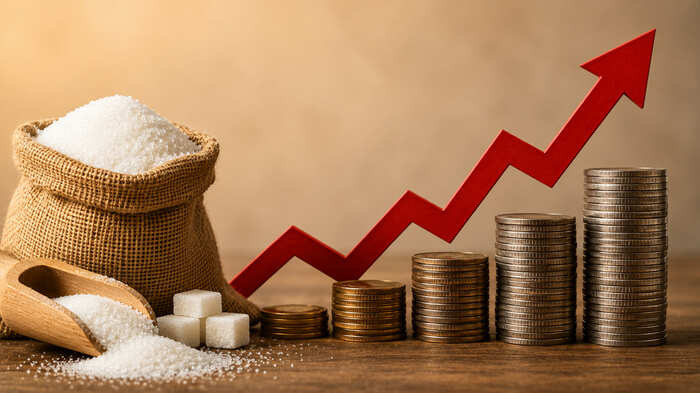
These days, the rising prices of kitchen items and especially sugar across the country have increased the concern of the common man. In the last few weeks, there has been a rise in the prices of sugar in the retail market, after which the question started arising whether this shortage and inflation of sugar is being created due to the ambitious Ethanol Blending Program of the government? Amidst this heated debate, the Central Government itself and the concerned ministry have now officially broken their silence and presented a detailed clarification. The government has clearly rejected all the speculations in which it was being claimed that due to diverting sugar to make ethanol, the prices in the market are skyrocketing. Instead, the government has exposed the real reasons that have led to the disruption in sugar supply in the country and across the world and the rise in prices. Let us know in detail in this complete report what are the main reasons behind the rising prices of sugar and what steps are being taken by the government to control the market.
Government's big clarification and figures on ethanol production
The question was being raised continuously from the opposition and many quarters that there is a shortage of sugar in the domestic market due to the use of sugar or sugarcane juice for mixing in petrol in the manufacturing of ethanol. On this, the Ministry of Consumer Affairs, Food and Public Distribution has released the data and made it clear that this perception is completely wrong and baseless. According to the government, the share of sugar that was diverted for ethanol production has declined from around 12 per cent in the financial year 2022-23 to only around 9 per cent currently (2025-26). Apart from this, the Ministry has also put forward a big fact that about three-fourth i.e. about 75 percent of the total ethanol produced in the country is now being prepared mainly from grains, especially maize, instead of sugarcane. In such a situation, it is not logical at all to hold the ethanol program directly responsible for the recent rise in sugar prices.
Decline in domestic sugar production and damage to crops
According to the clarification given by the government and market analysts, the biggest reason for the recent inflation is the domestic sugar production being lower than expected. According to initial estimates from sugar producing states, production of about 343 lakh metric tonnes (LMT) of sugar was expected this season. But due to inclement weather, excessive rain and waterlogging, the sugarcane crop suffered huge losses. Along with this, the outbreak of serious diseases like Red Rot and Top Borer in sugarcane crops also put brakes on the pace of production. Due to all these agricultural problems, the total sugar production in the current season is expected to decline to only around 306 lakh metric tons. This huge gap and shortage on the production front has directly disturbed the balance of domestic demand and supply, due to which prices have increased.
Demand of festive season, hoarding and global market pressure
Along with the decline in production on the domestic front, some other external and internal factors have also become active in the market, which have added fuel to the fire. In the coming days, the period of big festivals is going to start across the country, due to which there has been a sudden surge in the demand of sugar in the sweet manufacturers and retail market. Taking advantage of this imbalance of demand and supply, hoarding and unfair betting activities were also increased by some anti-social elements, speculators and sections of the industry, which led to artificial rise in prices. The situation was such that retail prices rose rapidly from mid-July to mid-August. Moreover, this crisis is not limited to India only, but has become a global phenomenon. At the global level, the total loss of sugar during 2026-27 has been estimated at about 33 lakh metric tonnes, due to which the prices of raw materials have increased significantly in the international market and this is indirectly impacting the Indian market as well.
The truth about farmers' dues payment and financial health of mills
The government, in its clarification, has also emphasized how huge economic benefits the country's sugar mills and sugarcane farmers have received from the policy of diverting the surplus sugar towards ethanol. India generally produces 320 to 340 lakh metric tons of sugar annually, while the total domestic consumption of the country is around 280 to 290 lakh metric tons. In such a situation, when there was excess or surplus sugar left, huge stocks got accumulated with the mills, due to which their funds got stuck and they were not able to pay the dues of the sugarcane farmers on time. This old structural problem has been resolved to a great extent due to the ethanol policy of the government. Its positive results have been that the financial condition of the mills has improved and farmers are getting most of their sugarcane dues paid on time, which has also relieved the government from bearing the burden of huge subsidy.
Strict steps taken by the government to control prices
To control the rising prices and provide relief to the consumers, the Central Government has fully geared up and has taken many strict administrative steps. In order to crack down on hoarding and profiteering, the government has imposed a certain stock limit on sugar dealers and wholesalers across the country, so that no trader can dump huge quantities of goods to create artificial shortage in the market. Along with this, strict instructions have also been issued for consumers consuming on a large scale. To ensure adequate availability in the market and maintain stable prices, the government has also eased import rules where necessary and has ordered central and state teams to jointly conduct physical verification of sugar mill warehouses. The main objective of the government is to ensure that during the upcoming festive season, the general public continues to get sugar easily at reasonable rates and strict action can be taken against those involved in black marketing.