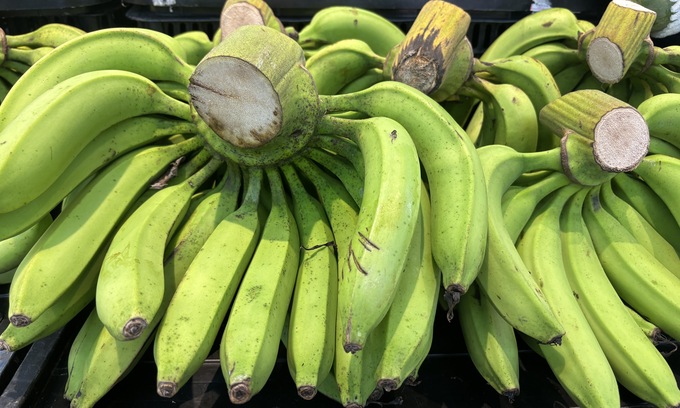
A banana’s nutritional profile changes as it ripens from green to yellow and eventually develops brown spots. Although bananas consistently provide carbohydrates, fiber, potassium, vitamin B6 and vitamin C, ripening alters the type of carbohydrates they contain and how quickly the body digests them.
|
Green bananas are rich in resistant starch, which is beneficial for gut health. Photo by Bao Bao |
Green bananas support gut health
Unripe green bananas contain high levels of resistant starch, a type of carbohydrate that is not fully digested in the small intestine.
Instead, it reaches the large intestine, where gut bacteria ferment it and produce compounds that can support digestive health.
Because resistant starch slows carbohydrate digestion, green bananas may also lead to a more gradual rise in blood sugar after eating, making them potentially useful for people seeking better blood glucose control.
As bananas ripen, enzymes gradually convert this starch into simpler sugars, EatingWell reported. This process makes the fruit softer and sweeter while reducing its resistant starch content.
Green bananas, however, have a firmer texture and more astringent taste and may feel harder to digest for some people. Nutrition experts note that bananas do not need to be completely green to provide beneficial fiber.
Slightly ripe bananas offer a middle ground
Bananas that have begun turning yellow retain some resistant starch while becoming softer and sweeter.
This stage can provide a balance between prebiotic starch and easier digestion, making it suitable for people who find green bananas too firm or tart but want to limit the higher sugar content found in fully ripe fruit, according to Times of India.
For people with diabetes, however, ripeness is only one factor affecting blood sugar. Portion size, total carbohydrate intake and the foods eaten alongside the banana are also important, Healthline noted.
Yellow bananas provide quick energy
By the time a banana turns fully yellow, much of its starch has been converted into simple sugars such as glucose, fructose and sucrose, according to Verywell Health.
This makes ripe bananas softer, sweeter and easier to digest than green ones.
Because their carbohydrates are absorbed more quickly, yellow bananas can provide a convenient source of energy before or after exercise.
A medium banana contains about 105 calories and continues to supply potassium, vitamin C and vitamin B6 regardless of ripeness. Nutrition experts stress that yellow bananas are not inherently less healthy than green ones, with the main difference being how quickly their carbohydrates are digested.
 |
|
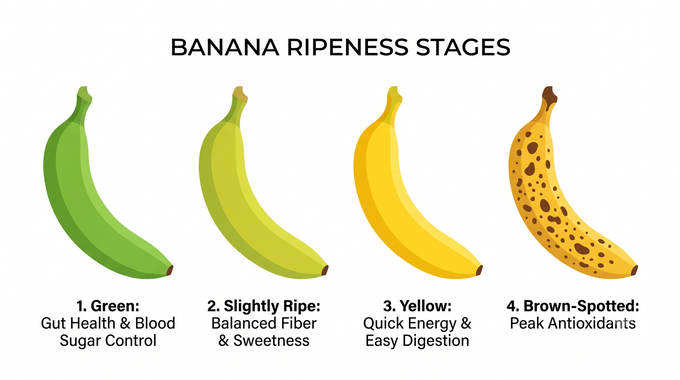
AI-generated illustration |
Brown-spotted bananas contain more antioxidants
As bananas become very ripe and develop brown spots, their resistant starch content falls further while their sweetness increases.
Levels of certain antioxidant compounds, including phenolics and flavonoids, may also increase during ripening.
These antioxidants help protect cells against oxidative stress, meaning very ripe bananas can still provide nutritional benefits.
People who closely monitor sugar or carbohydrate intake may prefer less-ripe bananas. For most healthy people, however, portion size and the overall quality of the diet are more important than the color of the peel.
Each stage of ripeness offers different advantages: green bananas provide more resistant starch for gut health and steadier blood sugar, slightly ripe bananas balance fiber and sweetness, yellow bananas offer easily digested energy, and brown-spotted bananas provide higher levels of certain antioxidants.