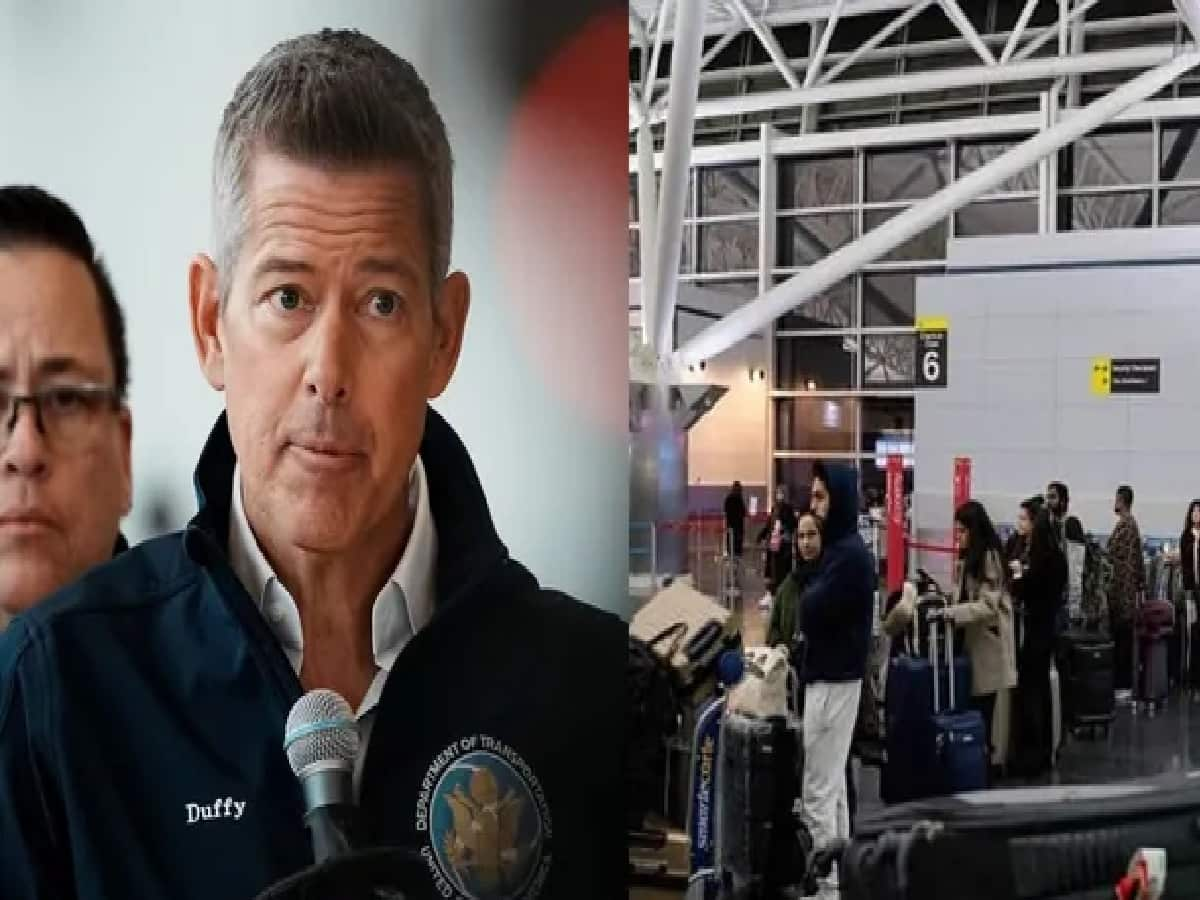
At this time, a very big and relief news is coming out for the passengers from the global aviation world and the skies of America. Recently, the Federal Aviation Administration (FAA) has officially lifted the nationwide 'Ground Stop' imposed across the entire US airspace due to communication system failure. Due to this technical glitch, aircraft movement at American airports was completely halted for hours and millions of passengers had to face a lot of problems. After the restrictions are lifted, the US administration and aviation officials are gradually trying to normalize operations. However, officials have clarified that even if the ban has been lifted, it may take some more time for the system to be completely back on track. Let us know in detail how the situation is now in the American skies and how the operation of planes will be streamlined in the future. FAA lifts ground stop, American airspace opened but it will take time to return to normal The Federal Aviation Administration (FAA) officially reopened American airspace at 8:15 pm Eastern Time after completing safety and technical inspections across the country. With this, the way has once again been cleared for planes to take off. However, US Transportation Secretary Sean Duffy has clearly warned that removing the ground stop does not mean that all flights will start floating in the air immediately and without any hindrance. The Transport Secretary said during a press briefing, "Does this mean that all flights will be able to take off immediately? Not at all, it will take some time." He has advised passengers stranded at airports or preparing to travel to stay in direct touch with their respective airlines and check the latest status of their flights before leaving home. The main focus of the administration is to ensure that the dispersed aircraft and their crew members at various airports across the country are arranged back on their correct rosters and routes. What is the administrative plan to bring aircraft operations back on track? The biggest challenge facing airlines and aviation authorities at this time is to safely transport stranded passengers to their destinations and to rearrange the disrupted schedules. Sean Duffy said that if the airlines have sufficient capacity of available crew and pilots, then every effort will be made to depart as many flights as possible on Friday night. he adds, "If all the arrangements are not completed tonight, we will work with our airline partners to start the phased departure of these aircraft from tomorrow morning. Whatever has happened suddenly this afternoon, it will definitely take some time for us to completely repair that major disruption and restore normalcy." According to officials, more than 3,500 aircraft were in the air during the crisis when the ground stop order was issued. Fortunately, due to the presence of mind of air traffic controllers, most of those planes landed safely, and at the height of the crisis there were only less than 400 planes left in the air. Questions raised on the old infrastructure of air traffic control, Trump administration demands funds. While discussing the real reasons behind this entire nationwide crisis, the US Transportation Secretary once again took the country's outdated aviation infrastructure to task. He said that many of the equipment and hardware used in the air traffic control system were quite old, and this technical failure had led to instability in the system. Sean Duffy strongly urged lawmakers and the administration to quickly approve the funding needed to modernize the entire air traffic control network. He warned that unless comprehensive and permanent improvements are made to this aging infrastructure, such technical barriers may recur in the future. It is noteworthy that the Trump administration has demanded a huge emergency funding of $ 50 billion to upgrade and completely modernize this important aviation network of the country. Airlines' warning: Flight delays may continue till the weekend. Despite the FAA lifting the ban, various airlines have warned their passengers that the impact of flight cancellations and delays may be seen throughout the weekend. For example, Air Canada canceled all of its flights to and from the United States on Friday evening. Additionally, services between Canada, the Caribbean and South America that pass through US airspace have also been affected. Similarly, major US airline JetBlue also canceled its remaining domestic flights, although select international flights from Boston and New York to Europe have been kept apart. According to data from aviation analytics companies, at least 827 flights had to be diverted during the entire disruption, with hundreds of flights having to return to their originating airports. However, the situation is gradually coming under control, but passengers are advised to remain patient and keep a close eye on updates related to their travel.