
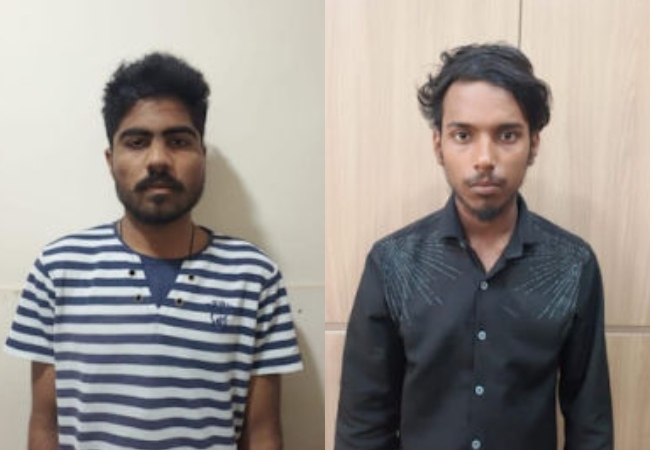
Conspiracy of ‘Ghazwa-e-Hind’! Gujarat ATS arrests 2 youths, “self-radicalized” through social media

Gujarat ATS: In Gujarat, Gujarat Anti-Terrorism Squad (ATS) has taken major action and arrested two youths involved in anti-national activities. According to media reports, both these accused were planning to carry out attacks in India, collect weapons and funds and wage war against the country. According to the investigating agencies, this entire network was being created through social media.
Read :- Congress President’s controversial statement on PM Modi raised political temperature, BJP said – this is not a slip of the tongue.
The ATS investigation, which was led by Deputy SP Virjit Singh Parmar, revealed that both the youths were active on WhatsApp and Instagram for the last seven months. He was part of a very close group of 12-13 people, where radical agenda like ‘Ghazwa-e-Hind’ was discussed. According to reports, this group was influenced by the ideology of terrorist organizations like ISIS and was following radical content related to Iran, Pakistan and Afghanistan. The investigation also revealed that both the accused were not in contact with any foreign handler, but had themselves become “self-radicalized” through social media, which is becoming a new challenge for the security agencies.
The arrested accused have been identified as Irfan Khan Pathan and Murshid Zahid Akhtar Sheikh. 22 year old Irfan is a resident of Sidhpur. He has studied MSc Chemistry from Mehsana and was currently preparing for competitive exams. The second accused, Murshid Zahid, is 21 years old, who is originally a resident of Bihar. He has studied till eighth standard and used to work at a biryani shop with his brother in Mumbai. According to media reports, no criminal history of both has been revealed, due to which this matter has become even more sensitive.
Action was taken after ATS received a specific input. With the help of local police, one accused was arrested from Sidhpur and the other from Mumbai. At present, a case has been registered against both of them under relevant sections of the IPC and the agencies are trying to find out who else may be involved in this network. This case once again points to how the youth’s rapid inclination towards radicalism through social media is becoming a major security threat. This kind of “self-radicalization” through online content alone, without any direct contact, is emerging as a new and serious challenge for the country’s security agencies.
Comments are closed.