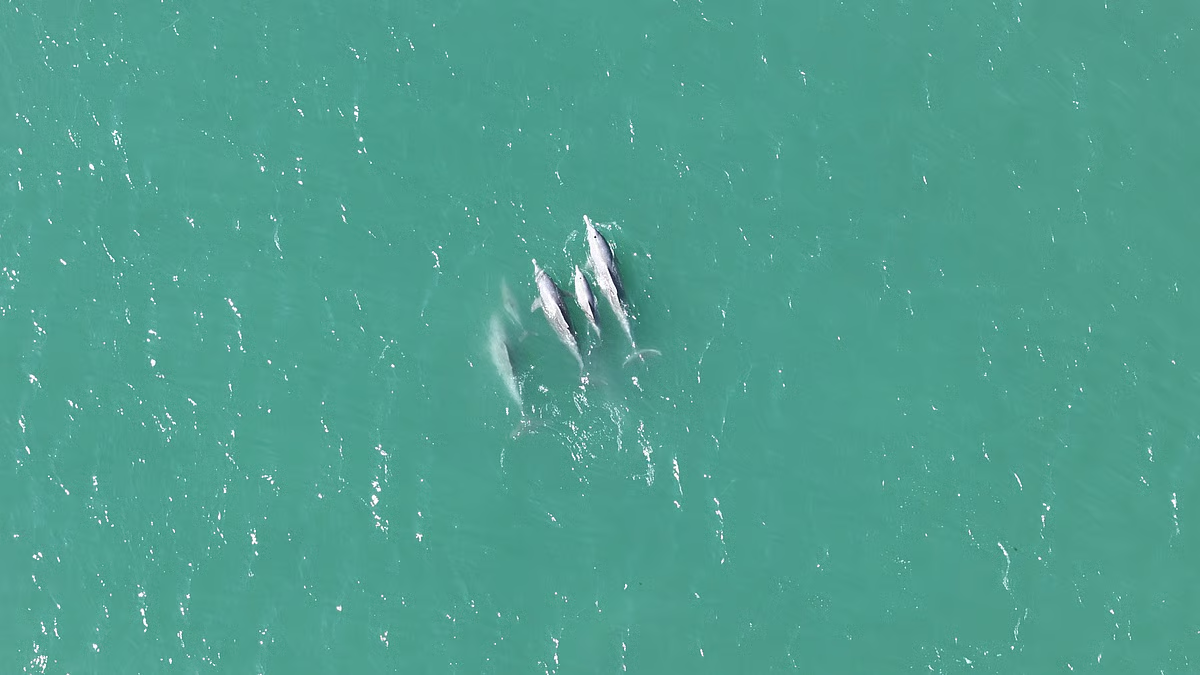
Tidal channels turn into dolphin highways
Researchers found dolphins closely associated with reef margins, island edges, tidal channels and open waters.
“These habitats are likely to serve both as movement corridors and productive feeding grounds. Strong tidal currents promote nutrient mixing and can concentrate fish, creating favourable conditions for dolphins feeding on schooling fish,” Pati said.
The Dedeka–Mundeka island complex emerged as a particularly important movement corridor, with dolphins frequently seen travelling along deeper reef margins and tidal channels between the islands.
Similarly, Pirotan Island recorded regular dolphin activity in open tidal channels, while dolphins at Dhani Island were repeatedly observed along eastern and southeastern margins where strong tidal currents interact with deeper channels.
These dynamic waters are believed to concentrate fish schools, effectively creating rich feeding zones for dolphins.
From solo swimmers to groups of 16
The survey also captured fascinating dolphin behaviour.
Researchers observed coordinated group swimming, regular surfacing, directional movement along tidal currents and occasional feeding activity. Group sizes ranged from solitary dolphins to aggregations of up to 16 individuals, reflecting the flexible social behaviour of coastal dolphin populations.
Habitat-wise, dolphins showed a particularly strong association with tidal channels and open waters.
Of the 177 marine megafauna records, 31 dolphin sightings were recorded in tidal channels and open waters, compared with 22 around reef platforms and 11 in seagrass meadows.
The contrast also highlights the Gulf’s ecological diversity: reef platforms were particularly important for marine turtles, while seagrass meadows remain vital feeding habitats for dugongs.
“The southern Gulf of Kachchh is a dynamic marine ecosystem where reefs, seagrass meadows and tidal channels work together to sustain diverse marine life,” said Dr Jaipal Singh, Principal Chief Conservator of Forests (Wildlife).
“For dolphins, tidal channels and open coastal waters appear especially critical, providing movement routes as well as access to fish-rich feeding grounds,” he added.