
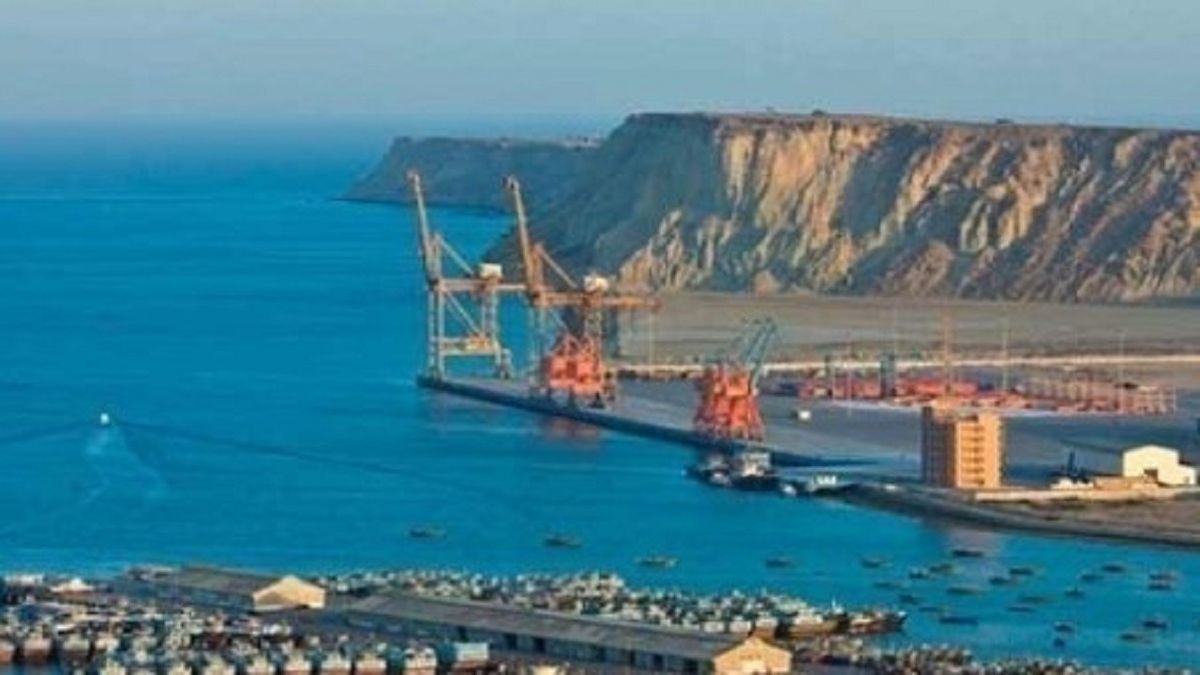

Once envisioned as a gateway to regional prosperity, Gwadar is now grappling with a dual crisis that threatens its future. Political tensions with Afghanistan have stalled key overland routes, limiting the port’s connectivity to the north. At the same time, insurgent groups have demonstrated an ability to operate in nearby waters, collapsing assumptions about maritime security that Pakistan’s security establishment had never had cause to test. The recent attack on Coast Guard personnel is a stark reminder of the risks involved. Pakistan’s security establishment considers Gwadar the most important piece of infrastructure in the country—the southern anchor of the China-Pakistan Economic Corridor, a deepwater port in Balochistan meant to connect Central Asia to global shipping lanes.
Balochistan Liberation Army killed three Pakistan Coast Guard
On April 12, the Balochistan Liberation Army killed three Pakistan Coast Guard personnel–Naik Afzal, Sepoy Jameel, and Sepoy Umair–in an attack on a patrol boat near Jiwani, a coastal town approximately 84 kilometers from Gwadar. All three on board were killed. It was the first attack of its kind in these waters.
Struggling to reach its commercial potential
A port that was already struggling to reach its commercial potential, against a backdrop of persistent land-based insurgency, Chinese investor nervousness, and local resentment of CPEC, now has to contend with the fact that its maritime approaches are not secure either.
The land threat was manageable in the sense that it was known. Pakistan has built concentric security rings around Gwadar over the years: checkpoints, escort protocols for Chinese personnel, and dedicated security forces for CPEC-related infrastructure. The measures have not eliminated attacks, but they have created a framework for managing them.
Framework exists for maritime threats
No equivalent framework exists for maritime threats. The Pakistan Coast Guard was designed for customs enforcement, anti-smuggling operations, and search and rescue. Counterinsurgency at sea is a different task. The skills, equipment, and doctrine required are different, and they take time to develop.
Pakistan-Afghanistan relationship remains hostile
The Jiwani attack lands in the aftermath of failed diplomacy that itself threatened Gwadar’s strategic value. China brought Pakistan and Afghanistan to Urumqi for seven days of talks in early April, hoping to cool tensions that had been rising since late February, when Islamabad launched Operation Ghazab lil-Haq, a large-scale campaign of air and ground strikes against Afghan Taliban military positions across multiple provinces, after the Taliban launched cross-border attacks on Pakistani border posts. The effort produced no binding agreement. Both sides returned without commitments on the issues that matter. The Pakistan-Afghanistan relationship remains hostile.
Pakistan-Afghanistan relations sever a critical link
This matters for Gwadar because the port’s value is not standalone. It is a node in a network. That network includes road and rail links running north through Pakistan and, eventually, aspirationally, through Afghanistan into Central Asia and beyond. It requires functional political relationships to operate. Hostile Pakistan-Afghanistan relations sever a critical link.
theoretically vulnerable to rival naval powers
Without the northern connectivity that a stable Afghan corridor could provide, Gwadar’s hinterland is limited to Pakistan itself. That reduces its commercial logic considerably, because the Pakistani domestic market, while substantial, was never the primary driver of the CPEC investment thesis. China’s vision was always larger: a route that bypasses sea lanes theoretically vulnerable to rival naval powers.
Beijing without meaningful Baloch input
And the diplomatic conditions for that vision are nowhere near being met. Local communities in Gwadar have their own grievances, which are distinct from the insurgency’s political agenda but share certain roots. Residents have protested, persistently and sometimes in large numbers, against the exclusion of local fishermen from port waters, the failure of infrastructure development to improve daily life in the city, and the sense that decisions about Gwadar’s future are made in Islamabad and Beijing without meaningful Baloch input.
These protests have not turned violent. But they represent a social undercurrent that complicates the narrative of CPEC as a development project. The insurgency’s appeal is partly sustained by the perception, not entirely inaccurate, that Balochistan is being developed for others.
What happens next at Gwadar is genuinely uncertain in ways it was not six months ago. A maritime-capable insurgency, a broken diplomatic relationship with Afghanistan, and persistent commercial underperformance now constitute a combined crisis of strategic viability. Each problem alone was manageable. Together, they are not.

Comments are closed.