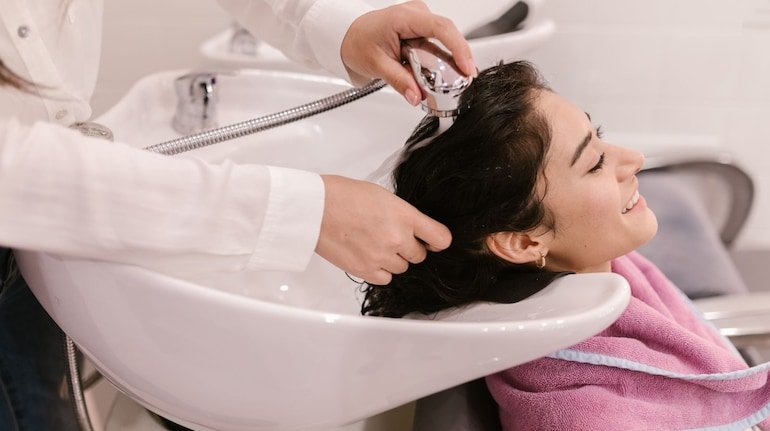
Shampooing is an essential part of our daily routine to maintain hair hygiene and remove excess sebum, dirt and sweat from the scalp. But people often assume that hair care ends with lathering and washing with shampoo. According to dermatologists and trichologists, the time right after shampooing is the most delicate and sensitive stage for hair health. When hair is wet, the outer protective layer of the hair, called the 'cuticle', swells and opens due to contact with water. In this condition, the keratin proteins and hydrogen bonds present within the hair become temporarily weakened, due to which the hair can stretch 30 percent more than normal and break in the middle even with the slightest pull. Most of the people complain of hair fall, split ends, dryness and frizziness despite using the most expensive shampoos and serums. The biggest reason for this is not wrong shampoo, but 5 unknown and serious mistakes made after washing hair.
The first habit of most people as soon as they come out of the bathroom after washing their hair is that they start rubbing and drying their hair quickly with a thick cotton towel. This habit works like a saw for the hair fibres. The fibers of ordinary towels are thick and rough. When you rub a towel vigorously on wet hair, the friction wears away the sensitive cuticles of the hair and makes them rough. The direct result of this is that after drying the hair looks extremely tangled, lifeless and dry.
As an alternative, one should always use 'Microfiber Towel' or an old soft cotton T-shirt. The microfiber cloth absorbs water 3 times faster without damaging the hair cuticles. The correct way to dry the hair is to press the hair lightly with a towel (Dabbing / Pat Drying) so that excess water comes out, never twist or rub the hair together.
Combing wet hair is one of the main reasons for hair fall. When hair is soaked with water after shampoo, the hair roots (hair follicles) become loose due to the weight of water and hot water vapor. In this delicate situation, if an attempt is made to untangle the hair with a plastic comb with fine teeth, then due to the pull of the comb, the hair gets pulled straight from the roots and comes out. Apart from this, the possibility of breakage from the middle of the hair shaft also increases manifold.
The scientific rule of detangling hair is to first let it air dry naturally to at least 70 to 80 percent. If the hair is very curly or thick and it is necessary to detangle it while wet, always use a wide-tooth wooden comb. While combing, always start from the bottom ends and gradually move upwards.
Two types of opposite mistakes are seen among people regarding the use of conditioner. The first mistake is that many people completely skip applying conditioner due to lack of time or laziness. The job of shampoo is to open the cuticles to clean the hair and scalp, while the job of conditioner is to seal back those open cuticles, locking the hair's moisture and creating a protective shield from external pollution. Without conditioner, hair is always at risk of becoming dry and split ends.
The second big mistake is that many people apply conditioner to their scalp and roots like oil. Conditioners contain heavy emollients, silicones, and fatty alcohols, which are made for hair length. If these are applied on the scalp, they block the pores, which leads to excessive oil accumulation on the scalp, dandruff and problems like folliculitis. Always apply conditioner on the mid-lengths to ends of the hair, starting from the lower part of the ear and wash thoroughly with normal or cold water after 2 to 3 minutes.
| type of habit | What not to do (harmful mistakes) | What to do (Dermatologist Certified Method) |
| drying technology | rubbing and twisting the hair vigorously with a cotton towel | Blot away water by dabbing gently with a microfiber towel or T-shirt. |
| method to solve | quickly combing through wet hair with a fine-toothed comb | After 80% drying, comb with a wide-toothed neem or wooden comb. |
| use of conditioner | Leave-in conditioner or apply directly to the scalp | Apply only from mid-section to ends of hair, keeping away from scalp |
| use of heat | Using a blow dryer or straightener on high speed while dripping wet hair | Applying heat protectant serum first, then using the dryer's 'cool mode' |
| habit of tying hair | Tying wet hair tightly with a rubber band or sleeping with a wet head | Allowing your hair to air dry; choosing satin pillow covers while sleeping |
In their busy routine, in a hurry to go to office or college, people turn on the blow dryer immediately after washing their hair and set it on the highest temperature and stick it on the hair. When the water present inside the hair fibers suddenly comes in contact with high heat, it turns into steam and starts boiling inside the hair. In medical language this condition is called 'Bubble Hair Syndrome'. In this, small air bubbles are formed inside the hair, due to which the hair starts cracking from the middle and their natural elasticity is permanently destroyed.
If using a blow dryer is unavoidable, apply a good leave-in conditioner or 'heat protectant serum' to your hair first. This serum forms an invisible protective layer around the hair which prevents direct heat from reaching the hair fibres. Always keep the dryer at least 6 to 8 inches away from the hair and always choose the 'Cool Shot' or medium temperature setting.
To save time, many women and girls make a tight bun of wet hair or tie a ponytail tightly after washing their hair. When hair is wet, it is not able to withstand tension. Tying it tightly causes excessive tension on the hair roots, which is called 'traction alopecia', due to which the hair starts receding from the sides of the forehead.
An even more harmful habit is sleeping with wet hair. The warm and damp environment that forms between the pillow and damp hair overnight is the ideal place for fungus and bacteria (like Malassezia) to grow. This creates the risk of intense itching, foul smell, stubborn dandruff and fungal infections in the scalp. Additionally, the friction of wet hair against the cotton cover of the pillow while tossing and turning throughout the night can cause severe tangles and breakage. Make sure your hair is completely dry before sleeping and always use 'Silk/Satin' pillow covers which keeps friction to a minimum.
The real beauty of hair lies not in any magical product, but in these small and scientific disciplines followed after washing. Choosing the right towel, precise use of conditioner and patiently letting your hair air dry can keep your hair naturally thick, shiny and strong without any expensive salon treatments.