Haldwani Read: The infection which has been spreading in Jeolikot area since the last week of June has now taken the form of a deadly tragedy. This waterborne outbreak, which initially started with diarrhea and vomiting, has transformed into a severe form of typhoid and now jaundice.
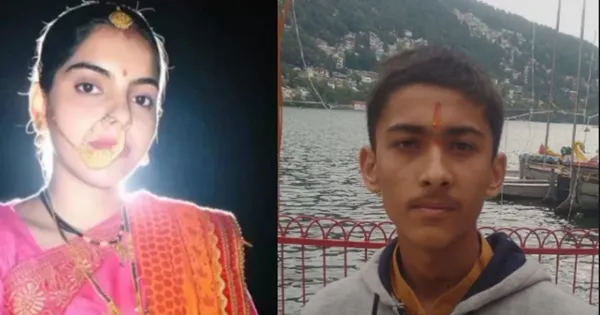
Last night this disease snatched away two young lives, one a 16-year-old bright student and the other a 26-year-old mother of two innocent daughters. These deaths have not only plunged Jeolikot and surrounding areas into panic and grief, but have also exposed the poor health infrastructure of Uttarakhand, the negligence of the Jal Sansthan and the insensitivity of the responsible officials.
First case: One crore treatment and helpless family, Ritesh could not survive.
Haldwani. 16-year-old Ritesh Jeena (son Umeshwar Singh, Upanal employee-Horticulture Department), resident of Sariyatal, was suffering from typhoid and vomiting and diarrhea since August 18. Despite treatment at the local level, his condition became extremely critical on August 28. The family kept taking him to many private hospitals in Haldwani, but the infection had spread so much that along with his liver, lungs and kidneys also started failing. From Haldwani, he was referred to LBS Hospital and AIIMS in Delhi, where doctors immediately advised 'liver transplant'.
According to family members, the cost of this entire treatment in private hospitals was said to be more than Rs 1 crore. It was impossible for my father, a daily wage/subnal employee, to raise such a huge amount in a few hours. Tired and exhausted, the family admitted Ritesh to Ram Manohar Lohia Hospital in Delhi, but this promising student died late on Saturday evening while fighting the battle against infection. The parents and elderly grandparents are in shock after losing their only son.
Second case: Mother's shadow lifted from the heads of two daughters
Haldwani. The second tragic incident is that of 26-year-old Neema Joshi (wife of Neeraj Joshi, daily laborer-forest department) of Jeolikot. Neema suffered from serious liver infection and jaundice in early September. When his condition deteriorated after first aid in Haldwani, his family took him to Ramamurthy Hospital in Bareilly, where he died during treatment. Neema has left behind two crying innocent daughters of four years and one and a half years, who cannot even understand that their mother will never return. The scary thing is that 5 other members of Neema's house are also suffering badly from jaundice, due to which the entire family is in trouble.
Three big questions pricking the system
1- Why did the administration keep sleeping for months?
Cases of diarrhea and typhoid were being reported in Jeolikot since the last week of June. Block chief Dr. Harish Bisht clearly says that concrete arrangements were not made to stop the source of the disease (contaminated drinking water) in time or for bleaching-chlorination. When the disease turned into jaundice and started causing liver failure, the system lost its sleep.
2- Contaminated water or poison of negligence?
The functioning of the Jal Sansthan, which claims to have clean water in the mountains, stands as a direct mark. When dozens of people from the same area and 5-5 members of the same household are simultaneously falling prey to jaundice, it is clear that a deadly mix of sewage or contaminated water is taking place in the drinking water supply.
3- Refer-refer game and huge cost of treatment
Even in Haldwani, which is the gateway to Kumaon in Uttarakhand, is there no timely ventilator or advanced critical care for liver infection patients? Poor families were forced to visit hospitals as far as Delhi and Bareilly, where two lives were lost due to lack of both time and money.
Health department issued alert
CMO Dr. Rashmi Pant said that an alert has been issued in Jeolikot area. Health department teams are monitoring the area. Asha workers have been instructed to go door-to-door to collect information about people's health and to immediately give information about suspected patients to the health department. Special emphasis is being laid on disease prevention and monitoring of patients in the area.