As prices surged in recent years, many people bought apartments, hoping to flip them later. But then prices stopped rising and have even fallen in some areas, and these speculators are now looking to dump their properties quickly amid payment pressure.
Many early buyers were offered interest rate subsidies for a period, but now, with the grace period ending, many are facing high floating rates.
In late 2024, Thuy Vy, 35, bought a one-bedroom apartment in Gia Lam Commune in the city’s west for VND3 billion (US$114,300).
The property had just been launched when she bought, and she expected to sell for a profit when construction finished. It has been completed, and she has paid over half the price, and has to pay the remaining 45% next month.
For the last two months, she has been trying unsuccessfully to sell it at the same VND3 billion she paid. She has now reduced the price by VND150 million, but inquiries remain scarce.
She laments: “I regret not selling at the market peak. Liquidity is very low now.”
|
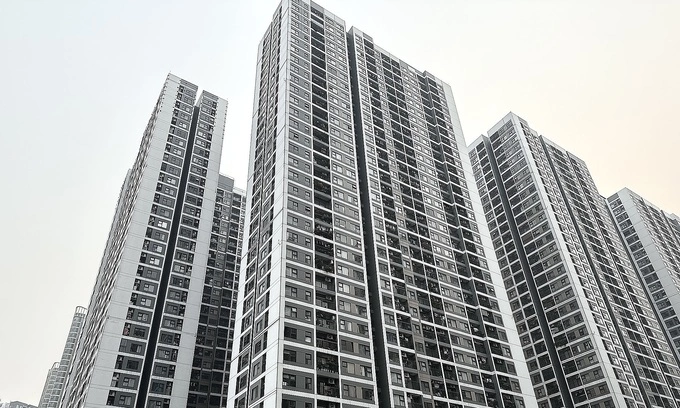
Apartment buildings in western Hanoi. Photo by Read/Ngoc Diem |
In 2024, Tuan, 40, purchased an apartment in a nine-tower development bordering Thang Long Boulevard for about VND4 billion.
He has paid around half. With the developer scheduled to begin handing over units in October, he said, “I’ve never felt pressure like I do now.”
He has to pay nearly VND2 billion, and bank interest rates have been rising steadily.
He is willing to sell for VND200 million below cost if someone wants to take it off his hands.
The two are among many who bought apartments in 2024-2025 and want to sell out now, but cannot find buyers due to a market slump.
In a recent market report, the Vietnam Association of Realtors said with many projects now entering the handover phase, buyers are required to pay the remaining 45%.
Historical listing data from online property platform Batdongsan shows that prices at several Hanoi localities and apartment projects have cooled from their peaks.
Asking prices have fallen by about 8% to 13%, including at Imperia Sola Park (down 12.6%), Lumi Hanoi (down 9.5%), and Kepler Land (down 8.6%).
Brokers say many speculators are abandoning short-term flipping strategies and merely hope to sell their properties as quickly as possible, reconciling to losses.
Duc Trung, a broker specializing in apartments in eastern Hanoi, said since the second quarter, the number of owners asking him to sell their apartments has surged by 20-30% compared with the beginning of the year.
Commenting on the trend, Pham Duc Toan, chief executive of real estate agency EZ Property, said many projects typically experience a wave of investors trying to exit their positions in the months leading up to handover, particularly those who relied heavily on leverage.
But he said selling apartments now is not easy, particularly at projects launched during the market boom in 2024.
With prices ranging from VND80 million to above VND100 million per square meter, secondary buyers must immediately commit several billion dong at a time when borrowing costs remain elevated, making them increasingly cautious.
Vo Huynh Tuan Kiet, director of the residential market at CBRE Vietnam, shared a similar view, saying apartment transactions in recent months have been driven primarily by speculators rather than people wanting to occupy them.
As prices move further beyond affordability, the market could enter a saturation phase in which “sellers are unwilling to lower prices, while buyers remain cautious about risks,” he said.
He pointed to the 2007-2011 period, when Vietnam’s housing market experienced a boom followed by tighter credit conditions, causing it to nearly freeze, and warned of similar risks emerging again.
Several research firms expect selling pressure from highly leveraged investors to intensify as huge supply enters the market.
From now through 2028, Cushman & Wakefield estimates more than 28,000 homes will be handed over in Hanoi.
The situation is worsened by high bank lending interest rates. Property agency Dat Xanh Services said mortgage rates are now 12-14%, and even 15-16% in many cases, and this has hit market liquidity.
It estimates the absorption rate at only 20-30% of supply in the first six months of the year, down from 50-60% in the second half of 2025.
Toan of EZ Property said most investors currently facing financial distress had relied on excessive leverage and should consider restructuring their mortgages and extend repayment rather than resorting to distressed sales.