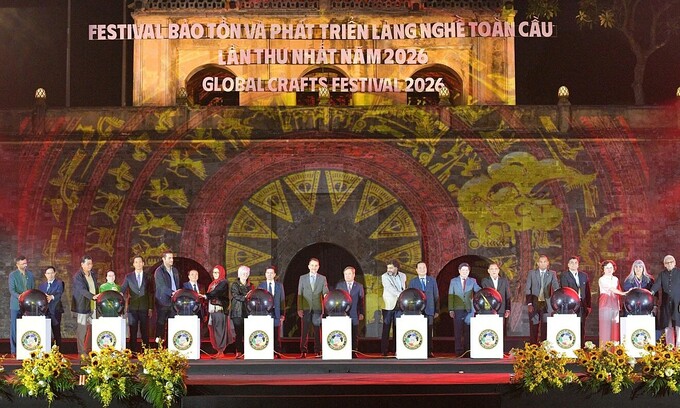
Hanoi is hosting the first Global Craft Village Conservation and Development Festival 2026, bringing together representatives of the World Craft Council (WCC), international organizations and around 200 artisans and designers.
The festival opened on Nov. 13 at the Thang Long Imperial Citadel, a UNESCO World Heritage Site, under the theme “Converging Craft Village Identity-Connecting Global Excellence.” Its main program runs through Nov. 16, with related activities from Nov. 12 to 17.
Organized by the Hanoi People’s Committee and the Ministry of Agriculture and Environment, the event aims to preserve traditional craftsmanship while helping artisans and craft businesses improve product design, reach new markets and build international partnerships.
Hanoi has about 1,350 craft villages, including 337 officially recognized ones. They preserve 47 traditional crafts, and the city’s handicraft products are exported to 89 countries and territories.
Four Hanoi craft villages have received recognition from the WCC: Bat Trang for ceramics, Van Phuc for silk, Son Dong for sculpture and lacquerware, and Chuyen My for mother-of-pearl inlay. Son Dong and Chuyen My joined the network earlier this year. Vietnam now ranks second globally in the number of craft villages recognized by the council, according to organizers.
Hanoi plans to seek international recognition for more craft villages to preserve traditional skills and expand market opportunities.
Activities began on Nov. 12 with a meeting between the Hanoi Department of Agriculture and Environment, WCC representatives and delegates from the four recognized villages. Participants reviewed the villages’ progress, preparations for upcoming WCC assessments and potential long-term cooperation. They also discussed a proposed memorandum of understanding between Hanoi and the council.
|
Representatives of the Hanoi Department of Agriculture and Environment meet with a World Craft Council delegation and representatives of four recognized craft villages on Nov. 12, 2026. Photo courtesy of the organizers |
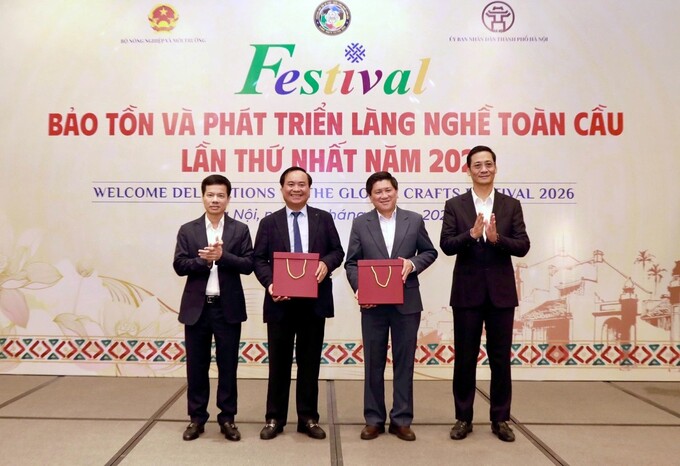
On Nov. 13, the Ministry of Agriculture and Environment and the Hanoi People’s Committee held a welcoming ceremony for international delegations, providing an opportunity for officials and craft organizations to discuss cooperation and cultural exchange.
 |
|
The Ministry of Agriculture and Environment and the Hanoi People’s Committee welcome international delegations attending the festival on Nov. 13, 2026. Photo courtesy of the organizers |
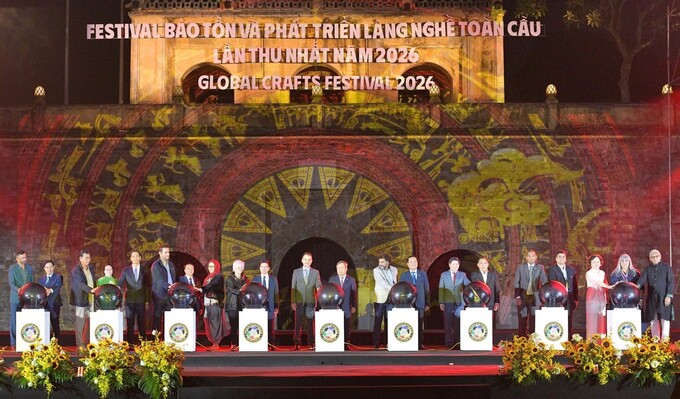
 The official opening ceremony took place that evening in front of Doan Mon Gate at the Thang Long Imperial Citadel.
Attendees included Hanoi People’s Committee Chairman Vu Dai Thang, Deputy Minister of Agriculture and Environment Vo Van Hung, Hanoi People’s Committee Vice Chairman Bui Duy Cuong, and Sundeep Kumar, WCC vice president for Asia-Pacific Region and co-chair of its World Craft Cities subcommittee.
Ambassadors, international organizations, experts, craft associations and artisans also attended.
 |
|
Vietnamese officials and international delegates open the first Global Craft Village Conservation and Development Festival 2026 at the Thang Long Imperial Citadel. Photo courtesy of the organizers |
Speaking at the ceremony, Cuong said craft villages generate jobs, support local livelihoods and preserve Hanoi’s cultural identity. He stressed that conservation should cover not only traditional products but also the knowledge, skills and cultural spaces associated with craftsmanship.
Passing these skills to younger generations is essential to keeping traditional crafts alive, he said.
Cuong outlined the city’s priorities for developing craft villages alongside the green and circular economy, tourism and cultural industries. These include improving product design and quality, protecting the environment and preserving local identity. International cooperation in training, design and technology could also help Vietnamese handicrafts reach more overseas markets, he added.
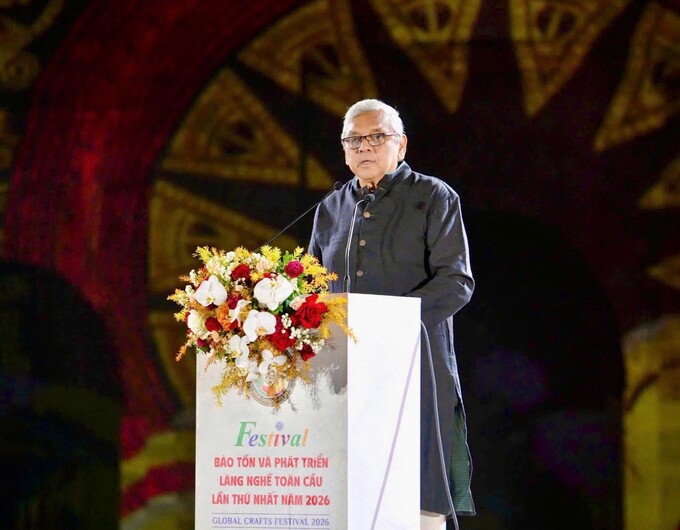
Kumar described Hanoi as an important strategic partner and proposed formalizing cooperation through a memorandum of understanding.
He also proposed establishing a World Craft Centre in Hanoi to connect artisans, designers, researchers and businesses internationally, and a World Craft Academy where master artisans could teach at universities and design schools.
 |
|
WCC Vice President for Asia-Pacific Region Sundeep Kumar presents proposals for international cooperation. Photo courtesy of the organizers |
 After the ceremony, Vietnamese officials and international delegates toured the exhibition, watched traditional craft demonstrations and met artisans. Activities included pottery demonstrations from Bat Trang ceramic and displays of Van Phuc silk and other handicrafts.
The festival is part of Hanoi’s broader strategy to develop craft villages as economic and tourism assets. The city aims to increase their production value by about 10% annually from 2025 to 2030.
Its priorities include building craft brands, training younger artisans, improving product quality and strengthening the competitiveness of local handicrafts in international markets. The city also seeks to promote environmentally sustainable production and closer links between traditional crafts, tourism and creative industries.
Through international partnerships, Hanoi hopes to expand opportunities for craft communities while preserving skills and cultural practices passed down through generations.