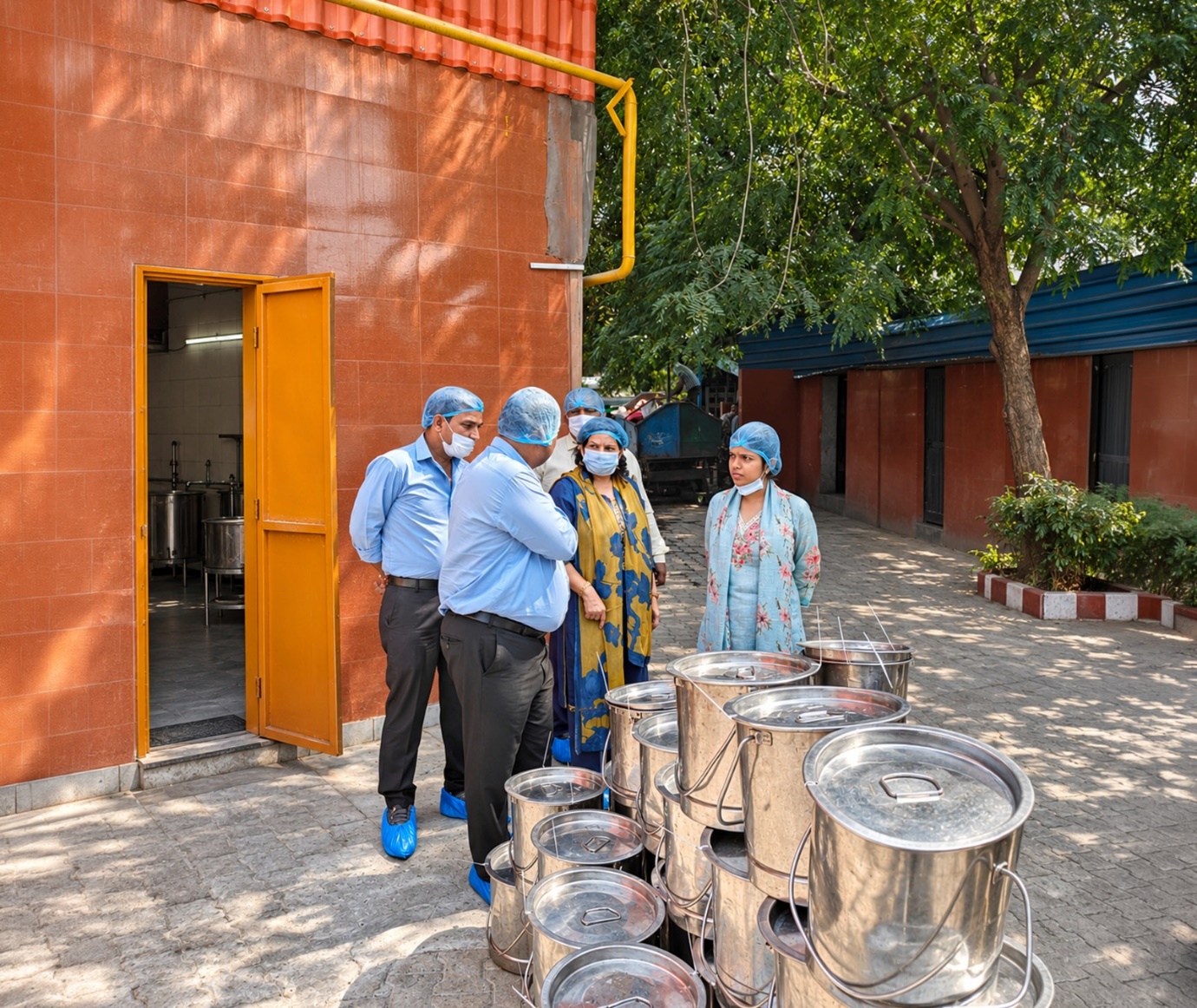
FARIDABAD: The effective implementation of school nutrition programmes depends on well-managed kitchen infrastructure, food safety practices and reliable distribution systems. As part of the Haryana Government’s efforts to understand and review the ground-level implementation of the PM POSHAN programme, Muskan SrivastavaAssistant Commissioner (UT), Faridabad, visited Annamrita Foundation’s centralised kitchen in Faridabad on 22 October 2026.
The visit provided an opportunity to observe the operational processes involved in preparing and distributing meals for government schoolchildren, understand the systems supporting food quality and hygiene, and assess how meals are managed from the kitchen to the schools.
Inside the Faridabad Kitchen: From Food Preparation to Quality Checks
During the visit, the officer observed various stages of meal preparation, beginning with the receipt and storage of raw materials, followed by vegetable cleaning and preparation, large-scale cooking, quality checks, packaging and dispatch.
Particular attention was given to kitchen cleanliness, sanitation, food handling practices and the arrangements followed to maintain food quality. These processes include cleaning raw ingredients, monitoring food temperature, adhering to nutritional requirements prescribed under the programme, ensuring proper packing and maintaining secure storage and transportation arrangements.
The officer also observed the coordination among kitchen personnel and the operational systems supporting the timely preparation and dispatch of meals to government schools. Following the visit, she recorded her appreciation in the kitchen’s visitor register, describing it as a “Very well managed facility. Pleasant visit.”
Supporting Nearly 3 Lakh Children Across Four Haryana Districts
The Faridabad kitchen is part of Annamrita Foundation’s wider school meal operations across Haryana. According to the organisation’s available programme figures, its operations cover 2,94,421 children across 1,967 government schools in four districts: Faridabad, Gurugram, Kurukshetra and Palwal.
The district-wise coverage includes 92,316 children across 383 schools in Faridabad, 1,00,601 children across 600 schools in Gurugram, 45,479 children across 548 schools in Kurukshetra and 56,025 children across 436 schools in Palwal.
Operating through four centralised kitchens, the programme requires coordinated procurement, food preparation, quality monitoring, kitchen management and transportation to ensure meals reach schools according to their daily requirements.
Technology and Operational Monitoring
Technology also plays an important role in managing meal distribution across multiple locations. Annamrita uses its Setu App to support delivery monitoring, timely dispatch and proper container-loading processes.
One of its important features is school geofencing, which helps verify that meal deliveries are associated with the intended school location. The system also supports the tracking of delivery information and food recall-related processes when an operational or food safety issue requires attention.
These digital mechanisms contribute to better visibility and accountability across the meal distribution network.
PM POSHAN and the Importance of Food Safety
Annamrita Foundation, formerly known as ISKCON Food Relief Foundation, works in partnership with government authorities to support the implementation of the PM POSHAN programme. The initiative aims to provide nutritional support to children studying in eligible government and government-aided schools.
At this scale, food safety and nutritional requirements are integral to the implementation process. Maintaining appropriate kitchen hygiene, food handling procedures, temperature requirements, secure packaging and organised transportation helps support the delivery of meals in accordance with prescribed programme requirements.
The organisation also supports local employment by engaging and training women in kitchen activities, including the sorting of rice and pulses, creating opportunities for their participation in the meal preparation process.
Strengthening the Delivery of School Nutrition Programmes
The visit to Annamrita Foundation’s Faridabad kitchen highlights the importance of understanding how public nutrition programmes function at the ground level. Government engagement, organised kitchen infrastructure, trained personnel and technology-supported distribution systems all contribute to the implementation of large-scale school meal programmes.
For Annamrita Foundation, the responsibility extends beyond preparing meals. It involves coordinating multiple operational stages to ensure that food is prepared, packed and delivered to schools through an organised system.
With its operations spanning four districts of Haryana and reaching nearly three lakh children, the Foundation continues to support the broader objective of making nutritious school meals accessible to children through the PM POSHAN programme.