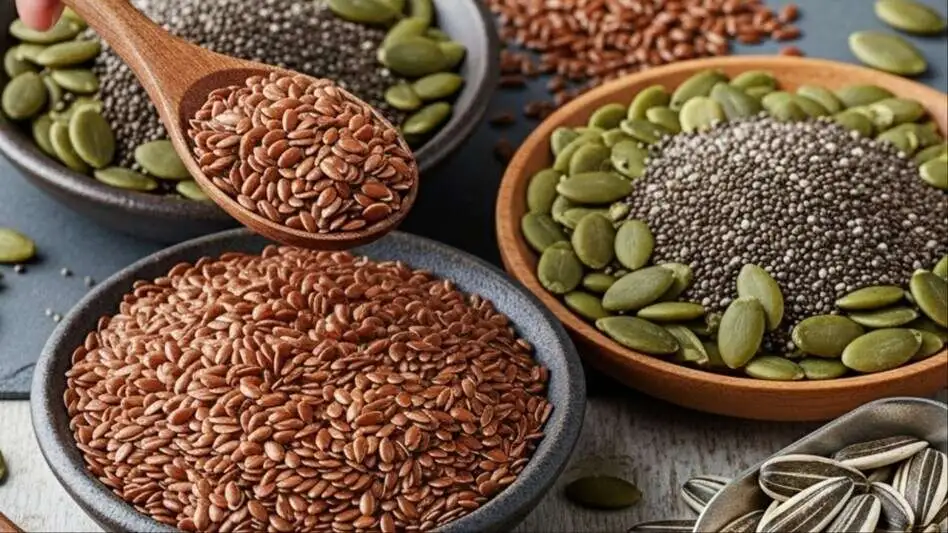
Nowadays, many people are striving to adopt a healthy diet. Simply filling your stomach isn’t enough for good health; the body also needs essential nutrients. In this context, tiny seeds can play a vital role. They contain many essential nutrients that nourish the body. Therefore, they are considered superfoods and people are incorporating them into their daily diets.
Nutrients of seeds
Various types of seeds contain important nutrients such as protein, fiber, healthy fats, vitamins, minerals, and antioxidants. They can be easily eaten with yogurt, salads, oats, smoothies, or other foods. Including seeds in the right amounts is beneficial. Let’s explore which healthy seeds can be included in your daily diet, their benefits, the right way to eat them, and what precautions should be taken when eating them.
Chia Seeds
Chia seeds contain fiber, protein, omega-3 fatty acids, calcium, and antioxidants. They can help keep you feeling full longer, improve digestion, and support heart health. They can be eaten soaked in water or mixed into yogurt, oats, or smoothies.
flax seeds
Flax seeds are rich in nutrients like omega-3 fatty acids, fiber, and lignans. They can improve heart health and digestion, as well as help balance cholesterol levels. Lightly roasted and ground flax seeds can be added to yogurt, salads, or flour.
Pumpkin seeds
Pumpkin seeds are rich in protein, magnesium, zinc, iron, and healthy fats. They help maintain bone and muscle health and boost your body’s resistance to disease. They can be roasted as a snack or added to salads and yogurt.
sunflower seeds
Sunflower seeds are rich in vitamin E, selenium, healthy fats, and fiber. They help protect cells from damage, improve heart health, and maintain skin health. They can be eaten with salads, oats, or as a snack.
mole
Sesame seeds contain calcium, iron, magnesium, protein, and healthy fats. These can help strengthen bones, provide energy, and improve heart health. Sesame seeds can be easily incorporated into chutneys, salads, laddus, and other dishes.
Things to consider when consuming seeds
Instead of relying on a single type of seed, consuming a variety of seeds can provide you with a variety of nutrients. Seeds are beneficial, but they should not be consumed in large quantities. When you first try them, start with small amounts and see how your body reacts.
If you have any allergies or health concerns, consult a doctor or dietitian before incorporating seeds into your diet. Instead of relying solely on seeds, consider including them as part of a balanced diet. It’s also important to drink plenty of water, especially when eating fiber-rich seeds.