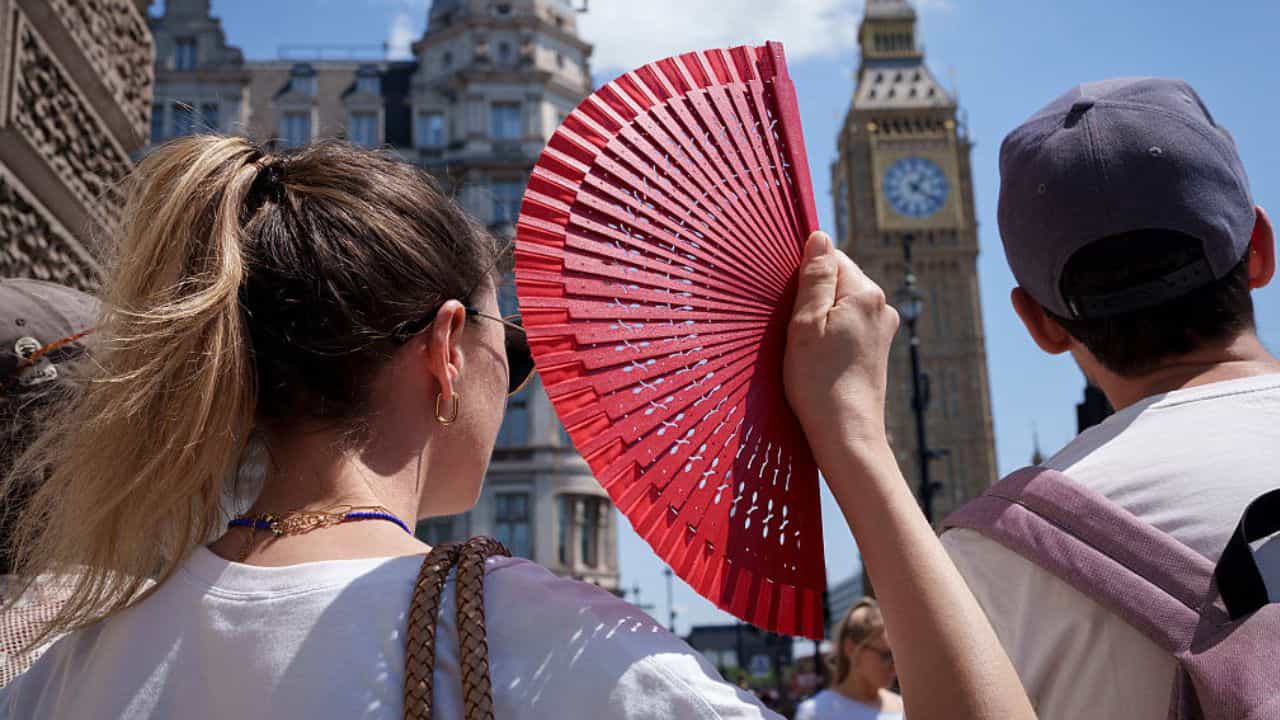
Britain and the entire Western Europe, which is generally known for its cool and pleasant weather, are currently experiencing fire from the sky. On Thursday, August 13, Britain recorded its hottest day so far in 2026, when the mercury soared to a dangerous level of 38.1 degrees Celsius (100.6 degrees Fahrenheit) in west London's famous 'Kew Gardens'. According to Britain's national weather agency 'Met Office', this extreme temperature has broken the previous record of 38.0 degrees Celsius made on June 28 this year. The country is currently facing the fifth devastating heatwave of the year. Due to the scorching sun and humid heat, normal life has become completely disrupted, incidents of forest fires are increasing rapidly and the health of patients as well as health workers in hospitals is deteriorating. Mercury reaches 38.1 degrees in Kew Gardens, West London: Becomes the hottest day of the year According to official data of the Meteorological Department, the temperature of 38.1 degrees Celsius recorded on Thursday has become the fifth highest temperature in British history. Although it was just 0.4 degrees less than the all-time August record of 38.5 degrees Celsius recorded in August 2003, the speed with which the mercury rose has shocked the entire country. Not only London, but Pershore in Worcestershire also recorded a temperature of 38 degrees Celsius. The mercury crossed 36 degrees Celsius in more than 40 different areas of central and southern England, leaving people suffering from the heat from streets to homes. Britain is scorching due to the fifth heatwave of the year: Heavy pressure on the infrastructure. Intermittent periods of severe heat had started in Britain since the month of May, and now the country is facing its fifth heatwave. So far in the current year 2026, a record four days have been recorded when the temperature has been above 36 degrees Celsius. British cities and buildings have historically been built with extreme cold and snowfall in mind, with thick walls and double-glazed windows preventing heat from escaping. Most homes, schools, shops and public transport in Britain do not have air conditioning (AC). This is the reason why temperatures above 38 degrees start proving fatal for the people of Britain. Conditions worsened due to lack of AC in hospitals, nurses fainted while on duty. The most painful effect of the scorching heat is being seen on Britain's health sector (NHS). Expressing concern, the Royal College of Nursing (RCN) said that in many older hospitals the temperature inside the wards has become unbearable due to the lack of adequate cooling or ventilation systems. Nicola Ranger, Chief Executive and General Secretary of the RCN, revealed that many nurses and health workers are falling unconscious due to heat exhaustion while caring for patients in hospitals, and have had to be admitted to the same hospital after complaining of vomiting and dizziness. Health unions have demanded the government to install portable cooling systems in hospitals on an emergency basis. Huge fire broke out in forests and grasslands, many houses burnt to ashes. Due to continuous dry weather and scorching sun, incidents of wildfires in forests and grasslands of Britain have gone out of control. A grass fire near a golf course in Stourbridge, West Midlands, spread so rapidly that many residential houses were burnt to ashes. Firefighters also struggled to control the massive fire in the 'New Forest' area of southern England. More than 1,017 wildfires have been recorded in England and Wales so far this year, according to data from the National Fire Chiefs Council. Given the high risk of fire, many local administrations have begun considering a complete ban on the use of disposable barbecues in public parks and open spaces. Severe drought crisis: Strict restrictions on water use and 'drought orders' A persistent lack of rainfall and severe evaporation have pushed Britain's rivers, aquifers and groundwater levels to historically low levels. 'Southern Water', the company that manages water supply in southern England, has applied to the government to impose an emergency 'Drought Order'. If it is approved, for the first time since 2006, there will be a complete ban on non-essential water use such as washing cars, watering gardens with hosepipes and filling commercial swimming pools. Crops have started drying up in the fields, due to which farmers are afraid of huge financial losses. Outcry across Europe: 41 degrees in France and rescue of tourists in Greece. Like Britain, the entire Western and Southern Europe is currently in the grip of an unprecedented heatwave. Neighboring France is also experiencing its fifth heatwave of the year, with temperatures reaching near 41 degrees Celsius (106 degrees Fahrenheit) in areas from Aquitaine to the Rhone River valley. France has been experiencing a period of extreme heat for the last 17 days, which has become the third longest heatwave period in the country's history. At the same time, after the forest fire in Greece's northern coastal resort 'Siviri' reached residential areas and hotels, more than 250 local people and foreign tourists were evacuated safely by sea in small boats. When will we get relief from the heat? Latest forecast of the Meteorological Department: According to Neil Armstrong, Chief Meteorologist of the British Meteorological Department, this tremendous 'heat dome' will gradually start moving towards the east from Friday. By the weekend (Saturday and Sunday), the temperature is likely to drop by 4 to 6 degrees Celsius and cold Atlantic winds will enter, which will provide some relief to the people from this deadly heat. However, climate scientists have warned that global warming and human-caused climate change will make such extreme weather and frequent heatwaves more common in the future, requiring the UK to make radical changes to its infrastructure.