
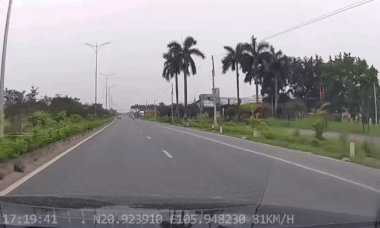

On May 10, a dashcam mounted on a car traveling along a road in the northern Hung Yen Province at around 80-85 kph captured one such incident. An electric motorbike suddenly sped past it at apparently much higher speed.
Based on the footage, the electric bike may have been traveling at around 90-100 kph, overtaking the car by dozens of meters within just one or two seconds. The rider was a young boy without a helmet, and the vehicle had no license plate.
An electric motorbike suddenly sped past a car at high speed as seen in the car’s dash cam footage provided to Read.
Under Vietnam’s Law on Road Traffic Order and Safety, electric motorbikes are only permitted to have a maximum designed speed of 50 kph and a motor output not exceeding 4 kW. However, according to the traffic police department, the vehicle in the video showed signs of being illegally modified to exceed legal speed limits.
Currently, most standard electric motorbikes sold in Vietnam have maximum speeds of around 45-60 kph. Some higher-powered models can reach 70-90 kph, but achieving speeds close to 100 kph usually requires technical modifications.
How are electric bikes modified for higher speeds?
Common modifications include replacing the electronic controller to increase power output, installing higher-voltage batteries, removing software speed limiters, or swapping in more powerful motors. Some riders also modify the drivetrain to improve acceleration.
 |
A screenshot showing unverified electric bike batteries being sold online. |
Services offering electric bike modifications are now widely available. Numerous social media accounts advertise speed upgrades costing several million dong. (VND1 million = $38)
Users can even purchase batteries, motors, controllers, and related components on e-commerce platforms and install them at home using tutorial videos uploaded by sellers.
Why are electric vehicles easier to modify than gasoline motorcycles?
According to technicians, electric vehicles are easier to upgrade because of their simpler structure and reliance on electronic systems.
Increasing the power of gasoline motorcycles typically requires deep mechanical modifications such as changing pistons, camshafts, ECUs, fuel injection systems, or exhausts. All of these demand advanced skills and significant expense.
Electric vehicles, by contrast, mainly consist of a battery, an electric motor, and a controller. Simply replacing the controller with one capable of higher output or installing a higher-voltage battery can significantly boost acceleration and top speed.
Some models also come with software speed restrictions that can be bypassed through electronic settings or firmware changes.
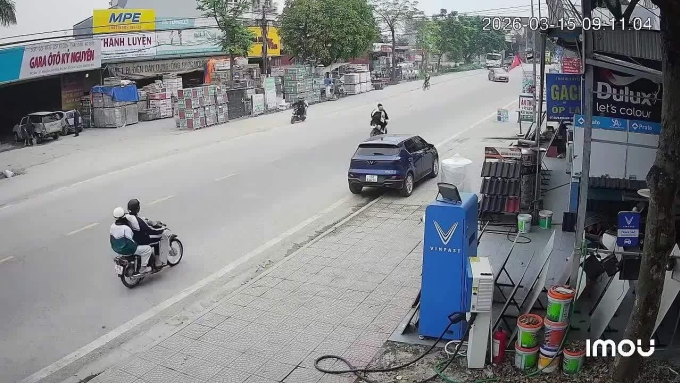
A student speeding on an electric motorbike before causing an accident in the northern Phu Tho Province on March 15, 2026. Video by local people
Many popular electric bikes are also designed with modular components. This makes it much easier to replace batteries, motors, or controllers compared to gasoline-powered motorcycles. Even users without advanced repair skills can perform modifications after watching online tutorials.
However, experts warn that excessive power upgrades may push vehicles beyond the original design limits of their frames, braking systems, and tires.
Many electric bikes intended for students are designed for speeds of only 40-50 kph. Modifications that allow speeds approaching 100 kph can significantly increase the risks of losing control, battery fires, or electrical failures during high-load operation.
Calls for tighter regulation of modification shops
Under the government’s Decree 168, individuals who illegally alter a vehicle’s frame, engine, shape, dimensions, or characteristics can face fines of VND4-6 million (US$150-230). Offenders may also be required to restore vehicles to their original condition.
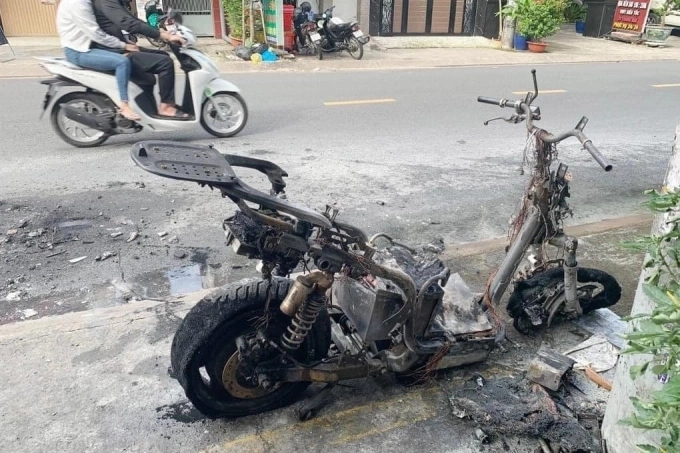 |
An electric bike catches fire due to a modified battery pack in Ho Chi Minh City. Photo by Vietnam Electric Vehicle Association |
As modified student electric bikes become increasingly common, many experts are calling for stricter oversight of repair and upgrade workshops.
During a session of the National Assembly Standing Committee on May 11, Hoang Duy Chinh, Permanent Vice Chairman of the Ethnic Council, urged the government to study measures to control the modification of electric bicycles occurring in many localities.
According to Chinh, many parents buy electric bikes for their children to commute to school. The students, however, later take the vehicles to repair shops to replace controllers and add extra batteries to increase speed and performance.
“This is extremely dangerous. Many children have already caused accidents. Inspections have found additional battery packs installed on these vehicles,” he said.
He added that the problem is particularly widespread in remote areas where oversight of repair shops remains weak.
The lawmaker called on authorities to strengthen inspections of electric vehicle modification facilities and to develop stricter technical standards. This would prevent unauthorized structural changes and excessive speed upgrades that go beyond manufacturers’ original designs.
Comments are closed.