The findings reveal that students graduating with these majors are significantly more capable of transitioning into different industries compared to their peers in highly specialized fields like engineering, education, or healthcare.
With overall hiring on the LinkedIn platform down 20% from pre-pandemic levels and 5% year-over-year, the value of a degree in today’s economy is increasingly defined by versatility rather than prestige.
To understand this trend, LinkedIn analyzed the 20 most common university majors among recent bachelor’s graduates from the 2022-2024 period, tracking their full-time employment status roughly one year after graduation.
Versatility ranking of the 15 most common college degrees on LinkedIn
|
Rank |
Major |
Versatility |
|
1 |
English |
69% |
|
2 |
Visual and Performing Arts |
68% |
|
3 |
Communications and Journalism |
67% |
|
4 |
Business and Marketing |
64% |
|
5 |
Computer and Information Sciences |
63% |
|
6 |
Social Sciences |
62% |
|
7 |
Interdisciplinary Studies |
60% |
|
8 |
Homeland Security and Law Enforcement |
58% |
|
9 |
Parks, Recreation, and Fitness |
56% |
|
10 |
Psychology |
55% |
|
11 |
Physical Sciences |
55% |
|
12 |
Biological Sciences |
43% |
|
13 |
Engineering |
41% |
|
14 |
Education |
34% |
|
15 |
Health Professions |
21% |
English majors ranked first for career flexibility, achieving a 69% adaptability score. The data directly challenges the long-standing stereotype that English graduates struggle to find employment.
Instead, their core competencies in communication, writing, and analytical thinking are translating successfully into diverse sectors, including customer experience, change management, brand strategy, marketing, and corporate communications.
Visual and performing arts degrees ranked second as the most versatile category, recording a 68% flexibility rate.
Graduates in these fields are frequently securing roles beyond the arts, moving into areas such as corporate philanthropy, digital engagement, content production, creative strategy, and collaborative project management. Communications and journalism majors secured the third spot.
|
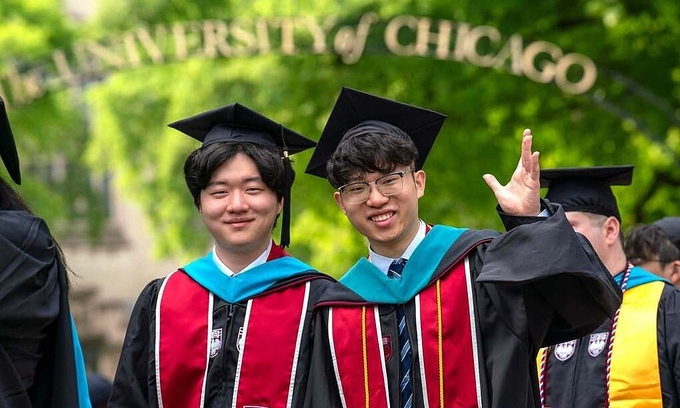
Graduates of the University of Chicago in June 2026. Photo from university’s Facebook page |
By contrast, the data showed that graduates with specialized training in engineering, education, and healthcare possess targeted skills that make it more difficult to pivot into unrelated professions if demand within their specific sectors slows.
This rising premium on adaptability is largely being driven by technological disruption. Kory Kantenga, LinkedIn’s Head of Economics for the Americas, indicated that as artificial intelligence automates more routine work, employers are placing a higher value on uniquely human abilities.
Strong communication skills, Kantenga told Forbes, are becoming increasingly essential across a wide range of occupations, giving humanities graduates the flexibility needed to capture hiring demand wherever it emerges in the broader economy.