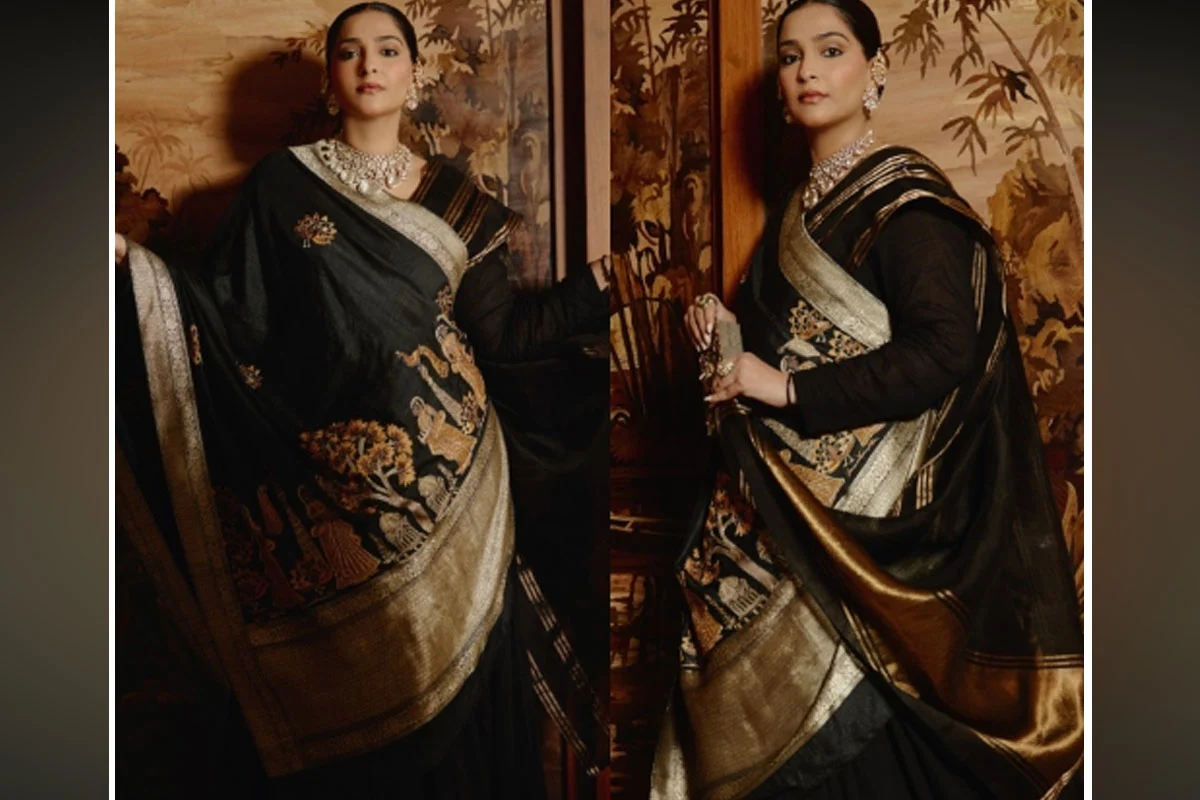
Fashion is truly timeless. Everything that is ancient, traditional, comes back again and again as a term of modernity. Recently Anil-Tanya Sonam Kapoor appeared at an evening organized by a jewelery brand. However, the clothes she wore became the most eye-catching in her look on this day, with ear-neck full of jewelry. She opted for an all-black anarkali, the drape of which fell well past the knees. And with Pichwai (Pichwai) art work, it became the 'talk of the town' in no time.
Dress stylists Rhea Kapoor and Manisha Melwani knew this, and instead of leaving the veil on just one shoulder as an accompaniment to the anarkali, covered the majority of the body with it. The veil became the 'showstopper' of her overall look. With a fashionista like Sonam making a conscious choice, Pichwai has become the talk of fashion lovers again. This 100% authentic Indian art style is not a modern import, it is almost 300 years old!
Pichwai art originated in Rajasthan, this style typically depicts flowers, peacocks, ghaghara parihita women, lotus flowers, cows, Vrindavan scenes or portraits of Krishna. The word 'pitchwai' literally means 'hanging back'. This particular style of religious painting, usually painted on cloth, was hung behind the idol of the deity in the sanctum sanctorum of the temple. Pichwai art flourished around the Srinathji temple at Nathdwara in Rajasthan. Here Srinathji is the boy form of Krishna—typically the seven-year-old Krishna is shown here holding Mount Govardhana with one hand raised.
It is said that Srinathji's idol was removed from Vrindavan to a safe place during the time of Mughal Emperor Aurangzeb. The permanent installation of the statue at Nathdwara was done under the patronage of Rana Raj Singh, the ruler of Mewar. After that artists and artisans settled around the temple and Pichwai became a distinct art form. The form of Pichwai is deeply associated with Srinathji's daily service. That is, one type of pichwai for summer, another design for monsoon, and a completely different image for festivals like Govardhan Puja, Raspurnima, Dol or Janmashtami. In some pitches, not just an event, but the whole atmosphere of the festival was depicted. Traditional pitchy making is very time consuming.
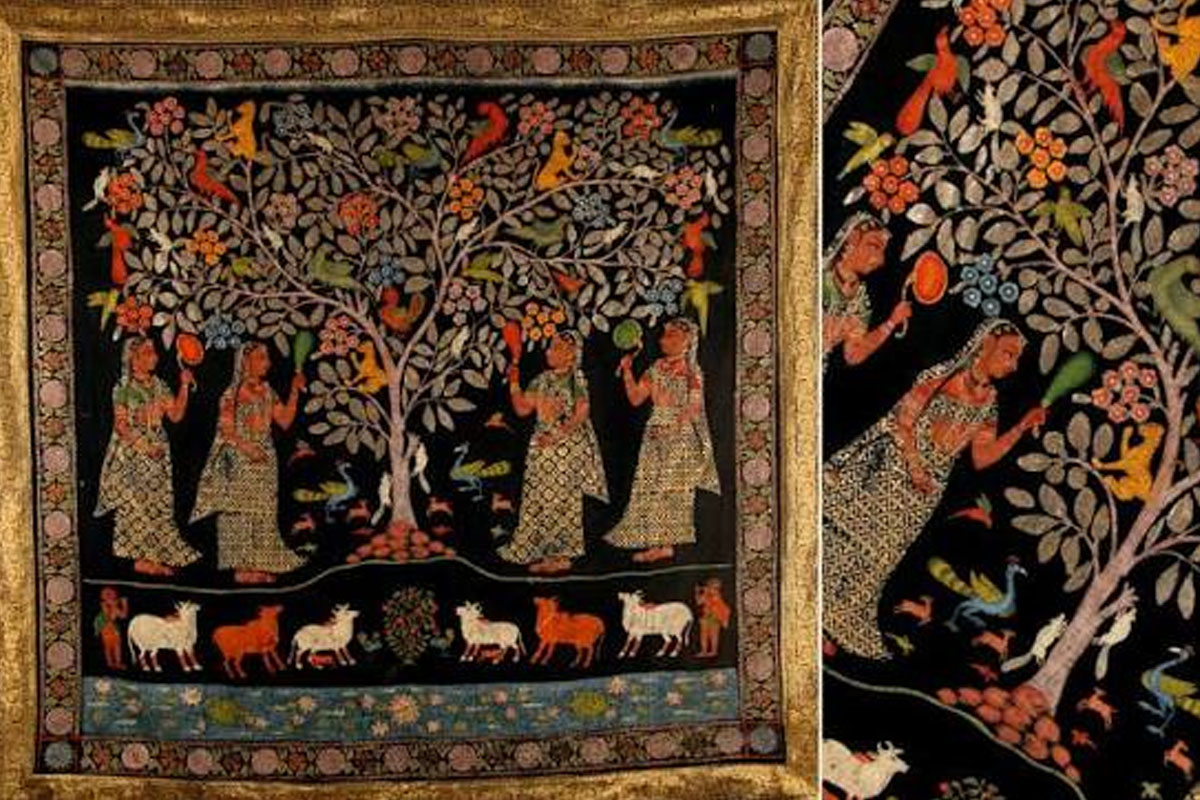
However, Sonam's tsar georgette veil is not the image printed on it, but the various motifs that have emerged in the work of silk thread. Instead of a full image, there were fragmented peachy motifs all over the veil. With her passion for bright gold and black, Sonam became the embodiment of the ancient art of India.