
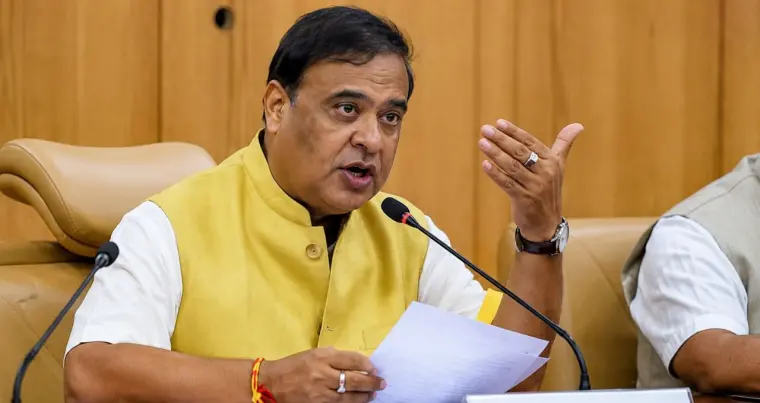

On the 51st anniversary of the Emergency, Assam Chief Minister Himanta Biswa Sarma described the 1975 Emergency as the dark chapter of Indian democracy. He paid tribute to those who struggled to protect democracy and stressed the importance of constitutional values.
Guwahati: On the occasion of the 51st anniversary of the declaration of Emergency in India, Assam Chief Minister Himanta Biswa Sarma described the 1975 Emergency as a dark chapter in the country’s democratic history and said it was a planned attempt to suppress India’s democratic system and civil liberties. He paid tribute to those who fought to protect democracy during that period and played an important role in keeping democratic values alive.
This statement of the Chief Minister has come at a time when various programs are being organized across the country to commemorate the declaration of emergency on June 25. The central government has also in recent years been commemorating the day specifically in the context of democratic rights and constitutional values.
Views expressed through social media posts
Chief Minister Himanta Biswa Sarma said in a social media post that the country should remember the period when Emergency was imposed in 1975. He described it as a challenging time for Indian democracy and said that during that period attempts were made to limit democratic rights and civil liberties.
In his message, he saluted those who struggled to protect the democratic system despite difficult circumstances. According to the Chief Minister, democracy is not just a political system but is the basis of civil rights, freedom of expression and strength of constitutional institutions.
What was the emergency of 1975?
National emergency was declared in India on 25 June 1975 under Article 352 of the Constitution. This period lasted for approximately 21 months and ended on 21 March 1977.
During the Emergency, the central government had gained wide powers. At that time, measures such as control of the press, arrest of political opponents, restrictions on public activities and limitations on many civil liberties were taken.
This period in Indian politics remains a subject of wide discussion and debate even today. There are differing views on the Emergency among supporters and critics, but most political analysts consider it one of the most important events in the country’s democratic history.
Center for debate on democracy and civil rights
The Emergency is often discussed in the context of democracy and civil liberties. Political experts believe that this period gave rise to widespread debate in India regarding the role of democratic institutions, independence of the judiciary, media freedom and importance of civil rights.
According to many historians, this period gave the Indian society an opportunity to understand how important is the strengthening of democratic institutions and protection of constitutional values. This is the reason why Emergency is mentioned prominently in political discussions even today.
Emphasis on constitution and democratic values
In his message, Chief Minister Sarma laid special emphasis on the importance of protecting democratic values. He said that the strength of any democratic country lies in its institutions, freedom of citizens and respect for the Constitution.
He said that democracy is not limited to elections only, but it is linked to the concept of citizen participation, freedom of expression and rule of law. Therefore, it is the responsibility of every generation to protect democratic values.
June 25 is being celebrated as ‘Constitution Murder Day’
The Central Government had announced to celebrate June 25 as ‘Constitution Killing Day’ from the year 2025. The aim of the initiative is said to be to commemorate the declaration of emergency and to encourage public discussion on the events that took place during that period.
The government says that this day provides an opportunity to understand the importance of the Constitution and democracy and underline the need to avoid such situations in future.
At the same time, opposition parties and some political analysts have expressed different opinions on this initiative. He believes that historical events should be understood in a broader historical context rather than looking at them from a political perspective.
Legacy of emergency in Indian politics
After the end of the Emergency, many important steps were taken towards strengthening the democratic institutions in India. In the general elections held thereafter, there was a change of power and the democratic process once again showed its strength.
Political analysts believe that the events of the Emergency deeply influenced the democratic consciousness of India. The experiences of this period made political parties, civil society and media more conscious of protecting democratic rights.
Even today, when democracy, freedom of expression and constitutional values are discussed, the reference to Emergency often comes up. This event is seen as a turning point in the history of Indian democracy.
opportunity for democratic awareness
Experts believe that the anniversary of the Emergency is not just an occasion to remember the past, but it is also a time to understand the basic spirit of democracy. The success of a democratic system depends on how aware the citizens are about their rights and duties.
Academics and political analysts say that studying such events from history helps new generations understand the importance of democratic institutions and the need to protect constitutional values.
Message to protect democracy
Assam Chief Minister Himanta Biswa Sarma’s comments have once again sparked a national discussion on the 1975 Emergency and its effects. Remembering the people who struggled to protect democracy, he gave the message that protecting civil liberties and constitutional values is the biggest responsibility of any democratic society.
In a huge democracy like India, the strength of democratic institutions, respect for civil rights and commitment to the Constitution are considered the basis of the country’s political stability and development. That is why the memory of the Emergency still reminds us of the importance of democracy and freedom.

Comments are closed.