
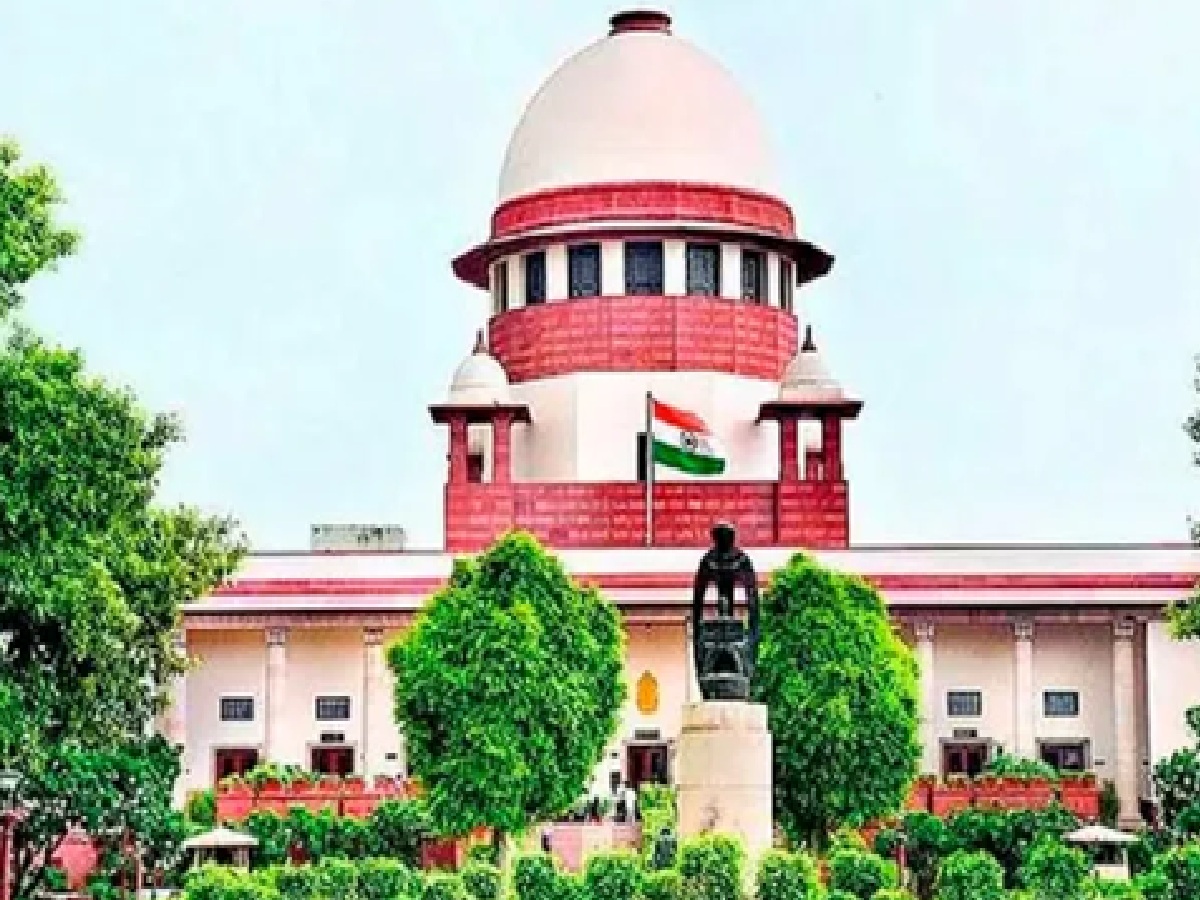
Historic decision of the Supreme Court, said- Rape victim should not be harassed by repeatedly calling the court, Tripura HC’s order reversed

India News Live, Digital Desk: The Supreme Court of the country has given a very sensitive and historic decision regarding the dignity of rape victims and their mental protection. The Supreme Court has clearly said that during the hearing of criminal cases, victims of heinous crimes like rape should not be harassed by repeatedly calling the court for cross-examination. The division bench of Justice Dipankar Dutta and Justice Satish Chandra Sharma has completely quashed an earlier order of the Tripura High Court in this case. In its decision, the Tripura High Court had accepted the petition of the accused, in which he had demanded to call the victim to the court again four years after the incident and get her testimony and cross-examination. The Supreme Court considered this order unfair and said that making the victims make repeated trips to the courts in sensitive and heinous cases is against the basic spirit of justice. The cross-examination had ended four years ago, the Supreme Court enumerated the difficulties of the victim. Underlining the seriousness of the case, the apex court said that the victim woman has already faced the extremely complex and mentally disturbing process of testimony and cross-examination by appearing before the lower court (trial court) on four different occasions. Not only this, during the police investigation and then before the magistrate, detailed statements of the victim have been recorded under section 164 of CrPC. In such a situation, when his cross-examination had been completed four years ago, it would be an extremely harsh and insensitive step to bring the accused in the dock again after such a long time for the convenience of the accused. It is wrong to expect witnesses and victims to come to the court again and again – Supreme Court’s strict comment The Supreme Court said in its comment that the courts have to understand that witnesses and victims of especially sensitive and heinous crimes cannot be expected to keep facing the mental and physical torture of appearing in the court again and again. If the victims of such serious crimes are repeatedly dragged to the courts in the name of cross-examination, then their old mental injuries will become green again and they will have to go through unbearable pain. The Supreme Court considered that the order of the Tripura High Court was going to create unnecessary new difficulties for the victim, hence the Supreme Court completely approved the appeal filed by the state government against that decision of the High Court. Extensive powers should be used thoughtfully and in the interest of justice, not arbitrarily. Let us tell you that the Tripura High Court, citing the powers under Section 311 of the Criminal Procedure Code (CrPC), had ordered re-issuance of summons to the victim on the application of the accused. The Supreme Court completely clarified the position on this technical aspect also. The court said that there is no doubt that under Section 311 of the CrPC, any court has very wide discretionary powers to recall or summon any person for deposition during any trial or investigation. But, these powers should be used very thoughtfully, based on serious arguments and in a judicial manner. Calling the court again is not a normal process. This power should be used to prevent miscarriage of justice and not to meet arbitrary demands of an accused or harass the victim.

Comments are closed.