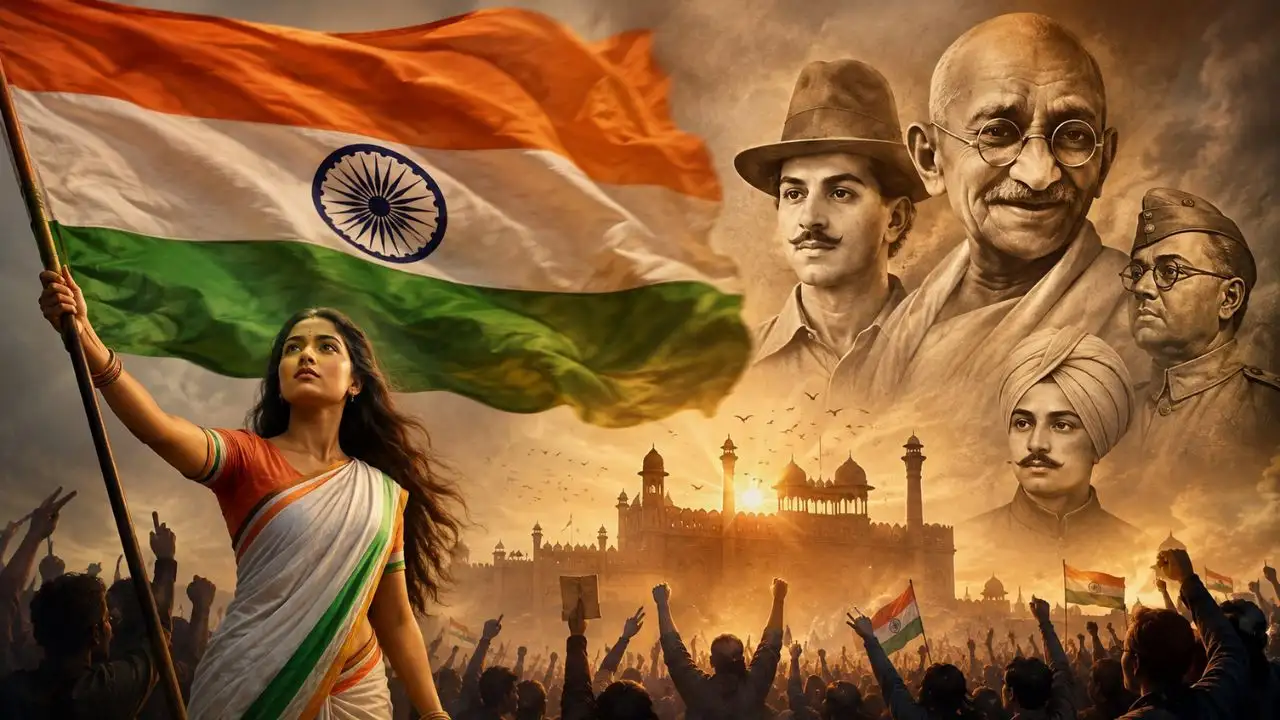
The Historical Significance of Vande Mataram
New Delhi: On November 7, 1875, Kartik Shukla Navami, also known as Akshaya Navami, ‘Vande Mataram,’ composed by the sage Bankim Chandra Chatterjee, completed 150 years. On this significant occasion, it is important to re-evaluate the Prime Minister’s view that ‘Vande Mataram’ is not just a symbol of the Indian national movement, but an invaluable mantra of national consciousness. In this timeless composition, ‘Mother’ symbolizes not just a landmass but the power of civilization. This conception of Shakti in feminine form wove a thread among the countrymen, elevating patriotism to the status of a sacred religion.
The Role of ‘Vande Mataram’ in the Freedom Struggle
The Lifeblood of the Freedom Struggle and the Spread of Patriotism
Sri Aurobindo depicted the Mother as Shakti in the ‘Bhavani Temple’, which Swami Vivekananda saw as Bharat Mata. ‘Vande Mataram’ awakened patriotism among the countrymen and inspired sacrifice. From the moment hundreds of Indians sang it in unison at Kolkata’s Town Hall in August 1905, it became a source of energy for revolutionaries and Satyagrahis. The banning of the song by the British government in 1906 was a testament to its immense power.
Political Controversy and Change
Objections and Political Turning Points
Since 1896, Congress sessions have begun with the singing of ‘Vande Mataram.’ However, after Maulana Mohammad Ali objected to it at the Kakinada session in 1923, the situation began to change. Despite this, its popularity remained unchanged. Before 1923, ‘Vande Mataram’ was included on the national flags designed by freedom fighters, but later it was restricted. The demarcation of the song in 1937 and the partition of the country in 1947 demand a deep introspection of history.
The Cultural Foundations of Modern India
The Cultural Foundations of Modern India
The sage Bankim said that even if his other compositions were to disappear, “Vande Mataram” would remain immortal. His belief proved correct. This mantra found its place on the earliest Indian flags designed by Sister Nivedita and Madame Bhikaji Cama. The concept of India is based not on any modern invention, but on centuries-old cultural foundations. Shared symbols like “Vande Mataram” are beyond dispute. The historical assessment of this immortal song, which became the key to liberation in the freedom struggle, remains relevant today.