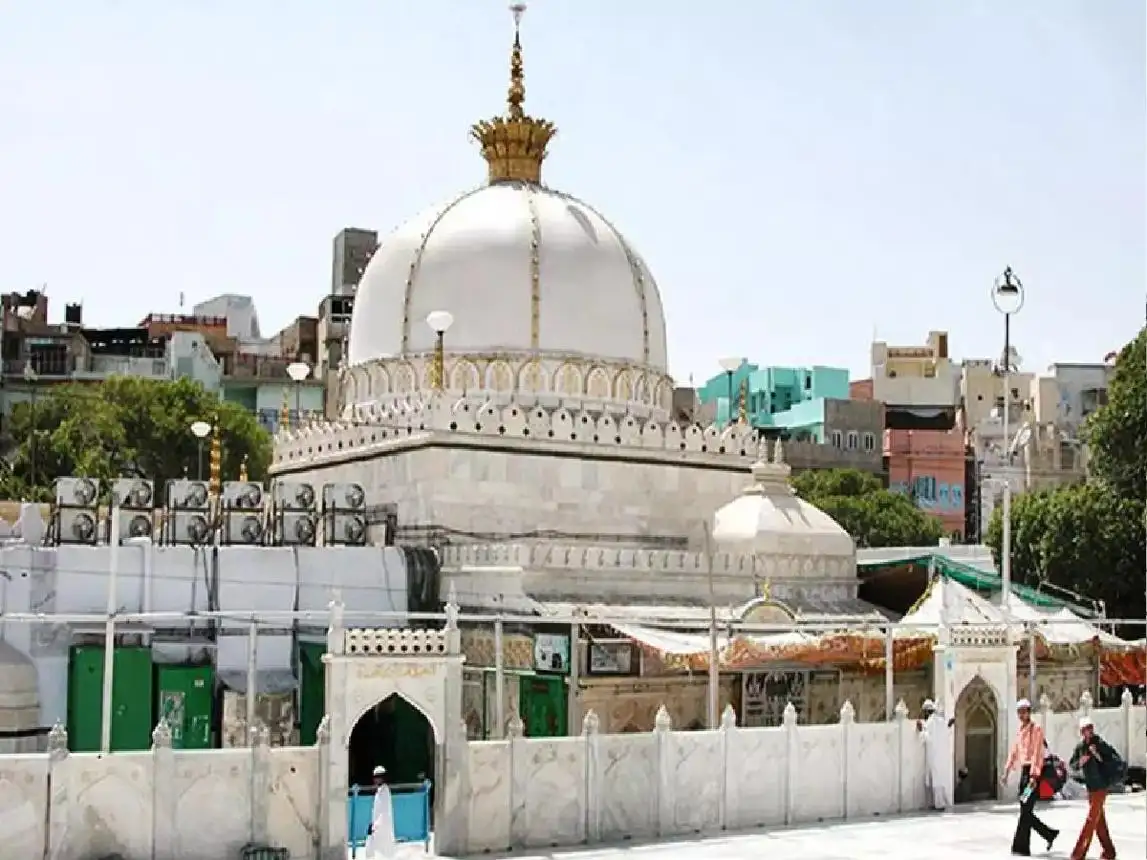
The Ajmer Sharif Dargah, located in the city of Ajmer, Rajasthan, is one of India’s most famous Sufi shrines. The shrine houses the tomb of Sufi saint Khwaja Moinuddin Chishti , fondly known to devotees as “Khwaja Garib Nawaz .” For centuries, this place has been a symbol of faith, love, service to humanity, and brotherhood.
Arrival of Khwaja Moinuddin Chishti
Khwaja Moinuddin Chishti is believed to have been born in the 12th century in the Sanjar region of Iran (present-day Iran). After attaining spiritual enlightenment, he traveled to India and eventually settled in Ajmer, Rajasthan, his place of work.
He is believed to have dedicated his entire life to serving the poor, the needy, and the vulnerable. His teachings placed the highest importance on love, compassion, tolerance, and humanity.
Ajmer made a spiritual center
Khwaja Moinuddin Chishti lived in Ajmer and propagated Sufi teachings. His ideas influenced a large number of people, and Ajmer gradually became a major center of the Sufi tradition.
After his death, a Dargah was built on his tomb, which later became one of the major religious places of India.
Construction and development of the Dargah
The Ajmer Sharif Dargah’s present form evolved through contributions from various rulers and devotees. The shrine received special patronage during the Delhi Sultanate and Mughal periods.
Mughal Emperor Akbar was considered a great devotee of Khwaja Sahib. According to history, Akbar visited Ajmer several times and contributed to the development of the shrine. Subsequent Mughal rulers also commissioned numerous construction projects here.
Main buildings of the Dargah
There are many historical buildings in the Ajmer Sharif Dargah complex, the main ones being-
1. Nizam Gate
This is considered the main entrance to the dargah and was built with contributions from the Nizam of Hyderabad.
2. Buland Darwaza
This huge gate reflects the grandeur of the Dargah and holds special significance during the Urs.
3. Akbari Mosque
Built by Mughal Emperor Akbar, this mosque is an important part of the Dargah complex.
4. Shahjahani Mosque
Built by Mughal Emperor Shah Jahan, this mosque is famous for its beautiful architecture and white marble work.
Urs of Ajmer Sharif
The Urs is held annually in the Islamic month of Rajab in memory of Khwaja Moinuddin Chishti . It is considered one of the largest Sufi events in India.
During the Urs, millions of devotees from India and abroad descend on Ajmer, where Qawwali, Chadar Peshi, and religious programs are organized.
Religious and cultural significance
The Ajmer Sharif Dargah is not only a religious site but also a symbol of India’s cultural diversity and harmony. People from all religions and communities visit here with reverence.
Khwaja Gareeb Nawaz’s message was that service to humanity was the greatest religion. This is why his shrine continues to inspire people with the message of love and brotherhood.