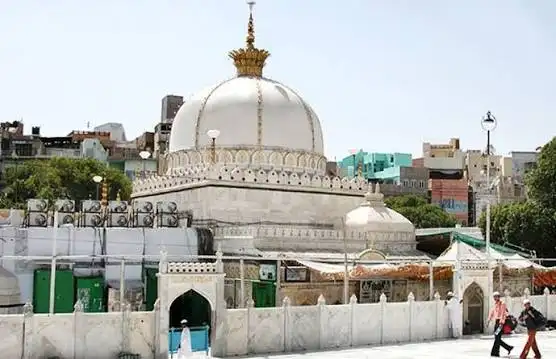
The Ajmer Sharif Dargah, located in the city of Ajmer, Rajasthan, is one of the most famous Sufi shrines in the country. It houses the tomb of Sufi saint Khwaja Moinuddin Hasan Chishti. According to Rajasthan Tourism, this shrine is an important religious site for people of all religions and faiths.
Who was Khwaja Moinuddin Chishti?
Khwaja Moinuddin Chishti was a Sufi saint who came to India from Persia and is considered one of the leading saints of the Chishti Sufi tradition. According to Rajasthan Tourism, he arrived in Ajmer and lived there from 1192 until his death in 1236 AD. His teachings emphasized love, humanity, and service. Due to his popularity, devotees also call him Garib Nawaz.
The Construction of the Dargah and the Mughal Era
The Dargah complex visible today evolved over several rulers and periods. According to Rajasthan Tourism, Mughal Emperor Humayun built the Dargah in memory of Khwaja Sahib. Later, Mughal emperors Akbar and Shah Jahan built mosques within the complex. Akbar had a special devotion to Ajmer Sharif. According to Rajasthan Tourism, Akbar visited Ajmer every year during his reign.
Dargah Architecture
There are several historic gates leading to the Ajmer Sharif Dargah complex. Among these are the Nizam Gate, the Shahjahani Gate, and the Buland Darwaza. The main complex houses the tomb of Khwaja Sahib. Marble lattices and silver railings are visible around the tomb, while the dome is gilded with gold. The fragrance of flowers, chadar, incense, and sweets is a hallmark of the dargah’s atmosphere.
The Special Significance of the Urs
Every year, the Urs is held to commemorate the death anniversary of Khwaja Moinuddin Chishti. A large number of pilgrims from India and abroad visit Ajmer during this time. The tradition of offering chadar and making wishes also holds special significance among the Dargah devotees. According to Rajasthan Tourism, people from various religions visit the shrine with devotion.
Prasad is prepared in a huge pot
A special tradition of the Dargah is the cooking of food in a huge pot. According to Rajasthan Tourism, food is prepared in large pots and distributed as prasad among the devotees.
A Symbol of Religious Harmony
One of the greatest features of Ajmer Sharif is its interfaith approach. Along with Muslim devotees, people from other religions also visit here. This has earned Ajmer recognition as a city of religious and cultural diversity. Rajasthan Tourism also describes Ajmer as a city with major religious centers for both Hindu and Muslim communities.
A Major Tourist Destination Even Today
The Ajmer Sharif Dargah is among the major religious tourist destinations in Rajasthan. Tourists visiting Ajmer can also see historical sites like Adhai Din Ka Jhonpra, Taragarh, and Ana Sagar Lake, along with the Dargah. Pushkar is about 14 kilometers from Ajmer. The history of the Ajmer Sharif Dargah is not just the story of a religious site, but also of centuries-old Sufi tradition, Mughal-era architecture, and religious-cultural fusion.