
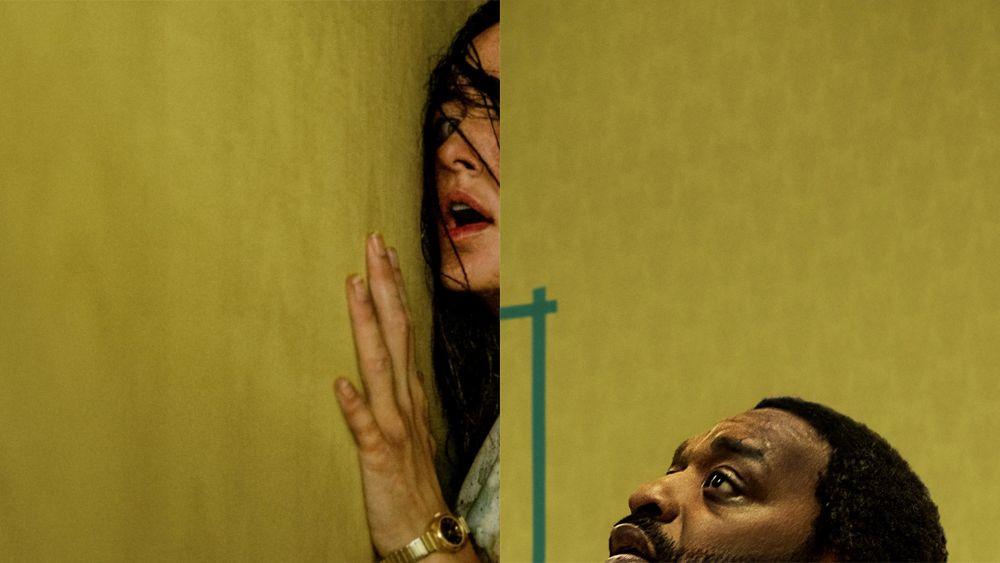

Kane Parsons, the debut director of Backrooms, is 20 years old. It is the sort of detail you want to hold against the film, but you cannot. Parsons made his name in high school, helming a YouTube series called Backrooms. Like the film, it grew out of a 2019 image of an empty yellow room: the patron saint of the internet’s endless fascination with liminal spaces, those transitional, in-between places that feel wrong the moment you find them empty.
The leap from that to an A24 feature (the film is based on his series) should have flattened the whole thing into content. Instead, Backrooms turns out cannier and more searching than its origins, spending its runtime worrying at questions about memory and what it means to be lost, which are far older than the internet that taught Parsons how to make it.
Also read: The Rs in Bharathiraja’s life: How the filmmaker’s heroines went on to become screen icons
You can feel him reaching past his own influences. The film brings back memories of the Apple TV show Severance and filmmakers David Lynch and Stanley Kubrick, storytellers who understood that a building could be the antagonist. Working with co-writer Will Soodik, Parsons mostly resists the urge to explain his universe and, by extension, avoids ruining such an adaptation. Instead, he adds lore without ever turning the lights on the mystery. The backrooms stay uncertain and that uncertainty is the whole point.
Backroom of memories
The setup is almost aggressively ordinary. It’s the early ‘90s. Clark (Chiwetel Ejiofor) is a failed architect, now running a cavernous discount furniture store called Cap’n Clark’s Ottoman Empire, after being thrown out by his wife. He drinks. He sleeps in one of the showroom’s display beds. He sees a therapist, Dr Mary Kline (Renate Reinsve), who is carrying her own grief and a mother whom she still seems to be flinching from. Their sessions circle loneliness and regret and the human mind’s habit of taking the path of least resistance and that last idea quietly underwrites everything that follows. When Clark finds the porous patch of basement wall and slips out of the world, he is, in a way, just taking the easiest route deeper into himself.
What he walks into is the most convincing spatial horror in years. Danny Vermette’s production design and cinematographer Jeremy Cox’s lensing assemble the place from half-remembered instructions about reality: that sickly mall-yellow light, carpet you can practically smell, odd-looking furniture. Nothing in the geometry holds still. Hallways run too long, perspectives buckle and the distance between two doors refuses to stay the same length twice. Plus, there’s no darkness anywhere, which turns out to be the cruel trick of it all. The fluorescent glare that ought to keep you safe is the very thing crawling under your skin.
The film’s real ambition is in what it decides the backrooms are. They aren’t just endless. They are made of memory: warped copies of real places, like Mary’s childhood home and Clark’s store. Everyone who walks in leaves something behind and the maze turns that residue into monsters: half-remembered versions of the living. The worst is a creature called Captain Clark, the man forced to face the version of himself he has spent a lifetime avoiding.
The state of scare
Ejiofor and Reinsve turn in disturbingly good performances; his architect’s curiosity souring into obsession, her warmth grinding down into something close to panic once she follows him in. The film does fumble at the end, the way clever horror so often does. A research outfit called Async appears, a scientist played by Mark Duplass leans in for a clammy little interrogation and the reveal it arrives at is smaller than the dread that built toward it. It helps that by then Parsons has already pulled off the harder thing: leaving audiences stranded in a bright, humming room they somehow recognise, with no memory of walking in and no idea of how to leave.
It isn’t that there is a single scare in Backrooms that rankles. Rather, it’s the state the film manages to keep you in. For long stretches in the film, nothing happens, and that turns out to be the worst of it. You sit there waiting for the corridor ahead to do something and when it just keeps going, the waiting curdles into a low, physical unease. When the scares do arrive, they land. At the same time, these scenes almost come across as relief from the tension rather than the cause of it. In that sense, the film works on you the way a bad dream does. By the time the lights came up, the audience is unsure of how long it had been holding its breath.
Also read: Peddi uses Janhvi Kapoor the way its hero uses consent: not at all
For a first feature, Backrooms is unusually sure of itself. Parsons has taken an internet ghost story and made it frighten and ache at once, without the heavy lore or the budget that usually hold these films up. It stumbles in the moments it tries to explain itself. But the place it builds is that rare thing in horror: a setting that feels genuinely new and one that stays with you long after the screen goes dark.

Comments are closed.