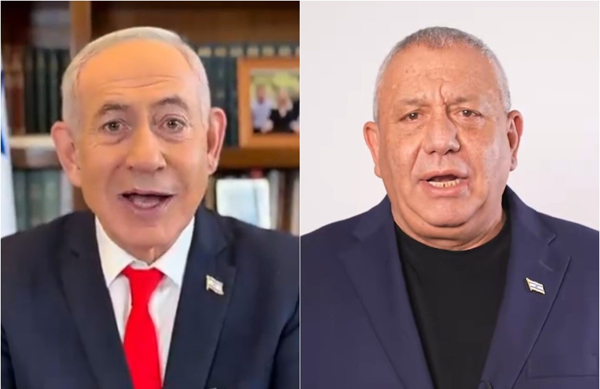
Jerusalem. Amid the ongoing political deadlock over government formation in Israel, Prime Minister Benjamin Netanyahu has decided to abandon efforts to form a coalition and focus on preparing for new elections. Israeli news channel C14 has given this information quoting sources related to the case. According to the report, Netanyahu believes that efforts to form a unity government are now futile and there is no possibility left to move forward in this direction.
It is being told that Netanyahu has also stopped efforts for a political agreement with Naftali Bennett's Together faction and Avigdor Liberman's Yisrael Beytenu party. Now his focus is on garnering public support and preparing his political team for the next elections.
Gadi Eizenkot's stance dashed hope
According to sources, Netanyahu took this decision when he felt that Yashar Party chief Gadi Eysenkot was not ready to join the unity government led by him. People close to Netanyahu say that information about informal efforts to contact Eizenkot was becoming public again and again. The Prime Minister's team was disappointed by this.
According to the report, the chances of an agreement were weakened due to the disclosure of information about the discussions by the middlemen involved in the talks. After this, instead of trying to form a coalition, Netanyahu's office has started working on the strategy of going among the public and contesting the elections.
Campaign against government supported by Arab parties
Netanyahu is now preparing to launch an aggressive election campaign against any potential government dependent on the support of Arab parties. This includes parties like Ra'am and Joint List. According to the report, Netanyahu may adopt a strategy to question the legitimacy of such a government and its suitability for national security.
His election message will be that a government formed with the support of Arab parties amid the current security challenges will not be favorable to Israel's interests. According to sources, Netanyahu is preparing to intensify the campaign, especially against leftist coalitions.
Netanyahu's coalition far from majority in parliament
61 seats are needed to form a government in Israel's 120-member Knesset. According to available election data, Netanyahu's Likud party and his far-right and ultra-conservative allies have won 53 seats. At the same time, the opposition group led by former army chief Gadi Eysenkot has got 48 seats and Arab-led parties have got 19 seats.
According to these figures, no party has a majority on its own. In such a situation, lack of consensus among political parties regarding government formation has become a big challenge for Netanyahu.
Will there be new elections in Israel soon?
The news of the coalition's withdrawal from efforts and preparations for the election campaign has intensified speculation about early elections in Israel. However, the official date of the new elections is not confirmed based on the available reports. At present, Netanyahu's priority is said to be to strengthen his political position and garner support in possible elections.