
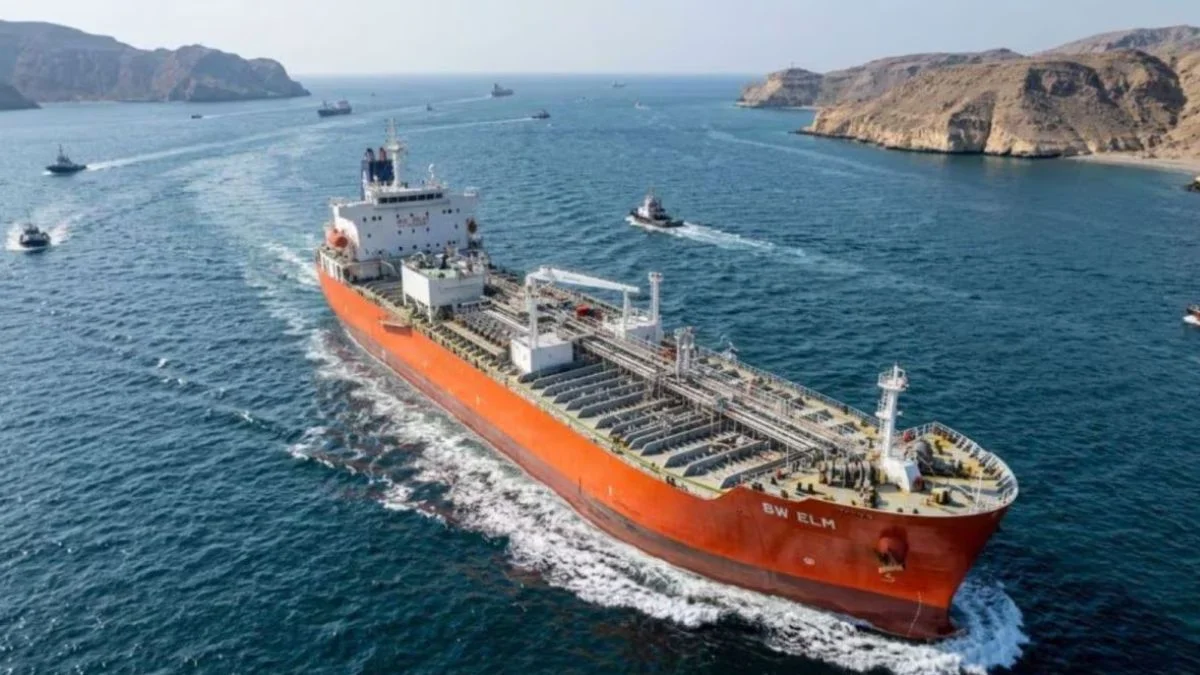

India has been handed a near-term inflation reprieve after Iran’s foreign minister said the Strait of Hormuz would remain fully open to commercial shipping during the current ceasefire, triggering a sharp pullback in global oil prices and easing one of the biggest immediate risks to Asia’s third-largest economy. Brent crude fell nearly 9% on Friday to about $90.93 a barrel, while U.S. crude dropped about 9.4%, unwinding part of the war premium that had built up during weeks of disruption in one of the world’s most critical energy chokepoints.
For India, the reopening matters disproportionately. India depends on the Strait of Hormuz for about 40% of its crude imports, even after an emergency diversification push, while the government said last month that roughly 90% of India’s LPG imports still move through the route. The petroleum ministry has said around 70% of India’s crude imports are now routed from outside Hormuz, up from about 55% earlier, helping avoid an outright supply crunch, but the waterway remained central to fuel and gas pricing through the crisis.
That is why the reopening offers what economists would call an inflation buffer rather than a full reset. India’s retail inflation rose to 3.4% in March, still below the Reserve Bank of India’s 4% target, but policymakers and analysts had already started warning that a prolonged West Asia shock would feed into transport costs, cooking fuel, petrochemicals and a broad range of manufactured goods. The RBI had estimated in an earlier report that a 10% rise in oil prices above $85 a barrel could add 50 basis points to inflation and shave 15 basis points off growth.
The importance of that oil link is amplified by the structure of India’s inflation basket. Under the new CPI 2024 series, the direct “fuel and light” group carries a weight of 5.489% in the combined index, while transport carries 8.796%. That means cheaper crude does not just reduce pressure on household fuel bills; it also lowers the risk of second-round effects through freight, commuting, logistics and input costs across the economy.
Until Friday’s reopening announcement, India had been bracing for the opposite. The RBI asked state oil refiners to curb spot dollar purchases and use a special credit line instead, seeking to reduce pressure on the rupee as oil prices surged and importers scrambled for dollars. The rupee, which had fallen sharply this year and hit a record low on March 30, recovered nearly 2% from that trough and strengthened further on Friday as central bank measures and easing crude prices helped sentiment. A softer oil bill typically improves India’s trade arithmetic and reduces imported inflation by easing both fuel costs and currency pressure.
Economists had been increasingly clear that, before the reopening, the pass-through risk was building even though the first-round hit to consumers remained limited. Radhika Rao of DBS said after the March inflation print that the higher energy shock would “gradually percolate” in coming months as alternative supplies arrived with a lag. Madan Sabnavis of Bank of Baroda said inflation was likely to rise gradually toward the RBI’s projected path, while HDFC Bank’s Sakshi Gupta said March’s benign reading showed energy-cost pass-through had so far been limited, giving the central bank room before turning hawkish. Analysts also pointed to early signs of price revisions in FMCG, cement, paints and consumer durables if high crude persisted.
The reopening changes that near-term trajectory. Lower crude reduces the odds of another round of petrol and diesel price stress, eases margin pressure on oil marketing companies and lessens the case for emergency fiscal cushioning after India had already cut petrol and diesel taxes last month to shield consumers. It also helps cap costs in sectors that are highly sensitive to fuel and freight, from aviation and chemicals to packaging and consumer goods. With March CPI still at 3.4%, the drop in oil prices could help keep headline inflation from moving decisively above the RBI’s comfort zone in the next few prints, especially if retail fuel prices remain stable.
But the relief is best seen as partial and potentially temporary. Shipping insurers indicated earlier this month that even if Hormuz reopened, war-risk premiums were likely to stay elevated for an extended period because of the danger of renewed disruption. In other words, the crude benchmark may have fallen sharply, but the full delivered cost of energy into India may not retreat as fast if freight and insurance remain unusually expensive.
Gas is another vulnerability. The petroleum ministry said India imports about 60% of its LPG consumption, and about 90% of those imports come through Hormuz. That means any easing in vessel movement should help reduce the risk of shortages and price spikes in cooking fuel, but it does not instantly erase the stress that built up while the route was disrupted. LPG and LNG tend to influence inflation both directly and indirectly through household budgets, restaurant costs and industrial fuel use.
There is also a wider macro caveat: India’s inflation outlook is no longer being driven by oil alone. The India Meteorological Department has forecast monsoon rainfall at 92% of the long-period average, the lowest first forecast in nearly three decades. ICRA’s Aditi Nayar warned that weaker rains, combined with the Middle East crisis, posed downside risks to growth and could push average inflation above 4.5% this fiscal year. That means even if energy pressure cools, food inflation could still keep headline CPI sticky.
For the RBI, that leaves a more comfortable but still complicated policy backdrop. The central bank kept rates unchanged this month, retained a neutral stance, cut growth expectations to 6.9% for 2026-27 and raised its average inflation forecast to 4.6%, citing the Middle East shock. A sustained decline in crude following Hormuz’s reopening would reduce the urgency of that inflation threat and ease pressure on the rupee, but policymakers are unlikely to declare victory while freight costs remain elevated, the ceasefire remains fragile and the monsoon outlook is uncertain.
The clearest conclusion is that India has avoided the worst-case scenario for now. A continued blockage of Hormuz would have forced a broader imported inflation shock through crude, LPG, freight, insurance and the rupee. Reopening the route interrupts that chain. It gives India breathing room at a moment when inflation is still below target, growth is slowing only moderately, and policymakers are trying to prevent an external oil shock from becoming a domestic cost-of-living spiral. But as long as the reopening is tied to a ceasefire rather than a durable settlement, the buffer looks real, not permanent.

Comments are closed.