Mint reports that JSW Group has put its proposed battery-cell factory on hold because it cannot secure the lithium iron phosphate, or LFP, technology it needs.
The problem is not lack of demand or willingness to invest. JSW says access to LFP manufacturing know-how has become the hurdle because the technology is heavily concentrated in China and Beijing has tightened controls on exporting advanced battery technology.
JSW is not alone. Other large battery projects have also faced difficulties linked to Chinese technology access, showing how difficult it is to build an independent EV supply chain when one country dominates crucial parts of it.
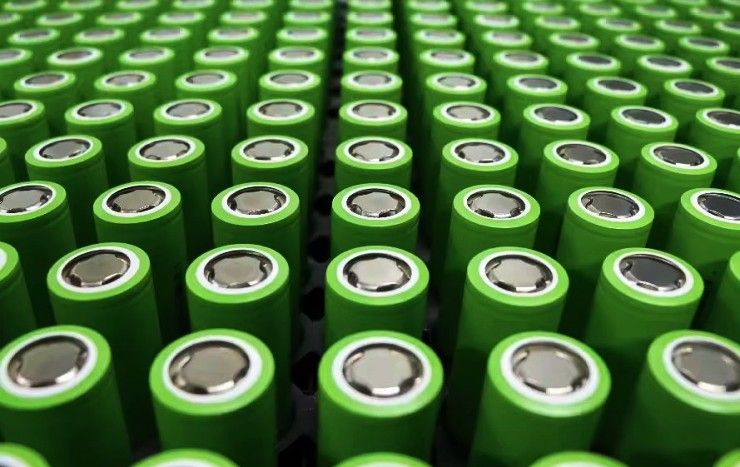
LFP is one of the two major lithium-ion battery chemistries used in electric vehicles. The other common chemistry is nickel manganese cobalt, or NMC.
LFP cells are generally cheaper and thermally stable, making them well suited to mass-market EVs and energy storage. NMC cells can offer higher energy density but are usually more expensive.
JSW had been planning a large cell-manufacturing project and is still looking for a technology partner. While earlier reports suggested that JSW was aiming at a battery factory with a capacity to produce up to 50 GWh, while more recent disclosures have referred to a 30 GWh project beginning with a 10 GWh first phase.
What is now clear is that the cell project is currently on hold. JSW has commissioned cell-to-pack facilities. That allows imported cells to be assembled into packs locally, but making the cells themselves is the more difficult step. Without cell manufacturing, a large part of an EV battery’s value continues to depend on imported technology and components.
The dependence goes beyond buying cells. China has introduced export controls and licensing requirements covering high-performance lithium-ion batteries, cathode materials, artificial-graphite anodes and associated manufacturing technology. That last part is particularly important.
A company can invest in buildings, machinery and assembly lines, but production cannot start competitively without the process knowledge needed to manufacture cells consistently and safely.
The government has acknowledged that the EV sector remains highly dependent on imported critical minerals and is vulnerable to Chinese policy changes. JSW director Parth Jindal says the group remains keen to manufacture cells locally but has not secured the required LFP technology tie-up. China’s restrictions therefore affect the ability to replace imports, not merely the supply of imported batteries.
Amara Raja Energy & Mobility had to alter its battery plans after its technology partnership with China’s Gotion ran into difficulties. Reliance Industries has also faced questions around access to Chinese battery technology, although Reliance says its battery manufacturing plans remain on track.
The pattern shows why localisation percentages can be misleading. An EV can have its body, seats, wiring, tyres and battery pack assembled locally while still depending on imported cells, magnets, electronics or production technology.
Cell manufacturing matters particularly because the battery is one of the most expensive parts of an EV. JSW MG Motor is separately targeting around 70 percent localisation for the Windsor and Hector Tomahawk by the end of 2027, but expects battery cells, rare-earth magnets and some electronics to remain imported.
China is entitled to control exports of technologies it considers strategically important. For India, however, the result is a clear warning. Building EV assembly plants is easier than creating the complete technology chain behind them.
Cell chemistry, production processes, cathode and anode materials, rare-earth magnets and manufacturing equipment all matter. Partnerships with companies in Japan, South Korea and elsewhere can reduce dependence. Domestic research will also have to close gaps that licensing cannot solve.
JSW’s stalled project shows the problem clearly. A company willing to invest more than a billion dollars can still be unable to proceed because critical manufacturing knowledge sits outside the country. Until that changes, locally assembled EVs can grow rapidly while genuine self-reliance in EV technology remains much harder to achieve.