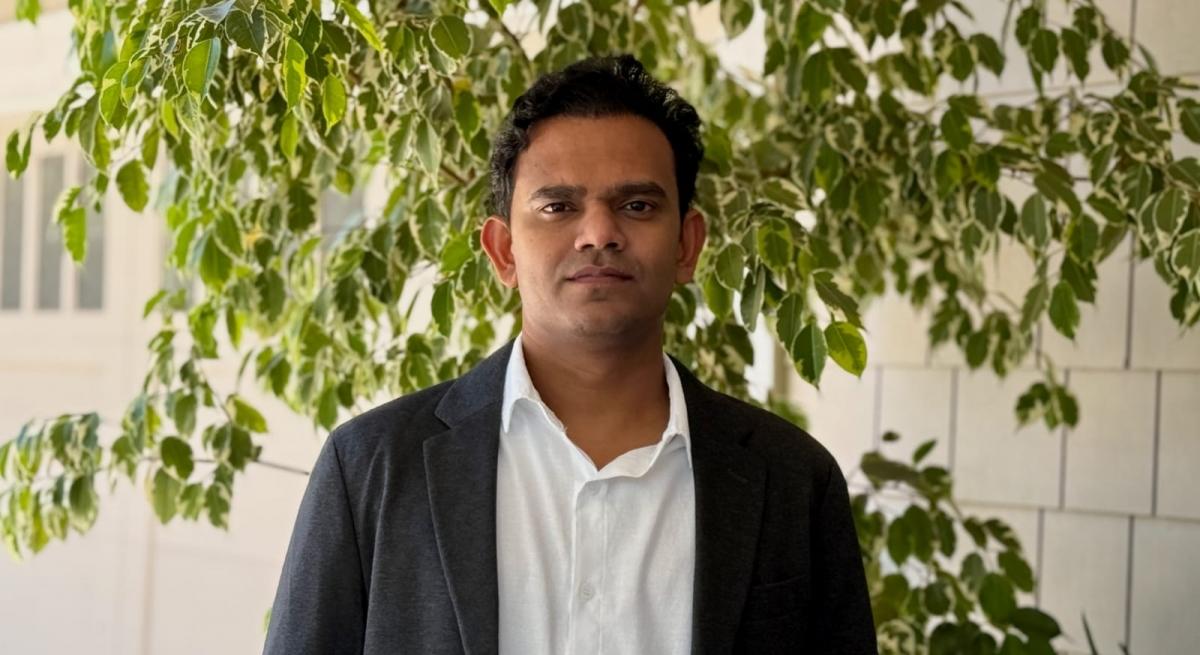
Enterprise technology is undergoing a major transformation. Customer relationship management platforms are no longer limited to storing accounts, contacts, opportunities, and cases. In modern organizations, CRM systems have become strategic business platforms that connect revenue operations, customer service, finance, marketing, compliance, partner management, and artificial intelligence.
Deepak T. Bahuleyan, a Salesforce Engineering Manager and Architect, has built his career at the center of this transformation. His professional journey began in enterprise software engineering, where he developed a strong foundation in Java/J2EE technologies, backend systems, web applications, integrations, and software development practices. He later transitioned into Salesforce, where he has focused on CRM architecture, platform modernization, enterprise integration, automation, and AI-enabled business transformation.
His career reflects a consistent theme: helping organizations replace fragmented systems and manual processes with scalable, integrated, and business-aligned platforms. Across multiple enterprise environments, he has contributed to initiatives involving Salesforce architecture, middleware integration, CPQ, Service Cloud, Commerce Cloud, data migration, business process automation, and platform governance.
Building Enterprise Platforms That Scale
For large organizations, CRM complexity grows quickly. Sales teams need accurate pipeline data, quoting tools, pricing rules, contract workflows, and customer insights. Service teams need efficient case routing, knowledge access, escalation logic, and complete customer history. Finance and operations teams need reliable billing, tax, compliance, and revenue data. Executives need reporting they can trust.
Bahuleyan’s work has focused on connecting these needs through Salesforce-centered architecture. His background includes Apex, Lightning Web Components, Salesforce CPQ, Service Cloud, integrations, APIs, automation, dashboards, data modeling, and enterprise development practices. This combination of technical depth and business process knowledge has allowed him to contribute to initiatives where Salesforce functions not only as a CRM system, but as the operational backbone of the business.
He has played key roles in CRM modernization programs involving legacy system replacement, platform consolidation, sales and service process redesign, and integration with core enterprise systems. The purpose of these transformations is not simply to move from one system to another. It is to reduce operational complexity, improve user experience, support scalability, strengthen data quality, and create a stronger foundation for automation and AI.
In large enterprise environments, this type of work requires careful planning around data architecture, integrations, security, reporting, user experience, change management, governance, and adoption. Bahuleyan’s career reflects the ability to work across these areas while keeping technology decisions aligned with business outcomes.
The Growing Role of AI in CRM
One of the most important shifts in enterprise CRM is the movement from passive systems to intelligent systems. Traditional CRM platforms often depended on users to manually enter data, update records, search for information, and determine next steps. AI-enabled CRM changes that model.
Bahuleyan’s recent work includes Salesforce AI use cases such as lead nurturing, case routing, and coaching sales representatives. These use cases reflect a broader shift in enterprise technology: AI is becoming a productivity layer that helps employees act faster, make better decisions, and work with more context.
For sales teams, AI can help prioritize leads, recommend next best actions, summarize customer activity, and identify opportunities that deserve attention. For service teams, AI can help route cases, surface relevant knowledge, reduce response time, and improve consistency. For managers, AI can provide better visibility into pipeline trends, customer risks, team productivity, and operational bottlenecks.
However, Bahuleyan’s approach emphasizes that AI must be grounded in strong architecture. Without clean data, clear process design, secure integrations, and proper governance, AI initiatives can struggle to produce reliable business value. In enterprise environments, AI success depends as much on platform quality as it does on model capability.
From Record Management to Intelligent Sales Enablement
A strong example of CRM evolution is the rise of centralized sales intelligence and recommendation tools. Modern sales teams often face information overload. Data comes from multiple channels, customer segments, product signals, marketing systems, service interactions, and internal tools.
The challenge is not simply collecting information. The challenge is turning that information into focused action.
Centralized recommendation platforms can help sales representatives spend more time on high-value opportunities and less time searching across disconnected systems. By improving lead prioritization, lead quality, and next-best-action guidance, these tools represent the next stage of CRM: moving from record management to intelligent sales enablement.
This direction reflects the future of enterprise CRM. The platform is no longer just a place where employees log activity. It is becoming a system that helps employees decide what to do next.
Turning Integration Into Business Value
Another defining aspect of Bahuleyan’s career is enterprise integration. Modern organizations depend on many systems across sales, finance, HR, collaboration, service, billing, tax, document management, and analytics. The value of CRM depends heavily on whether these systems can exchange accurate information at the right time.
Bahuleyan has worked extensively on integrating Salesforce with enterprise platforms and middleware tools, including ERP systems, collaboration platforms, tax systems, document workflow tools, and integration platforms. These integrations are critical because business teams rely on connected data to make decisions, automate workflows, reduce manual effort, and improve customer experience.
He has also helped stabilize Salesforce environments by reducing technical debt, optimizing automation, improving security, reducing unnecessary storage and customization, strengthening release management, and improving development governance. These efforts are not always visible to end users, but they are essential to long-term platform health.
Technical debt can slow innovation, increase risk, and make every new project more expensive. By improving governance and maintainability, enterprise application leaders create room for faster and safer innovation.
Commerce, Service, and Business Process Modernization
Across his Salesforce career, Bahuleyan has contributed to a wide range of business transformation initiatives involving sales, service, commerce, partner management, marketing operations, security workflows, and internal business process automation.
His work has included Salesforce Service Cloud implementations designed to improve customer support operations, partner portal solutions that simplified registration and access workflows, commerce platform implementations that supported direct digital sales, and business process management initiatives that moved legacy workflows into Salesforce.
He has also worked on applications for security incident management, marketing spend planning, lead integration, document automation, and approval workflows. These projects show a clear pattern across his career: using Salesforce not only as a CRM, but as a platform for broader enterprise process transformation.
His earlier Java/J2EE experience also remains important. That foundation gave him hands-on understanding of enterprise application design, backend development, web technologies, integrations, databases, and software development practices. Combined with his Salesforce expertise, this background allows him to approach CRM modernization with both platform-specific knowledge and broader engineering discipline.
A Leadership Model for Modern Enterprise Technology
Bahuleyan’s career reflects the changing expectations placed on enterprise technology leaders. In the past, technical leaders were often evaluated mainly on delivery. Today, they are also expected to guide architecture strategy, reduce operational risk, improve adoption, support revenue growth, enable AI, and align technical decisions with business priorities.
That requires a combination of engineering discipline, architectural thinking, stakeholder communication, and team leadership. Bahuleyan’s experience includes managing Salesforce development, mentoring engineers, working with business stakeholders, leading technical design, documenting solutions, supporting distributed teams, and guiding implementation across complex enterprise environments.
His certifications across Salesforce administration, Service Cloud, Platform App Builder, Platform Development, Salesforce AI, Agentforce, Java, and web technologies further reflect a career built on continuous learning. In a field where technology changes quickly, this ability to evolve is essential.
The Road Ahead
The next generation of CRM will be defined by intelligence, integration, and simplicity. Companies will continue to look for ways to reduce manual work, improve sales productivity, personalize customer engagement, automate service workflows, and make better use of enterprise data.
Professionals like Deepak T. Bahuleyan are helping shape that future by combining platform architecture with practical business transformation. His work demonstrates that successful CRM modernization is not just about implementing software. It is about building connected systems that help people work smarter, serve customers better, and support long-term business growth.
As AI becomes more deeply embedded into Salesforce and enterprise applications, the organizations that succeed will be those that pair innovation with strong architecture. Bahuleyan’s career offers a clear example of that approach: build a strong engineering foundation, modernize the platform, integrate the enterprise, govern the system, and then use AI to unlock the next level of productivity.