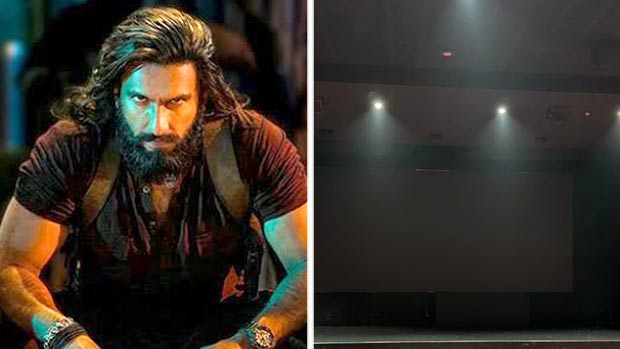
The success of a blockbuster is usually measured through its box-office collections, but the impact of Dhurandhar: The Revenge appears to have extended beyond ticket sales. The Ranveer Singh-starrer has reportedly helped several cinema halls across India generate the financial momentum needed to renovate their properties and upgrade their screening technology.
According to a report by Bollywood Hungama, the film’s remarkable theatrical performance provided much-needed cash flow to several exhibitors. This allowed cinema owners to invest in better infrastructure, modern projection systems and premium viewing facilities. The development highlights how a major theatrical release can benefit not just filmmakers and distributors but also the wider exhibition industry.
Dhurandhar’s box-office success gives theatres a financial boost
The original Dhurandhar, released in 2025, emerged as a major box-office success, raising expectations for its sequel, Dhurandhar: The Revenge. The second instalment reportedly collected more than Rs 1,000 crore in India, drawing audiences to cinemas across different regions and theatre formats.
A trade source quoted by Bollywood Hungama said the film attracted audiences despite considerably increased ticket prices. Unlike films that perform particularly well in either single-screen theatres or multiplexes, Dhurandhar: The Revenge reportedly brought crowds to cinemas across the country.
The source explained that the film’s business generated additional cash flow for several exhibitors, encouraging them to renovate and improve their properties. Some theatres reportedly began renovation work around July and August, with a number of them reopening around Diwali alongside the release of Ramayana. Others are expected to resume operations after completing their upgrades.
The source also clarified that the film was not the only reason behind the renovation drive, nor did every theatre undertake improvements using money generated by its success. However, its contribution to the revival and modernisation of several cinema properties was described as significant.
Mumbai theatres invest in modern projection technology
Mumbai has reportedly witnessed a notable wave of cinema renovations in 2026. Several established properties, including Roxy, SunCity, Jai Hind in Lalbaug and Topiwala, temporarily closed their doors to carry out renovation work.
The upgrades are not limited to cosmetic changes. MovieTime Hub in Goregaon and MovieTime in Malad have reportedly upgraded all their screens to laser projection technology. Laser projectors can deliver sharper images, improved brightness and a more consistent picture, helping theatres offer a better visual experience.
Another development took place at MovieMax in Andheri East, which upgraded to 2K projection technology. The improvement allows the property to screen 3D films as well as Hollywood releases. Interestingly, Ramayana became the first 3D film to be screened at this upgraded property.
South Mumbai’s New Excelsior is also reportedly being considered for an upgrade, although the plans have not been confirmed.
SunCity introduces an advanced LED cinema screen
Among the notable technology upgrades is SunCity’s installation of a Magnova LED screen. The Premium Large Format (PLF) display system is designed to provide an enhanced cinematic experience through advanced screen technology.
Introduced by UFO Cinema Solutions, the technology made its Indian debut at Magic Framez in Kochi in August 2026. SunCity is believed to be the second cinema hall in the country to adopt the system.
The development reflects a growing interest among exhibitors in premium screening formats. As audiences increasingly expect better picture quality, immersive sound and comfortable seating, cinema owners are looking at technology upgrades as a way to make theatrical viewing more attractive.
PVR INOX upgrades 150 screens for 3D screenings
The modernisation drive is also extending to major multiplex chains. According to a report cited by Bollywood Hungama, PVR INOX Cinemas upgraded around 150 screens across the country with 3D technology to accommodate additional 3D screenings of Ramayana.
The investment indicates that exhibitors are preparing their infrastructure for large-scale cinematic releases that can attract audiences through premium formats. Films with ambitious visual effects and large-scale production designs can benefit from 3D presentation, making upgraded screens an important part of the theatrical experience.
Better cinema experiences become a necessity
The reported upgrades point towards a broader shift in India’s theatrical exhibition business. Cinema owners are increasingly focusing on improving the overall experience rather than relying only on new film releases to bring audiences through their doors.
With streaming platforms offering viewers the convenience of watching films at home, theatres need to provide compelling reasons for audiences to choose the big screen. Advanced projection, 3D technology, premium displays and improved facilities can help create that distinction.
The success of Dhurandhar: The Revenge has reportedly played an important role in encouraging several exhibitors to invest in this direction. While the film cannot be credited as the sole reason for the industry’s renovation activity, its commercial performance has demonstrated how a major blockbuster can create a positive ripple effect across the cinema ecosystem.
Ultimately, the impact of a successful film may extend well beyond its box-office run. In this case, the financial boost associated with Dhurandhar: The Revenge appears to have helped several theatres prepare for a more technologically advanced future.