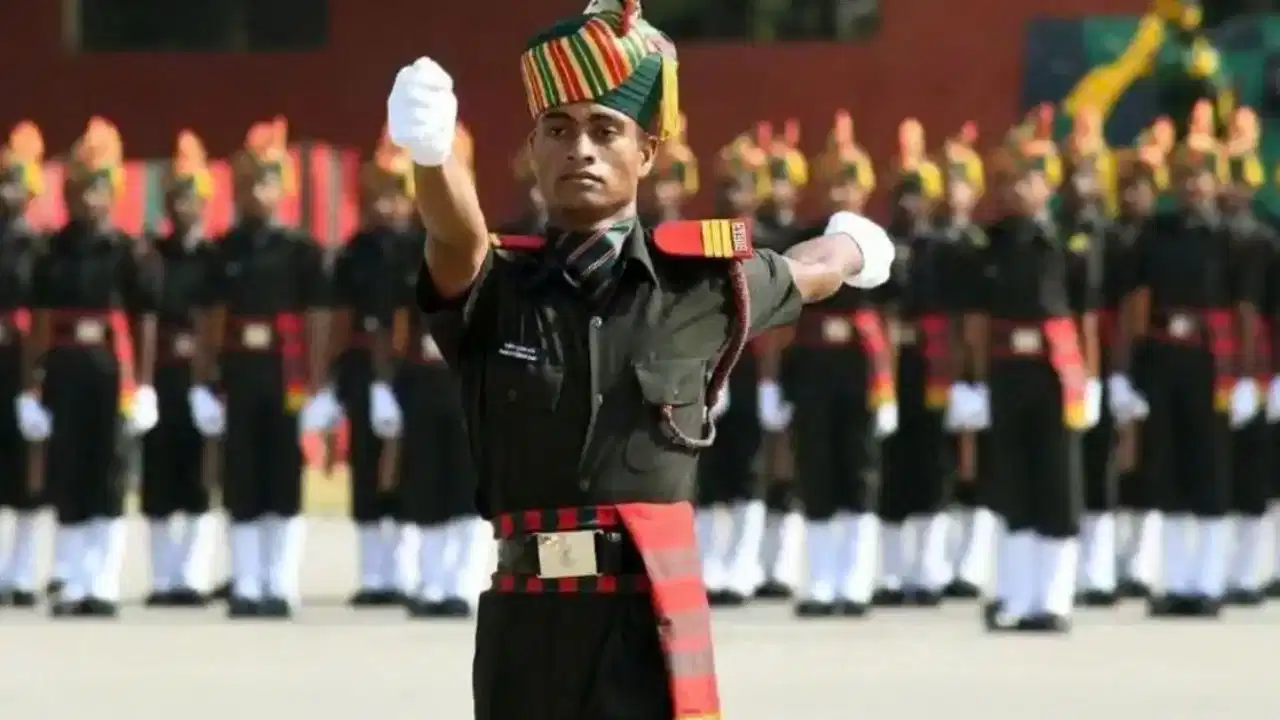
In a major change in the Agneepath scheme, the government has decided to give the fire fighters the option of two years of additional service after four years of service. Earlier, after completion of four years of service, only a maximum of 25 percent of Agniveers got a chance to become regular soldiers, while the remaining 75 percent of Agniveers had to leave the service. Now the question is being raised that why did the government need to make this change and can the path of permanent job be opened for the firefighters after completing six years of service.
Tezzbuzz Desk – According to sources, there were five major challenges before the Defense Ministry and the Home Ministry regarding the future of Agniveer. On one hand there was the question of the needs and recruitment system of the army, while on the other hand the Home Ministry was faced with the challenge of creating employment opportunities for the firefighters in forces like CRPF, BSF, CISF, ITBP and SSB. Meanwhile, the time for completion of four years of service of the first batch of Agniveers was also nearing. In such a situation, by making changes in the Agneepath scheme, the government has found a way to give the option of two years of additional service to 75 percent of the firefighters.
Under the Agneepath scheme, the service period of Agniveers recruited in the army was fixed at four years. After completion of four years, a maximum of 25 percent of Agniveers were to get the opportunity to become regular soldiers, while the remaining 75 percent were to be out of the army. The biggest challenge before the government was the future of these 75 percent firefighters. For them, arrangements were made to provide employment opportunities in the Central Armed Police Forces and other government jobs, but in this entire process, the responsibilities of the Defense Ministry and the Home Ministry were different.
The Defense Ministry had to take decisions related to the need of the army, the number of soldiers, recruitment and service of firemen. At the same time, the Home Ministry had to create employment opportunities in the Central Armed Police Forces for the fire fighters leaving the army. According to sources, the challenge before both the ministries was how to strike a balance between the needs of the army and the future of the outgoing firefighters.
In order to provide employment to the fire fighters after leaving the army, the Home Ministry had made arrangements for 20 percent reservation in the Central Armed Police Forces. Under this, there was a plan to give opportunities to fire fighters in forces like CRPF, BSF, CISF, ITBP and SSB. However, announcing reservation and implementing it in the recruitment process were two different things. For this, it was necessary to make changes in the existing recruitment policy and rules of these forces. The challenge before the government was that the benefit of reservation should not be limited to papers only, but the fire fighters should get its benefit in the actual recruitment process.
According to sources, objections were also raised by some representatives of paramilitary forces on the system of reservation for Agniveer. The concern was that giving 20 percent reservation to Agniveers may affect the recruitment system already running in these forces and the employment opportunities of other candidates. On one hand, the government was faced with the challenge of providing employment opportunities to the firefighters, while on the other hand, it was also necessary to take care of the existing recruitment system and the interests of the candidates involved in it.
The pressure of time was also increasing regarding the future of Agniveer. The Home Ministry had planned to complete the process of necessary changes in the recruitment policy of the Central Armed Police Forces by March 31, 2027, but the four years of service of the first batch of Navy's Agniveers was to be completed on November 21, 2026. In such a situation, the date of termination of service of the first batch of firefighters was nearing and the process of preparing a new recruitment system was also going on. Changes were to be made in the recruitment process of different forces like CRPF, BSF, CISF, ITBP and SSB, for which the process of amending the rules and implementing them had to be completed.
According to the basic provisions of the Agneepath scheme, after completing four years of service, only 25 percent of the Agniveers were to get the opportunity to become regular in the army. The remaining 75 percent were to be out of service. As the time for the completion of the service of the first batch of Agniveers was approaching, the question of the future of thousands of soldiers was also in front. These Agniveers had received four years of military training and experience, but in case they were not regular in the army, arrangements for alternative employment had to be made for them.
The roles of Defense and Home Ministries were different in the entire system. The Defense Ministry had to decide how many soldiers were required in the army and how the process of regularizing Agniveers would proceed. The Home Ministry was to create employment opportunities for Agniveers in the Central Armed Police Forces. Therefore, the challenge before the Agneepath scheme was not limited only to the recruitment system of the army, but it was also affecting the employment of Agniveers coming out of the army and the recruitment policy of paramilitary forces.
Amidst these challenges, the government has decided to make changes in the Agneepath scheme and give the option of two years of additional service to the firefighters. In the new system, after the first four years of service, 25 percent of the firefighters will be regularized in the first phase on the basis of merit and prescribed selection process. The remaining firefighters will get the opportunity to continue serving for the next two years. In this way they will get another chance to continue their service in the army and become regular soldiers.
After completion of two years of additional service, Agniveers will get the opportunity to become regular soldiers if they wish and meet the prescribed selection standards. There is no fixed percentage limit for regularization in this second phase. This means that now the Agniveers will have the option of two years of additional service instead of being out of the army directly after four years.
According to the official announcement of the government, this change in the Agneepath scheme has been made after the recommendation of the three services and assessment of the performance of Agniveer in the last four years. In the new system, firefighters will get additional opportunity to continue serving in the army. However, becoming regular in the second phase will not be automatic. For this, it will be necessary to fulfill Agniveer's wishes and the prescribed selection standards. In such a situation, the path of regular job is definitely open after six years of service, but it cannot be considered as a guarantee of permanent job for all the firefighters.