
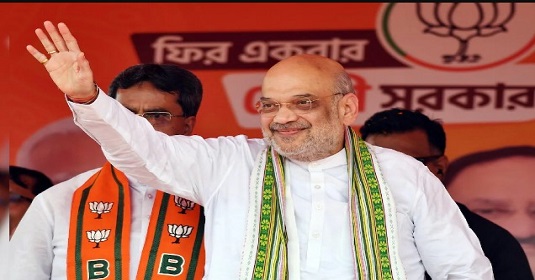
How did BJP conquer Bengal? Amit Shah’s 15 day ‘Mission War Room’, strategy meetings till 2 am changed the whole game, know

New Delhi/Kolkata. Union Home Minister Amit Shah is considered the party’s most influential strategist behind the BJP’s electoral expansion in the last decade. From the 2014 Lok Sabha elections to Uttar Pradesh, Bihar and now West Bengal, he has been recognized as a leader who has reshaped electoral politics through micro-management, booth level engineering and data-based strategies.
Deployment of ‘War Room’ model in Bengal-
This time, Amit Shah’s visit to the West Bengal elections was not limited to just campaigning, rather it was conducted like an “Operation War Room”. They were present in the state for about 15 days and strategically mapped North Bengal, Jangalmahal, border areas and industrial areas.
The BJP had already identified 100-120 “winnable” and 80-100 “competitive” seats. Shah’s entire focus remained on these areas, where organizational meetings continued till late night.
Election pressure through more than 50 programs-
A total of more than 50 programs were included in Amit Shah’s Bengal tour, which included-
30 public meetings
12 road show
organizational meetings
press conference
According to BJP, huge crowds were seen in their meetings and road shows. During the first phase of voting, Shah himself remained present in the war room and kept an eye on the entire process.
Election strategy at booth level-
Shah’s biggest strategic identity is considered to be booth level politics. This time too the BJP emphasized on the “Panna Pramukh” model, in which the target was to ensure 200-300 votes at every booth.
Candidates were also selected on the basis that they had a strong hold on their booth. Instead of big faces and celebrity candidates, preference was given to locally trusted leaders.
Lessons learned from the defeat of 2021-
BJP had got 77 seats in the 2021 assembly elections, but could not reach power. After this, major changes were made in the organization. Sunil Bansal was given the responsibility of the organization and emphasis was laid on re-establishing the grassroots structure.
This time the strategy reduced dependence on defector leaders and star candidates.
Changed election narrative-
BJP also changed the language of its campaign in this election. The focus was on issues rather than personal attacks.
Major messages of Amit Shah included-
Strict action against infiltrators
priority to women’s safety
Promise of fencing on borders
Claim to strengthen law and order
He said aggressively in many rallies that “hooliganism will end and the rule of law will be established.”
Booth management and voting strategy-
The center of BJP’s strategy was to strengthen the SIR (Voter List) and stop fake voting. The party tried to ensure that maximum voting in the early hours was by BJP supporters.
conclusion-
Amit Shah’s strategy once again showed that BJP fights elections not just as a political contest but as an organized ground-level operation. His war room style, booth management and data based strategy in Bengal elections has influenced the entire electoral scenario.

Comments are closed.