
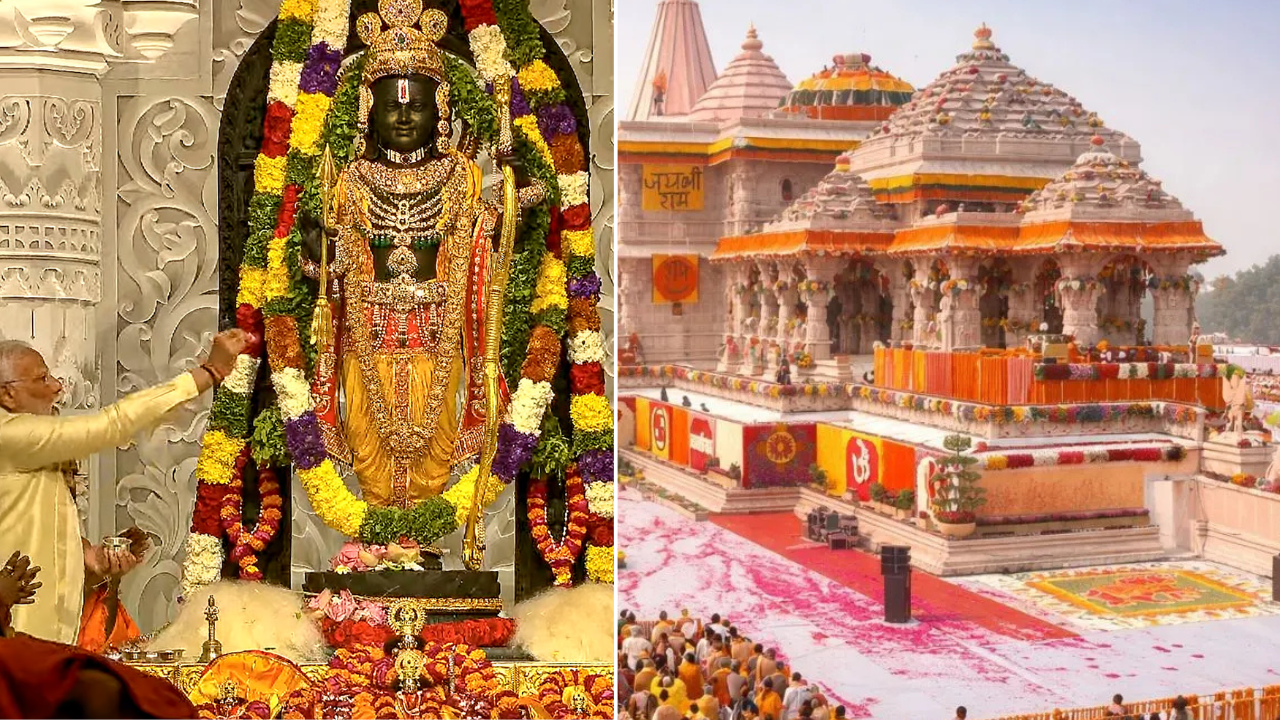
How did Shri Ram ‘Ramlalla’ of Ayodhya become? How did Lord Ram Janmabhoomi win the case by making him an ‘ignorant boy’? find out

On January 22, 2024, a historic ceremony was held at the Ram Temple in Ayodhya, where the idol of Lord Rama was enshrined. The Ram Janmabhoomi–Babri Masjid dispute dragged on in the courts for decades and resulted in many claims, research and legal developments. In this whole case the word “Ram Lalla” meaning the child form of Shri Rama became very important. The concept of “Ram Lalla Vrajaman” played an important role in court proceedings and ownership litigation. Therefore, it becomes important to understand what exactly the word Ram Lalla is and how it came to be at the center of the court debate.
Shree Ram Temple: An inspiring story of destruction to reconstruction, what is the history of Sriram Mandir
The Babri Masjid–Ram Janmabhoomi dispute was the longest-running religious and legal dispute in India. While the Babri Masjid is believed to have been built in 1528 by Babar’s Sardar Mir Baqi, several Hindu organizations claim that the site was formerly home to a Ram temple. In 1949, after the idol of Ramlalla was revealed in the mosque, the dispute went to court. On 6 December 1992, the Babri Masjid was demolished, leading to riots and tension across the country. Thereafter hearings continued in various commissions and courts. In 2010, the Allahabad High Court decided to divide the disputed land into three parts. But this decision was challenged in the Supreme Court. On November 9, 2019, the Supreme Court gave a historic decision to allot the entire land for the Ram temple and alternate five acres of land for the mosque.
The most important legal issue in the Ram Janmabhoomi case is the juristic person status given to “Ram Lalla”. An institution, organization or deity may also be considered a legal entity under certain circumstances under Indian law. Hence, the concepts of “Ram Janmabhoomi” and “Ram Lalla Virajaman” rather than the Ram temple became central to the judicial process. In an important petition filed in 1989, Bhagwan Shriram Virajaman and Asthan Shriram Janmabhoomi were made parties. A legal guardian or “next friend” was appointed for Ram Lalla as an ignorant child (minor).
This was the first decision of the Supreme Court on ‘Ichchamarana’! Aruna Shanbaug VS Union of India; Milestone in Indian Judiciary!
In this case, former judge Devkinandan Aggarwal, acting as Ram Lalla’s representative, filed a claim that the disputed land in Ayodhya is Ram Lalla’s native land and he has the right to own it. The argument highlighted the centuries-old religious significance of the site and the beliefs of the Hindu community.
The Allahabad High Court and later the Supreme Court also recognized Ram Lalla as a juristic person. The court accepted Ram Lalla’s right to the disputed land after considering religious beliefs, historical evidence and legal principles. Hence the concept of “Ram Lalla Virajman” became the decisive and important aspect of the entire case.

Comments are closed.