
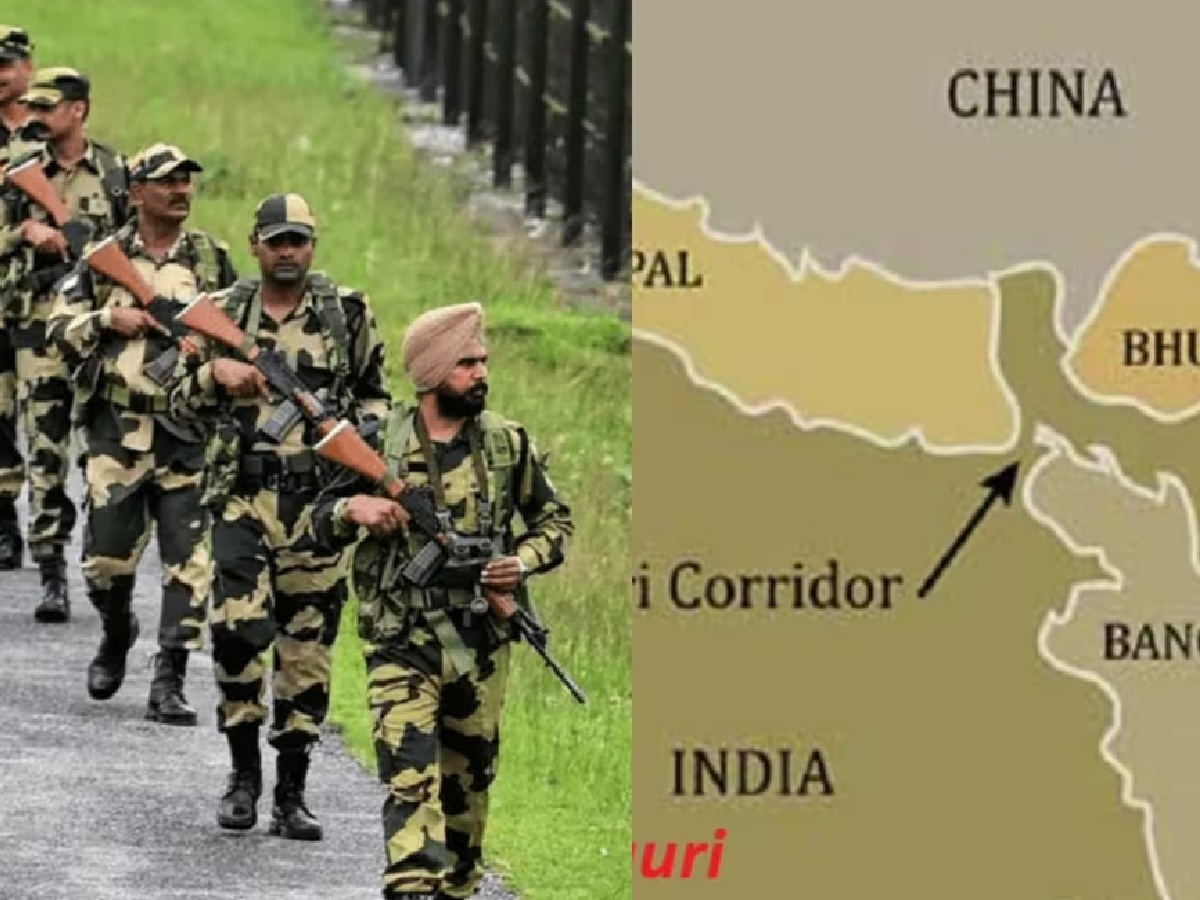
How India Transformed the Vulnerable Siliguri Corridor Into an Impenetrable Strategic Fortress:

For decades, military analysts and global defense experts viewed the Siliguri Corridor as India’s most critical geopolitical vulnerability—a fragile, bottlenecked strip of land in North Bengal measuring just 17 to 22 kilometers wide, infamously dubbed the “Chicken’s Neck.” The constant strategic fear was that a hostile adversary could sever this narrow land bridge during a conflict, effectively cutting off the entire Northeast of India from the rest of the mainland. However, through aggressive defense overhauls, massive infrastructure investments, and cutting-edge military deployments, India has completely rewritten this narrative, transforming what was once a fragile neck into a powerful, unbreakable “elephant’s trunk.”
The Geopolitical Significance and Strategic Importance of the Siliguri Corridor
The Siliguri Corridor is far more than a narrow geographical pass; it serves as the ultimate national lifeline connecting the Indian mainland to all eight northeastern states. Nearly every critical supply line, including major national highways, trunk railways, fuel pipelines, and military logistics routing provisions, must traverse this vital choke point. Recognizing that any disruption to this passage during wartime would cripple regional security and supply chains, the central government has dramatically shifted its strategic doctrine since 2014, moving away from a passive defensive posture toward a proactive, offensive deterrence model along India’s eastern frontier.
The Three-Garrison Shield and Advanced Technological Defense Systems
To secure this critical region against hostile threats from neighboring borders, the Indian military has established an impenetrable security ring known as the “three-garrison shield.” This defensive architecture features the Lachit Borphukan Military Station in Assam acting as a massive logistics hub, the Kishanganj Forward Base in Bihar enabling rapid troop deployment, and the Chopra Forward Base in West Bengal providing immediate tactical surveillance right near the international border. Furthermore, to counter looming threats from the nearby Chinese military presence in the Chumbi Valley and shifting geopolitical dynamics in Bangladesh, the Indian Army’s Tri-Shakti Corps has been heavily reinforced with state-of-the-art S-400 air defense systems, BrahMos supersonic cruise missiles, and advanced Rafale fighter jets.
Alternative Routes, Underground Rail Infrastructure, and Future-Proofing
Beyond securing the corridor itself, India is aggressively future-proofing its regional connectivity through multi-layered infrastructure projects. Authorities are currently developing secure underground rail networks to ensure uninterrupted, safe logistical transport even under heavy wartime bombardment. Simultaneously, alternative routes such as the Kaladan Multi-Modal Transit Transport Project through Myanmar are being fast-tracked to reduce total reliance on the Siliguri Corridor, ensuring that India’s northeastern frontier remains permanently connected, secure, and fully fortified against any external aggression.

Comments are closed.