
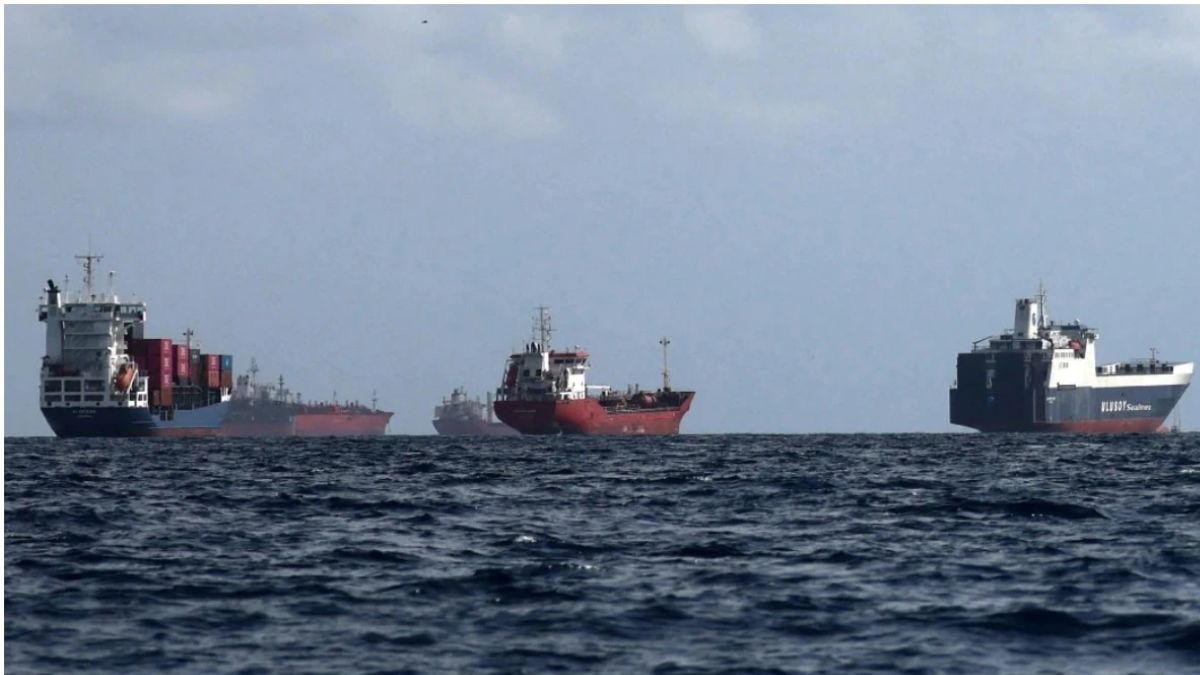
How long can the world’s busiest oil corridor hold as 135 ships are diverted from Iranian waters?

The United States Central Command (CENTCOM) on Thursday said that its maritime blockade targeting Iranian ports continues to be enforced across the Arabian Gulf and the Gulf of Oman, with coalition forces maintaining restrictions on vessels entering or departing Iranian coastal areas.
According to CENTCOM, the blockade applies to ships of all nationalities and is being implemented without discrimination. The command stated that since the operation began on April 13, US forces have disabled nine vessels that failed to comply with directives, redirected 135 ships that followed instructions, and permitted 42 humanitarian aid vessels to proceed through the restricted zone.
Focus on maritime enforcement
CENTCOM said the blockade covers all Iranian ports and coastal facilities located along the Arabian Gulf and the Gulf of Oman. Officials indicated that the operation is intended to regulate maritime traffic linked to Iranian ports while maintaining oversight of vessels operating in the region. The command emphasized that enforcement measures are applied uniformly regardless of a vessel’s flag or country of origin.
According to CENTCOM, freedom of navigation for vessels travelling to and from non-Iranian destinations through the Strait of Hormuz remains unaffected.
Latest action in Gulf of Oman
The latest operational update follows a recent enforcement action involving a Palau-flagged oil tanker in the Gulf of Oman. CENTCOM stated that the vessel, identified as M/T Settebello, was disabled on June 9 after allegedly violating blockade restrictions by attempting to transport oil from Iran. According to the command, US forces issued repeated warnings and directions before taking action. Officials said precision munitions were used to target the vessel’s engine room after the tanker failed to comply. The incident marked one of several enforcement operations carried out since the blockade was introduced.
Humanitarian vessels continue to receive clearance
US military officials have maintained that humanitarian shipments remain exempt from blockade restrictions, subject to inspection and approval procedures. CENTCOM reported that 42 vessels supporting humanitarian aid operations have been allowed to transit since the blockade was implemented. Officials said humanitarian traffic continues to be assessed separately from commercial maritime activity covered by the operation.
Blockade enters third month
The maritime blockade was announced by CENTCOM on April 12 and formally implemented on April 13 following a presidential proclamation. Since then, coalition naval and air assets have continued patrol and enforcement activities across regional waters.CENTCOM said the number of redirected vessels has steadily increased as ships comply with operational directives issued by coalition forces. The command has indicated that enforcement measures will continue against vessels that fail to follow instructions while operating in areas covered by the blockade.
What happens next?
Attention is now expected to remain focused on how the blockade affects commercial shipping, energy exports and maritime traffic in the region in the coming weeks.
CENTCOM has indicated that enforcement operations will continue against vessels that fail to comply with coalition directives while approaching or departing Iranian ports. Military officials are also expected to maintain patrols across the Arabian Gulf, Gulf of Oman and surrounding waters.
Shipping companies and vessel operators are likely to continue adjusting routes and operational plans in response to the restrictions. Humanitarian shipments are expected to remain exempt from the blockade, subject to inspection and approval procedures.
Meanwhile, international observers will closely monitor any further enforcement actions, changes in regional maritime activity and potential diplomatic developments related to the ongoing operation. The situation remains fluid as the blockade enters its third month and maritime traffic continues to adapt to the restrictions.

Comments are closed.