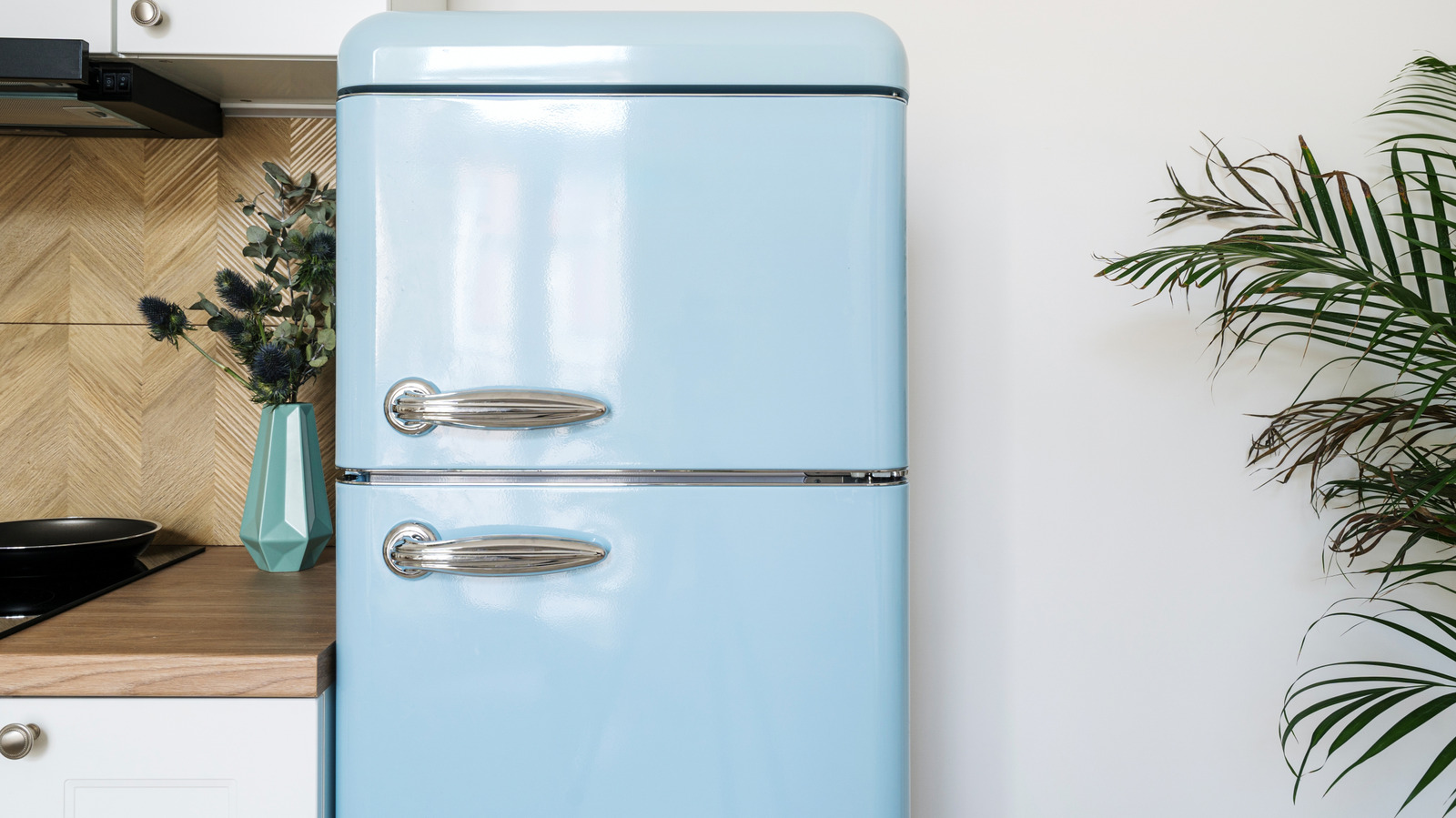
Refrigerators are one of the steadier energy draws in your home. They fall well behind HVAC systems and water heaters, but refrigerators and freezers still account for roughly eight percent of residential electricity consumption, according to the U.S. Energy Information Administration. While knowing how much electricity a refrigerator uses can help you understand energy costs, that doesn’t necessarily tell you how much power they use. Electricity is a form of energy, and there is a difference between energy and power.
For example, it’s common to see power listed as watts, and energy listed as watt-hours. Power is a metric of what it takes for something that consumes energy to do the work it’s intended to do. For a refrigerator, the heart of the appliance is the compressor, which uses energy to compress the refrigerant and pump it throughout the system to keep the compartments at the right temperatures. The power it takes for a compressor to do that is measured in watts or amps.
Knowing how many amps a refrigerator uses helps you make informed decisions about what size circuit you need, or what size generator would be required to run one during an outage. Refrigerators come in many forms, and even use different compressor types, which all affect their power draw. The average top freezer refrigerator model is typically rated for 3-6 amps at 120V, not including the in-rush current for the compressor to start.
A refrigerator’s power consumption is dictated by its size, type, features, and usage
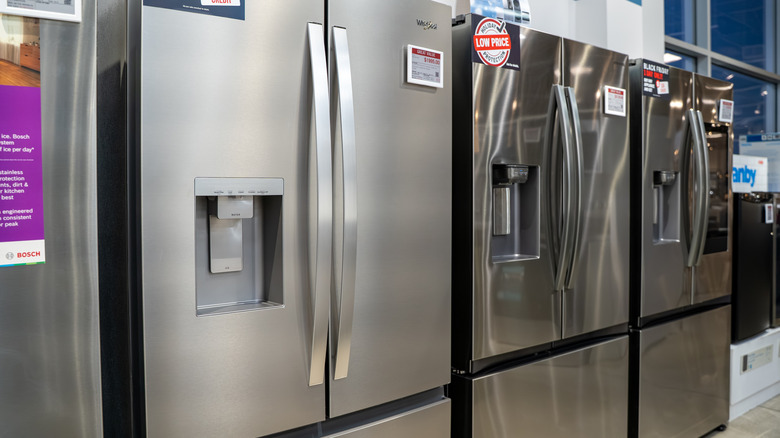
Many factors determine how much power a refrigerator uses, including its size (measured in cubic feet), its features (such as ice makers and water dispensers), and its compressor type. Refrigerators are often segmented by their class: mini-fridges, top- or bottom-freezers, side-by-side, commercial or reach-in, or even garage-ready. That overview can give you an idea of the power requirements, but even then, it’s not set in stone. A modern side-by-side inside a kitchen may use less power than an older or smaller, non-garage-ready fridge in a hot garage.
The compressor type and size have the biggest bearing on power draw, and there are several potential compressors a refrigerator could use. Those can include the tried-and-true reciprocating compressor that has been around for decades, or linear and inverter-type compressors that are aimed at higher mechanical efficiency. A compressor’s cooling capacity, measured in the BTU/h rating, as well as the horsepower rating of the motor, also play a factor in how much power it uses. To determine this, you’d have to look at the nameplate on the compressor, as many manufacturers don’t share this information in product specifications.
How you use your refrigerator matters, too. Things like ambient temperature and proper ventilation, minimum distances from walls, the frequency of the doors opening and closing, and maintenance all impact how hard a compressor has to work to maintain the temperature.
Typical amperage, circuit sizes, and generator considerations
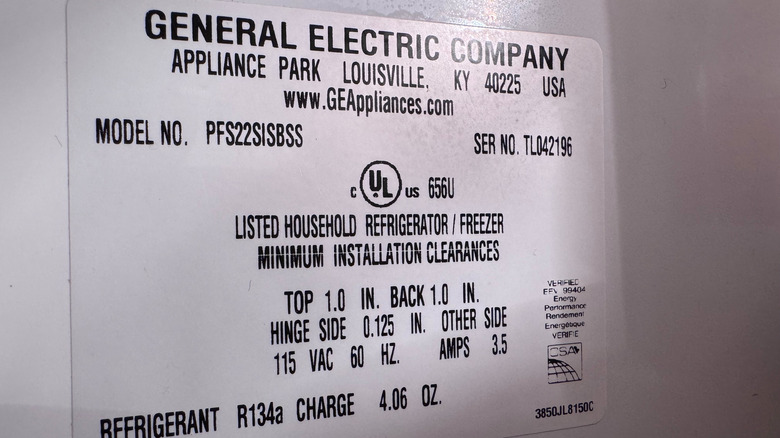
In the U.S., residential refrigerators operate at single-phase 120V; commercial units often run at 208-230V, still single-phase, and larger remote-condensing or walk-in systems can be three-phase. Manufacturers rarely publish a wattage figure, but will list amperage and the required 15A or 20A circuit in the electrical requirements for a given model. Most compressors have a max continuous amperage, and some manufacturers may provide that.
Amperage is not the same as watts, but it loosely defines a refrigerator’s power requirements. An amperage of 3-8 amps for top freezer models and side-by-sides is common. Determining the exact power requires measuring the current while the refrigerator is running, and then multiplying the voltage by the amps (V x A = W).
Manufacturers recommend allocating a dedicated 15A or 20A circuit for a refrigerator. While it’s technically possible to run a freezer and refrigerator on the same circuit, it’s not advisable. This is because motors have a locked rotor amperage (LRA) rating, which is the brief surge of current required to start the motor, and it can be six or seven times the operating current. If two or more compressors cycle on at the same time, or if one has a fault, it would most likely trip the breaker, and both appliances would lose power.
If you plan on running a refrigerator on a generator, first figure out the running watts and starting watts, and then round up, which will help you choose the right generator. A 1,200W generator with 1,500 starting watts would probably run a small refrigerator, but nothing else. At minimum, we recommend a generator with running wattage of 2,000, and moving up to 2,500 or 3,500 would give you even more headroom.