
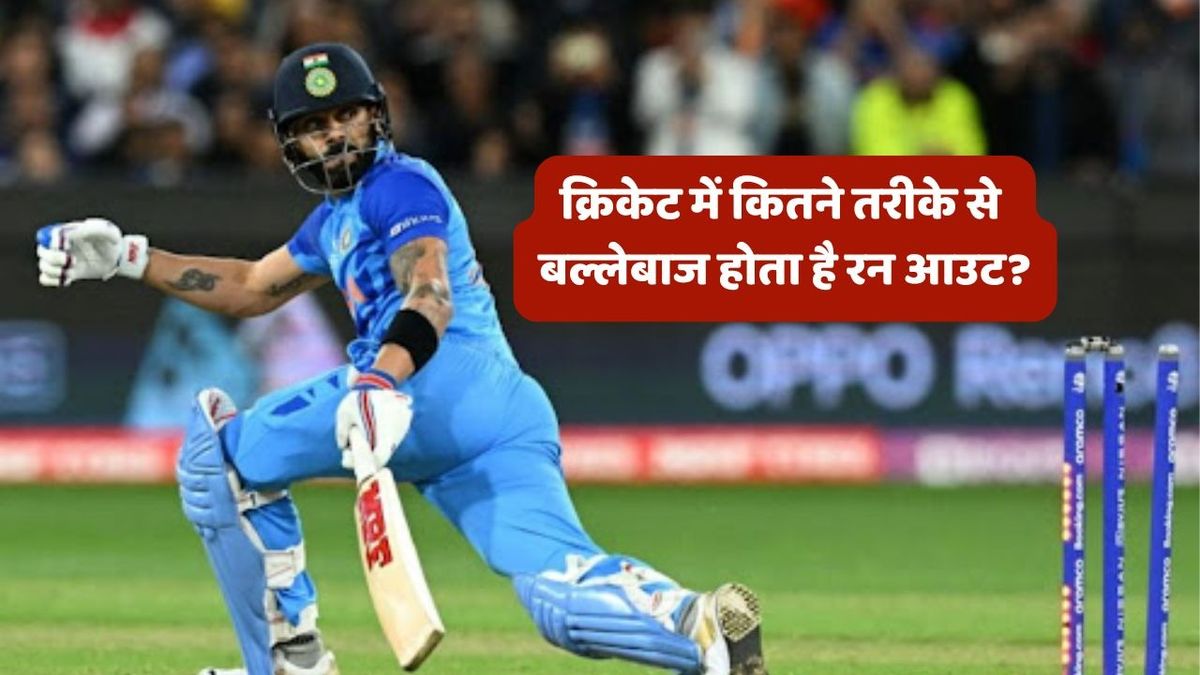
Explainer: In how many ways can a batsman be run out in cricket? Even fans will not know about this

How many ways can a Batsman be Run-Out: Cricket is played according to its own rules. Many rules have been made to play this game, which also includes rules for getting players out. A batsman can be out in many different ways, one of which is run out. But very few fans would know that there are many ways to get run out in cricket. In cricket, a batsman can be run out mainly in two ways, but under the rules of the Marylebone Cricket Club (MCC), a batsman can also be run out in some rare circumstances. Some cricket fans are not even aware of this, so let us know in this article about all those rules due to which a batsman can be run out.
normal run out – All cricket fans know how a batsman gets run out. This is the most common way to get run out in cricket. When the batsman plays a shot and both the striker and non-striker batsman run to score runs, but before reaching the crease, the fielder of the opposing team hits the ball on the wickets and the wickets get scattered, then the batsman who is out of his crease at that time is run out. Apart from this, there are many other rules also.
mankading run out Although this rule of cricket is absolutely legal, it often remains controversial. It is also linked to the spirit of sports. However, now ICC and MCC have put the Mankading rule in the category of a normal run out. According to this rule, when the bowler is ready to bowl the ball, but before the ball is bowled, the non-striker batsman leaves the crease to run, then in such a situation the bowler can run out the non-striker by blowing the wickets of the non-striker. This rule has been seen many times in the history of cricket, on which controversy has arisen. The Mankading rule has been used by both Indian men and women players. This rule applies in IPL also and has become a controversy.
Run out on no-ball – In cricket, on hearing the name of no-ball, the batting team jumps with joy, while the problems of the opposing team increase. Actually, a batsman can neither be caught out, nor bowled out, nor out leg before wicket (LBW) on a no-ball. The main way for the opposing team to get the batsman out is to run him out. That is, if a batsman tries to steal a run on a no-ball and comes out of the crease, and at that time the wicketkeeper of the opposing team or a fielder hits the ball on the wicket, then the batsman is declared run out and he will have to go to the pavilion. However, apart from this, on a no-ball, the batsman can also be declared out under the rules of ‘obstructing fielding’ or ‘hit the ball twice’.
Run out on wide ball – When the umpire declares a ball wide, then the batsman cannot be caught out, bowled out or LBW on that ball. However, he can be run out and stumped. If the batsman tries to steal runs on a wide ball and comes out of the crease, then if the wicketkeeper or any fielder breaks the wicket, then the batsman is run out. But if the batsman is not trying to score runs, but is just away from the crease due to playing a shot or going out of the crease and the wicketkeeper scatters the bails, then he will be considered stumped out, not run out.
Run out due to batsman’s mistake – The batsman standing at the other end (non-striker end) can also lose his wicket if the batsman plays a shot. If the striker batsman plays a shot in front and the ball hits the wicket at the non-striker’s end directly, causing the bails to fall and at that time the non-striker batsman is out of his crease, then if the ball hits the wicket directly without touching the bowler’s hand or body, then the batsman is not considered out. But, if the ball hits the wicket after hitting the bowler’s hand or any part of the body and the bails disintegrate, then the non-striker batsman is considered to be run out. It is declared.
Run out by wicketkeeper – If a batsman runs out of the crease to score a run after playing a shot and the wicketkeeper catches the ball and hits it on the stumps, then he is considered run out because the batsman has tried to score a run. This will not be called stumping out. Stumped out occurs when the batsman simply remains outside the crease without attempting to score runs and the wicketkeeper hits the ball on the stumps. The credit for run out goes to the wicketkeeper or the fielder, while the credit for stumped out goes to the bowler, even if the wicketkeeper did the stumping.
Also read: IND vs ENG: These 3 players were dropped from England ODI series, one has scored 2 centuries in just 3 matches
run out on bye or leg-bye – When the ball hits the batsman’s bat or body and goes away and the batsman runs to score runs, then if the wicketkeeper or any fielder hits the ball directly on the stumps while the batsman is out of the crease, then the batsman is declared run out. Whether the ball hits the bat or the pad, the batsman has to be run out if he is out of the crease.
Also read: ‘He attacked from the first ball…’ Vaibhav Suryavanshi’s coach gave a big statement on his stormy innings against Sri Lanka, know what he said?

Comments are closed.