
On the day of Diwali, everyone leaves no stone unturned in lighting their house. But the next morning the condition of the house is almost the same every year. Melted candle wax has settled on the parapet, lamp oil has spread near the door, and the colors of yesterday's rangoli in the courtyard have settled on the floor. In a hurry, most people reach for lemon or vinegar first. If the floor is made of marble, then this mistake is the most serious. This can cause significant damage to your floors. So let's know about this-
Keep these two things in mind before starting
When you start cleaning after Diwali, first identify what the surface is made of. Cleaning of natural stones like marble, kota and granite and ceramic or vitrified tiles is not the same. Vinegar can only be used on ceramic and porcelain tiles, not natural stone, as its acidity will damage the stone. The same thing applies to lemon. Secondly, first try any new method on a corner or the area under the bed.
how to clean wax
Often people start rubbing the wax to clean it. But rubbing wet wax makes it spread further. Let it set completely. If you are in a hurry, fill a plastic bag with ice cubes and keep it on the wax for a few minutes. As soon as the wax hardens, pick up pieces of it with a plastic scraper or old card. Do not scrape with a knife or steel spoon, marble and tile may be scratched. Whatever thin layer is left, blow hot air from a hair dryer on it and as soon as it melts, blot it with a paper towel. Finally, mix mild dishwash in lukewarm water and wipe.
How to clean lamp oil stains
If the oil is fresh, first soak it, do not wipe it. Wiping makes it spread further. Sprinkle some talcum powder or chalk powder on top and leave it for some time, then dust it off. On the other hand, lukewarm water and dishwash liquid is usually sufficient on tiles.
More attention needs to be paid while cleaning marble. There are small holes in marble, through which oil penetrates inside and darkens the color of the stone. Make a thick paste by adding some water to baking soda. Lightly wet the stained area with clean water and apply this paste on it, about half a centimeter thick, spreading it a little beyond the stain. Cover the top with plastic foil and tape the edges. Let the paste work for 24 to 48 hours, then remove the foil, let it dry completely, and scrape it off with a wooden or plastic scraper and wipe it off with clean water. If the stain is not removed in one go, repeat the same process.
How to clean rangoli colors
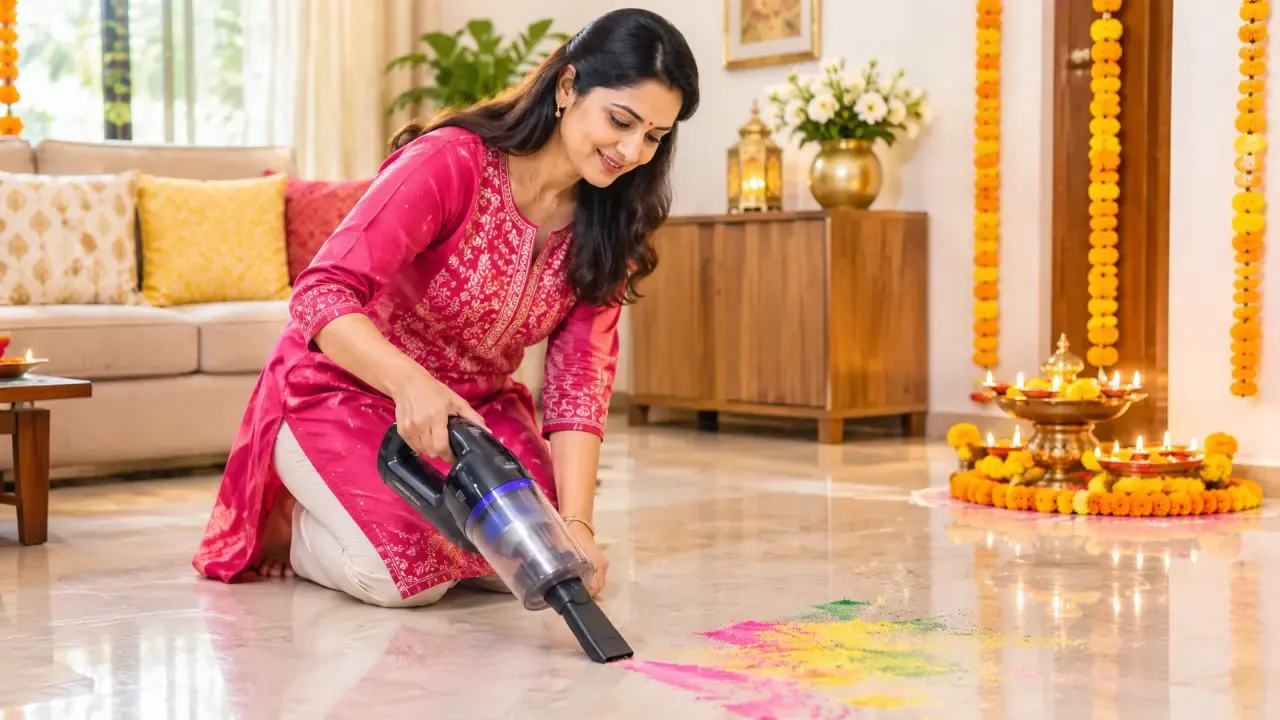
The best way to clean rangoli colors is to first remove the dry colors with a broom or vacuum cleaner. If applied directly with a wet mop, the color will spread with water and form a large stain. After this wipe with mild detergent water. Do not let the colored water on the floor dry on its own, keep wiping it with a dry cloth, otherwise marks remain on the shiny tiles. If color has settled in the joints (grout) of tiles, apply baking soda paste and rub it with an old toothbrush.
don't make these mistakes
Never mix bleach and ammonia cleaners together. This produces poisonous gas.
Do not apply acid, lemon or vinegar on marble, kota or granite.
Do not pour boiling water on the floor.
FAQ
Can vinegar and lemon be used on marble floors?
No, vinegar and lemon are acidic, which will damage the natural marble stone and dull its shine.
How to remove frozen wax from marble?
First harden the wax with ice, then remove with a plastic scraper or card. Melt the remaining layer with the heat of a hair dryer and clean it with a paper towel.
How to remove stubborn and deep oil stains from marble?
To absorb oil, make a thick paste of baking soda and water and leave it on the stain covered with plastic for 24 to 48 hours, so that the oil gets removed completely.
What is the right way to clean dried rangoli colors from the floor?
To clean the rangoli, first remove the dry color with a broom or vacuum cleaner, so that the color does not get absorbed into the pores of the floor after coming in contact with water.