
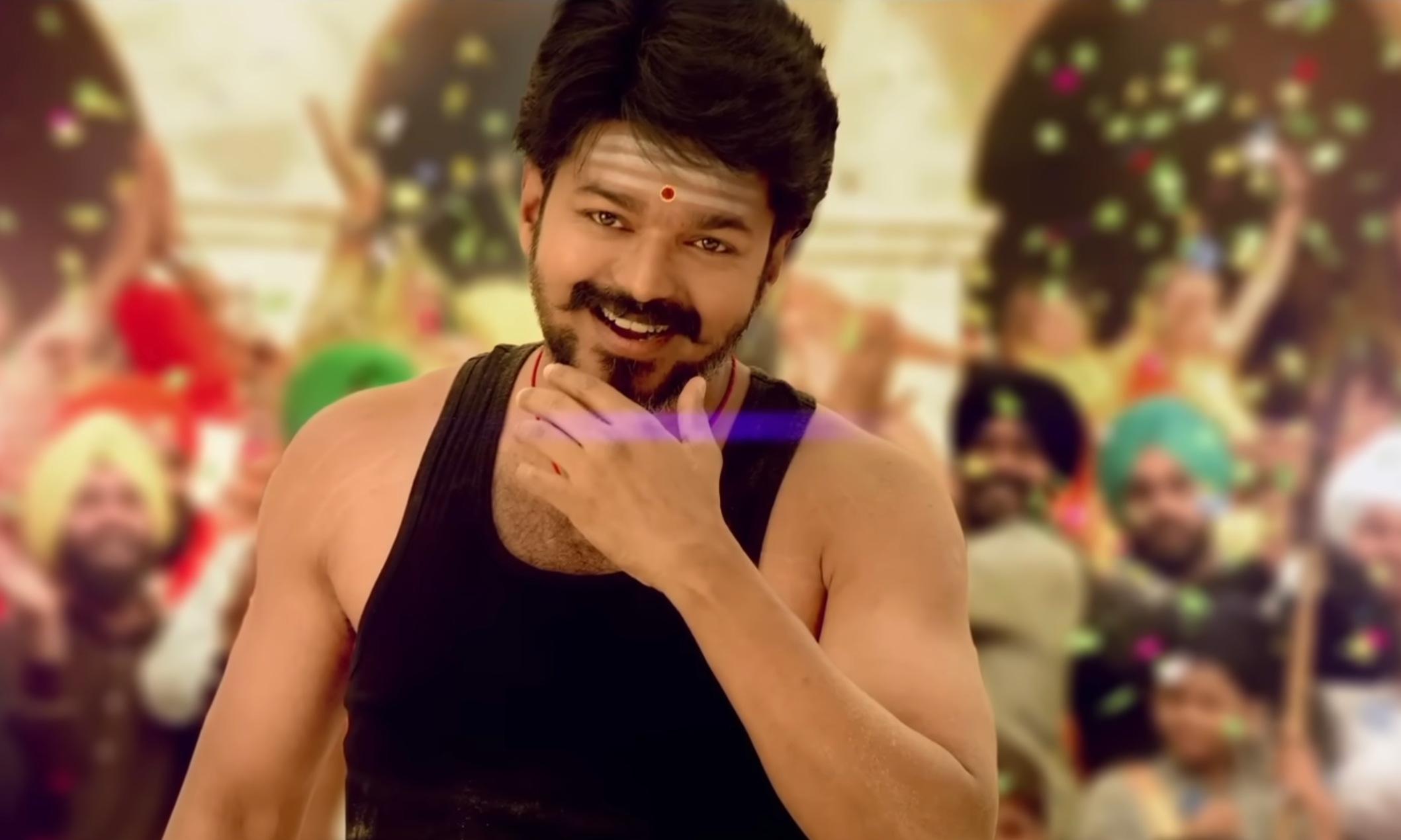

“Sila paerin peyar thaan oru aalumai perumaamae” goes the line in the song Beast Mode from the film Beast (2022), where Vijay plays Veera Raghavan — the character on whose trademark suit the current Tamil Chief Minister’s public image is modelled. The line means: only the names of a few get to the place of power. With what has unfolded in Tamil Nadu over the last two months, the line might read like premonition — or, in the trending term, manifestation. But it was neither an accident nor a prophecy. It was careful planning, a strategy embedded so deep in the DNA of Tamil politics that it feels like fate. The lines didn’t predict what happened. They were aimed to create it.
The reason Vijay came up with not one but multiple songs during his election campaign has a deep-rooted history that dates back to the 1950s, to a moment when the Dravidian movement first understood that the darkened theatre was a more powerful political arena than any public maidan.
The Dravidian invention
The leaders associated with Periyar EV Ramasamy’s Self-Respect Movement understood early that cinema could bypass elite-controlled media and directly reach working-class audiences. Rather than relying only on public meetings and pamphlets, they used films and theatre to communicate ideas of rationalism, anti-caste politics, and social justice.
CN Annadurai, founder of the DMK, used drama and screenplay writing to popularize Dravidian ideology. M Karunanidhi expanded this approach through powerful dialogues and scripts — his work in Parasakthi (1952), delivered memorably by Sivaji Ganesan, became a landmark in Tamil cinema by openly criticising religious orthodoxy, caste oppression, and state failures.
Also Read: Vijay govt 1-month report card: Coalition stability offset by fiscal strains | Interview
The song was the sharpest tool in that kit. It could carry ideology further than a pamphlet, lodge itself deeper than a speech, and be hummed by someone who had never once been to a party meeting. The DK and DMK did not merely use cinema, they understood it as a form of politics.
The name that trumps all others in this tradition is Pattukkottai Kalyanasundaram. When Annadurai swept to power in 1967, it was on the back of years of cinematic groundwork — and Kalyanasundaram had provided the ammunition. His song for MG Ramachandran in Thirudathe (1962) had lines that cut directly at the Congress government: “Kodukkura kaalam nerunguvadhaal, ini edukkura avasiyam irukkaadhu. Irukkiradhellaam podhuvaai ponaal, padhukkura velaiyum irukkaadhu” — “As we are nearing the age of giving, we don’t have to steal. When everything becomes common for all, no one has to hoard.” It was an unmistakable dig at Brahminical hegemony and Congress corruption. Not a political pamphlet — a song on a cinema screen.
MGR wields the weapon for DMK
Nadodi Mannan (1958) was nakedly propagandist, with colour sequences of the DMK flag and its rising sun symbol, presenting the good guys as waiting to overthrow corrupt rule — a thinly disguised stand-in for the Congress Party. It inaugurated MGR’s personal political programme with songs like Thoongathe thambi thoongathe — “Don’t sleep, young brother.”
Also Read: Why CM Vijay is clinging to TN’s ultimate political tradition, holding home portfolio
The quintessential MGR song Naan Aanaiyittal from Enga Veettu Pillai (1965) carried the same charge with greater lyrical precision: “Ethirkaalam varum, en kadamai varum, indha kootathin aatadhai ozhipen. Pothu neethiyilae, puthu paathaiyilae, varum nallor mugathilae vizhipen” — “When the future arrives, so will my duty. I will then annihilate the atrocities of this crowd. With social justice and a new path, I will look at the face of the good people.”
It was Pulamai Pithan, Vaali, Muthulingam, Kalyanasundaram, and others who gave MGR this arsenal. The lyrics were invariably left-leaning, appeasing the working class, vowing to end the evils of the ruling order — Congress until 1972, then the DMK after he was expelled for rebelling against the party’s mismanagement of funds. He eventually became chief minister in 1977.
MGR: The hijack and the apotheosis
Then came MGR’s solo adventure — and the tradition was taken hostage. After MGR was sacked from his posts in DMK, he began his own party Anna Dravida Munnertra Kazhagam. Since then through films like Ulagam Sutrum Valiban (1973), Idhayakkani (1975), and Netru, Indru, Naalai (1974), MGR carefully built an on-screen image of a protector of the poor, a fighter for justice, and a man of integrity. He then turned the same weapon he had been using for DMK against them.
The visual language of these songs was as deliberate as the lyrics. MGR hugging poor men. MGR receiving blessings from mothers. MGR adored by children at his feet. The philosophical and didactic nature of the songs earned him the name Vaathiyar — teacher — and the songs themselves came to be called Vaathiyar songs. Each song was custom-made for MGR to convey his beliefs and his ideals. People believed in him blindly. They believed he was their saviour. His film songs became a bible by which they led their lives.
Also Read: Can TN’s new actor-CM Vijay turn euphoria into governance? | AI With Sanket
This is the crucial turn. What Annadurai and Karunanidhi had built as a collective ideological instrument — cinema as the voice of a movement — MGR converted into the vehicle of a persona. The saviour was no longer the Dravidian idea. The saviour was the man himself. When he broke with the DMK and formed the AIADMK, he took the entire emotional infrastructure with him. The masses followed the man, not the movement.
Rajinikanth: The tease without the follow-through
MGR was succeeded in this tradition by Rajinikanth — but with a crucial and revealing difference. Rajinikanth used the song effectively as a communication channel between himself and his fans, but he never quite established an opposition. He never named an enemy. Vaali and Vairamuthu aided him in a different kind of political conversation — one directed inward, toward the fan, rather than outward at a corrupted power.
Take Athaanda Ithaanda from Arunachalam. At one point in the song, Rajinikanth sings at a Shiva Lingam, but the camera is placed so that he appears also to be addressing the audience, breaking the fourth wall. The lyrics go: “En kanirandaiyum kaapaathum kanimaiyum neethaan. En thozhgalilae muzhubalamaai ullavanum neethaan. En nenjil vaazhnthuvarum thairiyamum neethaan. En sollil kudi irukum sathiyamum neethaan” — “You are the eyelids that protect my sight. You are the one who exists with full strength on my shoulders. You are the courage that lives and grows in my heart. You are the truth that resides in my words.” The stanza ends: “The only compilation I will have till the end will be you” — the god, the fans, inseparably merged.
It was spiritual, not political. And Rajinikanth’s hesitancy about a full political commitment was reflected in the songs themselves. Muthu (1995) has the line: “Katichiyellam namakethuku, kalaathin kayil adhu irukku” — “Why do we need parties? It is all in the hands of time.” Seven years later, Baba (2002) had the same stance in different words: “Katchikalai padhavigalai naan virumba maataen. Kaalathin kattalayai naan marukka maataen” — “I don’t like parties and posts, but wouldn’t deny the orders of time.” The songs were wisdoms, not weapons. Warm invitations, never declarations of war. Rajinikanth used the form but refused the final commitment — and so the political project never arrived.
Vijay: A different architecture
And then there came Vijay. The Chief Minister of Tamil Nadu began hinting at his political ambitions relatively late in his career, around the time of Tamizhan (2002), a socio-political drama about corruption and the need for individual contribution to good governance, written by his father SA Chandrasekar. But even before the ideology arrived fully formed, the intention was legible. Vaseegara (2003) had a unique choreographic choice: Vijay and Sneha danced to Nenjam Oru Murai in exactly the manner of vintage MGR and Saroja Devi. It was an act of conscious self-placement within a lineage, a young actor announcing, in gesture if not yet in lyric, which tradition he intended to inherit.
Then in 2005, with Sivakasi’s Kodambakkam Area, Vijay touched upon the surface with humour. The film’s director Perarasu wrote the lines of the song that has yet again found some takers after the election. “Staarungka naangalum ottu kettaa yaarumae jaathithaan paappatilla. Ezhaikka pazhaikka nenachiputtaa naalaikku neengalum CM thaan. Vendaaamada vivagaaramthaan, aatchi vanthaa athikaramthaan (If even stars like us ask for votes, nobody looks at caste. If the poor and the downtrodden set their minds to it, tomorrow you too can be CM, No need for unnecessary drama, when power comes, authority follows)” goes the line of the song that has gone viral after Vijay’s victory.
Also Read: How Vijay glided effortlessly from Kodambakkam to Fort St George
Unlike MGR, who embedded political messaging into films right from the start, Vijay only found his political voice on screen in the early 2010s. But when the songs arrived, they arrived with more problems for him. The first time Vijay became a bit bold about his political aspirations was with Thalaiva (2013)–the title itself was enough to betray his ambitions. The film also became the starting point for his release woes. From then on, most often than not, all of his releases faced problems ahead of his release. Na Muthukumar wrote all the lyrics of the film, but it was the track Thalaiva that got the attention.
“Pirara thunban than thunbam pol enninaal, varalaatril oru thalaivan uruvaaguvaan. Erithaalum puthaithaalum azhiyaamale varungaalum paersolla uramaaguvaan. Un ratham en ratham vaerae illai, uthirathil vithaithayae anbin sollai (If one feels another person’s suffering as if it were their own, a leader will be born in history. Whether burned or buried, he will not perish; he will become the nourishment that lets future generations speak his name. Your blood and my blood are no different; with your very blood, you have sown the message of love),” goes the lines. Now, these are not lines written for a character in a film, but a star who is aiming for much more than a box office success.
Claiming the Tamil identitiy
Then came Alaporaan Tamizhan in Mersal. Written by Vivek, the song is Vijay claiming the quintessential identity any politician in the state should possess–the identity of being a Tamilan.
“Thamizhan da ennalum. Sonnalae thimirerum. Kaathoda kalanthalum. Athu thaan un adayalam (A Tamil, always. The very mention of it stirs pride within. Even if you dissolve into the winds, That is the mark by which you’ll always be known),” are not just song lines, but a sort of political manifesto. Vijay began to jot out his tenets of his brand of politics one lyric at a time. This also started an enduring collaboration of Vivek and Vijay. Vivek went on to write Oru Viral Puratchi for Vijay’s Sarkar, his blatant proclamation of his political ambition.
Oru viral puratchiye irukkudhaa? Unarchiye? Naam ondraai kelvigal kettaale adakkum kai angu nadungaadho? Eliya manithan ezhuthum vidhiyile puthiya ulagam thodangaadho? Karai vettigal angangu silai, engal viyarvaiyum raththamum vilai, verum vedhanaiye ingu nilai, ezhu maatra paravaiye (When we question together, are the hands of oppressors tremble? Doesn’t a new world begin in the destiny written by the simple common man? Statues for the coloured veshtis everywhere, while the price of our sweat and blood is only suffering. Pain alone remains the condition here—rise, O bird of change!)
The character in the film takes the back seat. This was Vijay using the form directly for political messaging. The song invoked the Dravidian tradition explicitly—the working-class appeal, the call to collective action, a move against the established leader. But it was unambiguously tied to Vijay himself.
The tradition perfected
The full arc becomes clear only in retrospect. From the choreographic gesture in Vaseegara to the direct political manifestos of Mersal and Sarkar, Vijay had been methodically building a political identity across cinema. Each song added a layer, each film reinforced the next. By the time he formally entered politics in March 2023, the work was already complete.
Going back to the line from Beast Mode —”Sila paerin peyar thaan oru aalumai perumaamae“— it was not a prophecy. It was a blueprint. Vijay had learned what the Dravidian movement invented in the 1950s and what MGR had weaponized in the 1970s: that cinema could construct political reality.
The tradition that began as a collective voice, the movement speaking through cinema, had been perfected into a singular project. The tool remained the same. The user had simply changed. Whether this represents the tradition’s culmination or its corruption depends entirely on what happens next in Tamil Nadu.

Comments are closed.