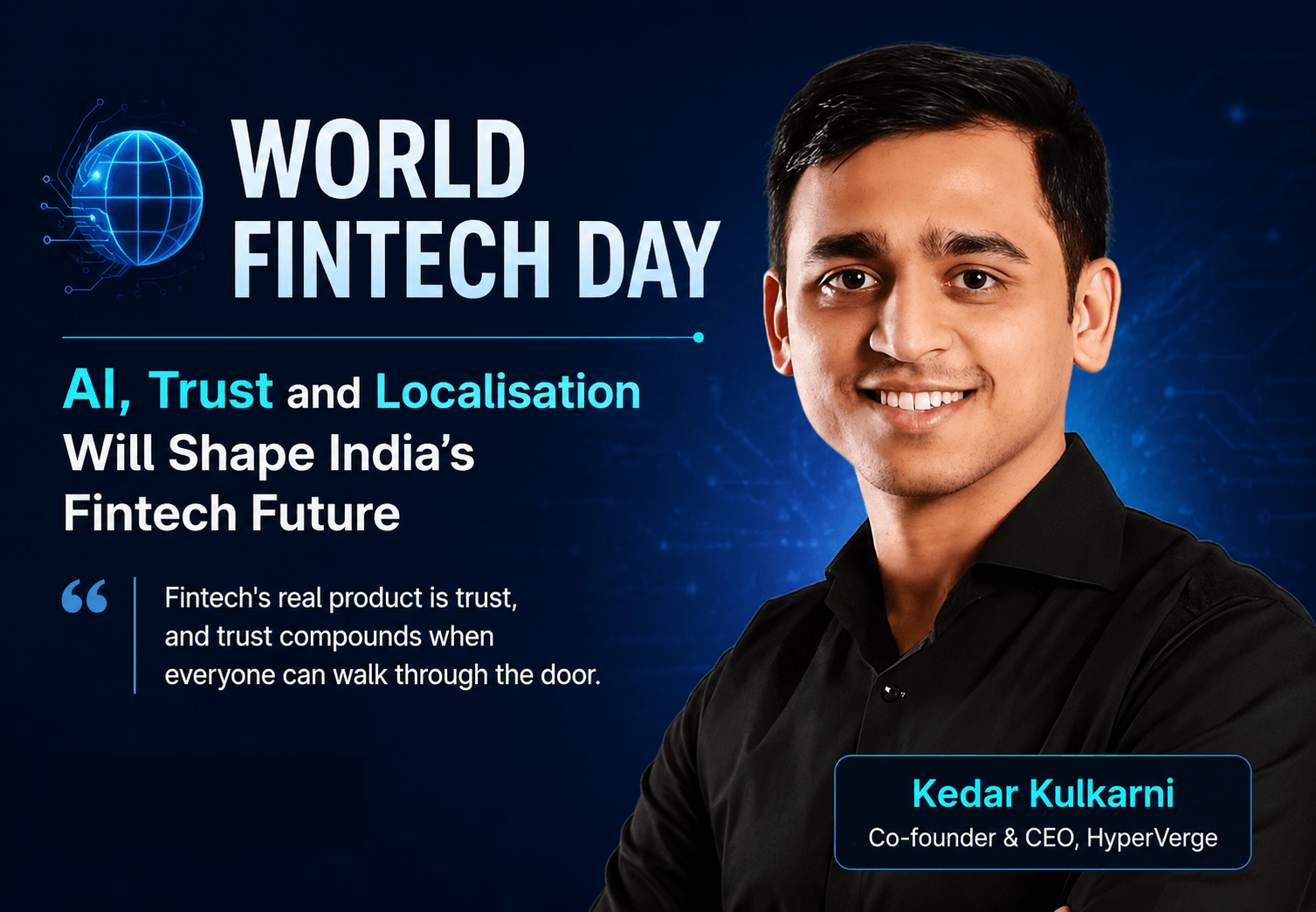
As India’s fintech ecosystem continues to evolve, artificial intelligence, multilingual experiences and secure identity verification are emerging as the key drivers of financial inclusion, according to Kedar Kulkarni, Co-founder and CEO of HyperVerge.
Sharing his views ahead of World Fintech Day, he said India’s fintech story has become increasingly complex as innovation accelerates across payments, lending, digital identity and financial services.
He noted that regulatory support from the Reserve Bank of India (RBI) has encouraged technology that expands financial access, while AI is now playing a growing role throughout the customer journey.
He said AI has the potential to transform financial services, but the technology must reflect India’s diverse population.
He pointed out that many AI models have been trained primarily on non-Indian datasets, creating challenges when onboarding customers across different regions, languages and demographics. “Every year, the story of Indian fintech gets a little harder to summarise, because the innovation is happening everywhere at once. Regulatory bodies like the RBI have consistently encouraged technology that brings people from even remote areas into the financial system, and AI is now fuelling that effort at every touchpoint of the financial journey.”
He added that fintech companies are increasingly developing AI systems designed to perform consistently across race, age and gender, helping improve accessibility and reduce bias.
He identified language as one of the biggest barriers to digital financial inclusion.
According to HyperVerge’s data, nearly 65% of video KYC users come from Tier III cities and towns, with Hindi, Telugu, Marathi, Kannada and Tamil among the most widely used languages during onboarding. He said, “Localisation is doing more for inclusion than almost anything else in the stack.”
He said multilingual onboarding experiences are helping financial institutions reach customers who might otherwise struggle to access digital financial products.
He said deepfakes and identity theft have increased alongside advances in AI, making real-time verification essential for protecting both businesses and consumers.
According to him, modern verification technologies not only prevent fraudulent onboarding but also help address longstanding issues, including unclaimed bank funds linked to outdated KYC records. He said, “By the next World Fintech Day, I expect the sector will have carried inclusion further than any of us predict. Because at the end of the day, fintech’s real product is trust, and trust compounds when everyone can walk through the door.”
He believes the combination of AI, localisation and secure digital identity will help extend financial services to more people while strengthening confidence in India’s digital economy.