
Hyundai is expected to outsell Ford in the United States during the third quarter for the first time ever, according to a new forecast from Cox Automotive. The projected shift would mark a significant milestone for the South Korean automaker and highlight the growing importance of hybrid vehicles in the American auto market.
Cox Automotive analysts expect Hyundai to move ahead of Ford in quarterly U.S. sales as consumers increasingly look for vehicles that offer better fuel economy without requiring a complete transition to electric vehicles. The forecast comes as automakers face changing consumer preferences, elevated vehicle prices and continued sensitivity to gasoline costs.
The potential sales crossover is particularly notable because Ford has long been one of the dominant players in the U.S. automotive industry. Hyundai, meanwhile, has spent years expanding its presence in the country through a broader vehicle lineup, new technology and increased investment in its American operations.
One of the factors behind the expected change is the growing demand for hybrid vehicles. Hybrids combine a conventional gasoline engine with an electric motor, allowing vehicles to achieve better fuel efficiency while retaining many of the characteristics of traditional gasoline-powered cars. They have increasingly become an attractive option for consumers who want to reduce fuel expenses but are not ready to switch completely to battery-electric vehicles.
Cox Automotive analysts said Ford and General Motors are seeing sales lag partly because they do not offer as many hybrid vehicles as some of their competitors. Both Detroit automakers have invested heavily in electric vehicles as part of their long-term strategies, but their relatively limited hybrid portfolios have left them with fewer products in a segment that is gaining momentum.
The shift is important because the U.S. auto market has not moved uniformly toward fully electric vehicles. While EV sales have expanded over the past several years, many consumers continue to consider factors such as vehicle prices, charging availability, driving range and convenience. Hybrids can address some of these concerns by providing improved fuel efficiency without requiring drivers to depend entirely on charging infrastructure.
Hyundai has positioned itself to benefit from this demand by offering hybrid versions of several popular models. Its broader electrified lineup gives customers the ability to choose between gasoline-powered vehicles, hybrids, plug-in hybrids and fully electric models.
That flexibility could prove increasingly important as consumers make purchasing decisions based on individual needs rather than following a single technology trend. Drivers who travel long distances or do not have convenient access to charging infrastructure may find hybrids more practical, while customers seeking maximum fuel savings or zero tailpipe emissions may choose electric vehicles.
Toyota remains the strongest example of the success of this strategy. The Japanese automaker has been a leader in hybrid vehicles for decades and has built a broad range of hybrid models across different vehicle categories. Its established position in the hybrid market has helped it maintain strong demand as American consumers increasingly consider fuel efficiency.
Cox Automotive also expects Toyota to continue narrowing the sales gap with General Motors. GM has remained the leading U.S. automaker by sales, but Toyota’s performance has put increasing pressure on the Detroit company.
Toyota’s success demonstrates how early investment in hybrid technology can provide an advantage when market conditions change. The company began developing and selling hybrid vehicles at a time when the technology was still relatively new, eventually making hybrid powertrains a major part of its product strategy.
Ford and GM have taken a different approach in recent years, placing substantial emphasis on the transition to electric vehicles. Both companies have invested billions of dollars in EV development, manufacturing facilities and battery technology. They have also introduced electric versions of popular vehicle categories, including trucks and SUVs.
However, the slower-than-expected adoption of some electric vehicles has complicated that strategy. Consumers have continued to show interest in gasoline-powered vehicles and hybrids, creating a market in which automakers need to offer multiple powertrain options.
For Ford, the expected third-quarter result would represent a notable change in the company’s competitive position. Ford has traditionally ranked among the top-selling automakers in the United States, supported by strong demand for its trucks, SUVs and commercial vehicles. Moving behind Hyundai in quarterly sales would therefore underscore how quickly the market can change when consumer preferences shift.
Hyundai’s potential rise is also part of a broader transformation in the American auto industry. International automakers have steadily expanded their share of the U.S. market, challenging traditional Detroit manufacturers across several segments. Hyundai has strengthened its reputation through investments in design, technology, safety and electrified vehicles, while also expanding its manufacturing footprint in the United States.
The increasing popularity of hybrids could force automakers to reconsider how they balance investments among gasoline, hybrid and electric technologies. While the long-term industry trend continues toward electrification, the transition may involve several stages rather than a direct shift from gasoline engines to fully electric vehicles.
Hybrid vehicles could play an important role during that transition. They allow automakers to offer improved fuel efficiency while giving consumers an option that does not require major changes to their driving habits.
The third-quarter figures will determine whether Hyundai actually surpasses Ford, but the forecast already points to a broader change in the U.S. automotive market. The competition is no longer simply about which company can sell the most gasoline-powered cars or introduce the newest electric vehicle. Automakers must increasingly respond to consumers who want different combinations of efficiency, affordability, performance and convenience.
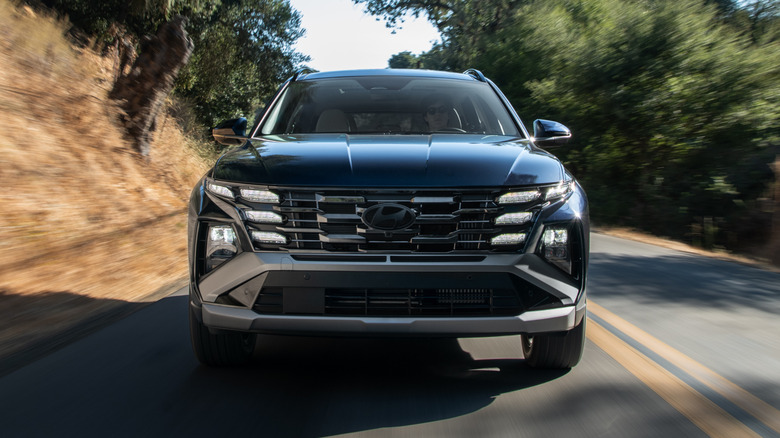
Hyundai’s expected move ahead of Ford would therefore be more than a change in quarterly rankings. It would reflect the growing influence of hybrid vehicles and the challenges facing manufacturers whose product strategies have focused heavily on either traditional gasoline vehicles or fully electric models.
At the same time, Toyota’s narrowing gap with GM shows that the competitive impact of hybrids extends beyond Hyundai and Ford. As fuel costs and vehicle efficiency remain important considerations for American buyers, manufacturers with strong hybrid offerings could continue to attract consumers who are looking for an alternative between conventional gasoline vehicles and fully electric cars.
The developments suggest that the U.S. auto market is entering a more diverse phase of electrification, where hybrids, plug-in hybrids, EVs and traditional vehicles compete alongside one another. For automakers, having the right mix of these technologies may become just as important as the strength of individual models.