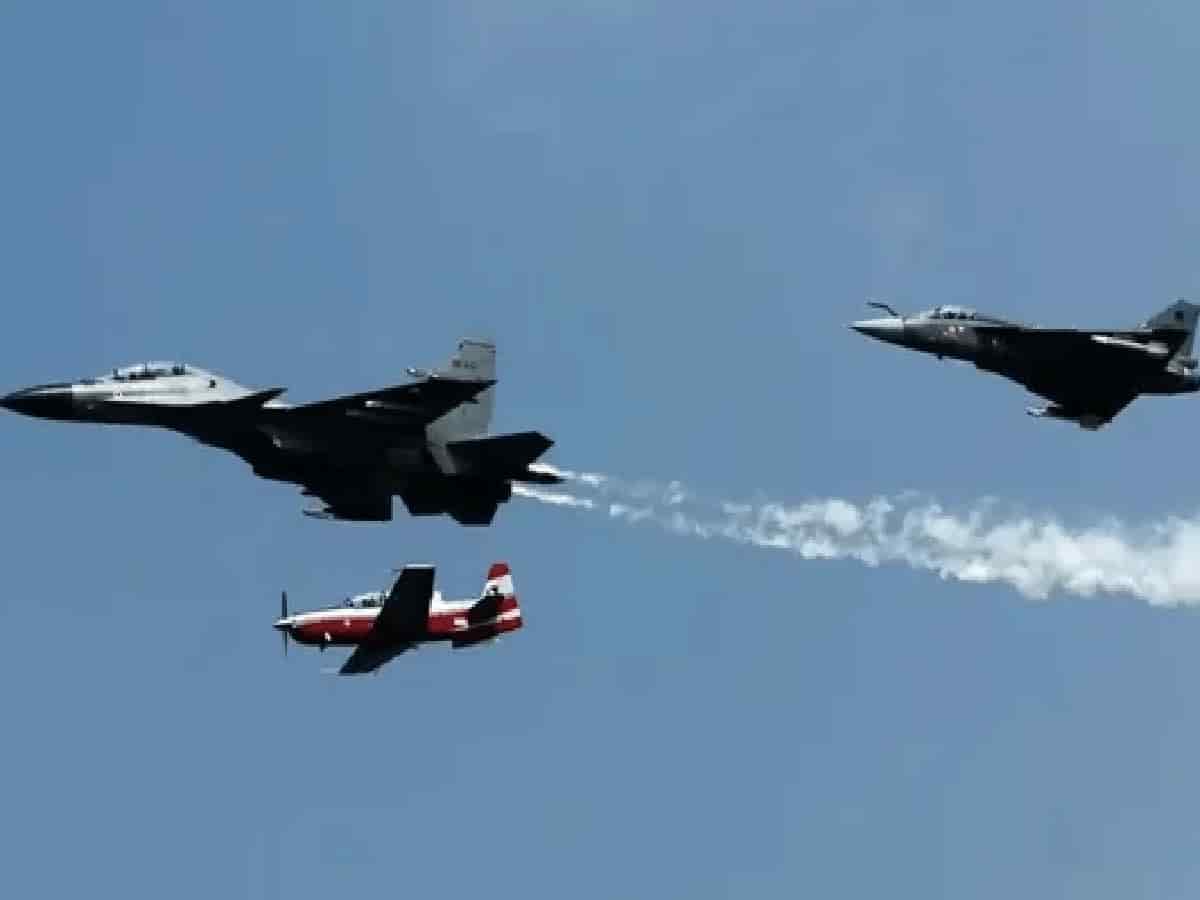
In a landmark advancement for domestic defense manufacturing and aerospace self-reliance, state-owned aerospace major Hindustan Aeronautics Limited (HAL) is officially handing over advanced indigenous aircraft platforms to the Indian Air Force (IAF) on September 18 in Bengaluru. The high-profile induction ceremony marks the delivery of the Final Operational Clearance (FOC) standard twin-seater trainer variant of the Light Combat Aircraft (LCA) Tejas, alongside the indigenously designed HTT-40 Basic Trainer Aircraft. Concurrently, HAL is also expanding civil aviation capabilities by handing over the next-generation Advanced Light Helicopter (ALH) Dhruv to national helicopter operator Pawan Hans.
Strengthening Pilot Training with Tejas Twin-Seater and HTT-40 Platforms
The induction of these frontline training platforms marks a major operational upgrade for the Indian Air Force’s flight training pipeline. The twin-seater LCA Tejas trainer will enable advanced fighter training and lead-in combat proficiency within the country’s indigenous supersonic ecosystem, transitioning trainee pilots seamlessly toward frontline supersonic squadrons. Complementing this, the homegrown HTT-40 basic trainer aircraft provides a modern, high-performance training foundation for ab-initio rookie pilots, equipping them with glass-cockpit ergonomics, advanced avionics, and reliable aerobatic flight handling tailored specifically to Indian operational conditions.
Elevating Domestic Aerospace Ecosystem and Reducing Defense Imports
Defense officials highlighted that the induction ceremony underscores HAL’s expanding design, testing, and production capabilities alongside private sector industrial partners. The simultaneous induction of military trainers and next-generation Dhruv helicopters for Pawan Hans reinforces the Central Government’s prioritized thrust toward Make in India, indigenous research, and self-reliance in aerospace engineering. By substituting foreign airframes with dependable, homegrown defense hardware, the initiative significantly curtails overseas import dependencies while building an enduring, globally competitive domestic aviation ecosystem.