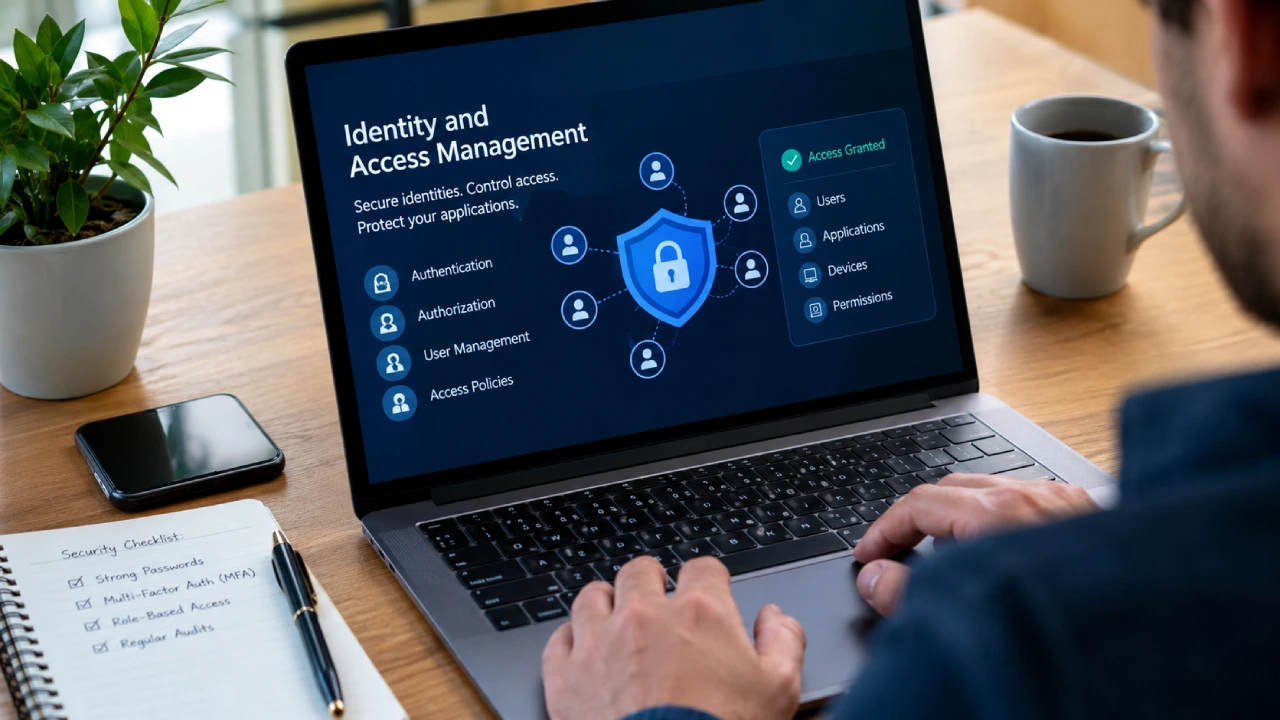
Modern applications handle sensitive information such as customer records, payment details, business documents, and employee data. Protecting this information requires more than securing the application code or network.
Organizations must also control who can access their applications and what those users can do after they gain access. This is where Identity and Access Management (IAM) becomes an important part of application security.
IAM provides a structured way to manage digital identities, authentication, permissions, and access policies. It helps organizations ensure that employees, customers, administrators, applications, and other systems receive appropriate access to resources.
A strong IAM strategy can reduce unauthorized access, limit the impact of compromised accounts, and make security management easier as an organization grows.
What Is Identity and Access Management?
Identity and Access Management is a collection of technologies, policies, and processes used to manage identities and control access to digital resources.
It answers three basic questions: who is requesting access, whether that identity is genuine, and what that identity is allowed to do.
Authentication verifies that a user or system controls the credentials associated with a claimed identity. For example, a user may provide a username and password to sign in to an application.
Authorization determines which features or resources that authenticated identity can access.
Consider an online business application with separate accounts for employees and administrators. Both users may successfully log in, but an employee may only be able to view customer information while an administrator can manage accounts and security settings.
IAM makes these differences possible through roles and permissions.
IAM can also manage non-human identities. Applications, APIs, automated processes, and cloud services often need their own credentials and permissions to communicate with other systems.
These principles also apply to cloud environments. As explained in TechGenYZ’s guide to Cloud Identity and Access Management, roles, permissions, and access policies help organizations manage increasingly complex infrastructure.
Why IAM Is Important for Application Security
A compromised account can become a major security problem, even when the application itself has strong technical defenses.
If an attacker obtains valid credentials, they may be able to access the application while appearing to be a legitimate user.
Excessive permissions can make this problem worse.
If a normal employee has administrative privileges, an attacker who compromises that account could potentially access or modify sensitive resources.
IAM reduces these risks by limiting access according to business requirements. It can also help organizations respond when employees change roles or leave the company.
The importance of IAM increases as applications become more connected.
Cloud platforms, third-party services, APIs, remote workers, mobile applications, and automated systems all introduce additional identities that need to be managed.
Common IAM Risks Organizations Face
One of the biggest IAM risks is weak authentication. Password-only authentication can expose accounts to phishing, credential theft, password reuse, and other attacks. A strong password policy can help, but it does not eliminate every risk. Another major issue is excessive access.
Users may receive permissions they do not need because access is granted too broadly or because old permissions are never removed. Over time, these unnecessary privileges can create significant security gaps.

Inactive accounts are another concern. Employees may leave an organization while their accounts remain active.
Similarly, temporary accounts created for contractors or projects may continue to exist after they are no longer required.
Service accounts can also introduce risks.
Applications often use machine identities to connect to databases, API,s and other services. If these identities use long-lived credentials or have excessive permissions, attackers may exploit them if the credentials are exposed.
Poor monitoring creates an additional challenge.
Without reliable records of authentication and access activity, security teams may struggle to identify suspicious behavior or investigate an incident.
Use Strong Authentication Controls
Strong authentication is one of the most important IAM controls.
Organizations should consider multi-factor authentication (MFA), particularly for administrators and users accessing sensitive information.
MFA requires additional verification beyond a password. Depending on the system, this may involve an authentication application, security key,ey or another approved factor.
This makes it more difficult for attackers to access an account using only a stolen password.
However, not all MFA methods provide the same protection. Phishing-resistant options, including FIDO2 security keys and passkeys, can offer stronger protection against credential phishing than traditional one-time codes.
TechGenYZ’s multi-factor authentication security guide explains the differences between authentication factors and why recovery procedures also need protection.
Single sign-on (SSO) can simplify identity management.
Instead of maintaining separate credentials for every application, users can authenticate through a centralized identity provider.
This can improve convenience while allowing organizations to apply consistent authentication policies.
However, the identity provider becomes an important security dependency and should be protected with strong authentication, monitoring,ing and recovery controls.
Account recovery should receive the same level of attention. Weak password-reset or recovery procedures can undermine otherwise strong authentication controls.
Apply the Principle of Least Privilege
The principle of least privilege means that users and systems should receive only the access they need to perform their responsibilities.
For example, a customer-support employee may need permission to view customer profiles and update support tickets.
That employee may not need permission to change application configurations or delete customer records.
Role-based access control (RBAC) is a common way to implement this approach.
Instead of assigning permissions individually, organizations create roles based on job responsibilities. Users are then assigned appropriate roles.
Applications might have roles such as customer, support agent, manager, and administrator. Each role can have a different set of permissions.
These permissions must also be enforced when users access individual records or application functions.
For instance, file upload security requires checking whether a user is authorized to view, modify, or delete a particular document, even when that user is successfully authenticated.
Least privilege should also apply to service accounts.
If an application only needs to read information from a database, its service identity should not automatically receive permission to modify or delete that information.
Manage the Complete Identity Lifecycle
IAM should cover the entire lifecycle of an identity, from creation to removal.
This process is often described through three major stages: onboarding, changes,s and offboarding.
During onboarding, new employees or users should receive access based on their approved responsibilities.
Access should not be granted simply because it might be useful in the future.
When someone changes departments or responsibilities, their permissions should also change. Keeping old permissions after a role change can create unnecessary access.
Offboarding is equally important.
When an employee leaves an organization, their accounts and associated access should be disabled promptly.
This should include applications, cloud services, internal systems,ms and other resources.
Organizations should also consider active sessions, authentication tokens, and other credentials that might remain usable after an account is disabled.
Regular access reviews can identify permissions that are no longer necessary.
Automation can make this process more reliable by connecting identity management with employee and application lifecycle systems.
Temporary access is particularly important when external technicians or contractors need to investigate problems.
As discussed in TechGenYZ’s remote support security guide, unnecessary permissions should be removed once the support activity is complete.
Monitor Access and Review Permissions
IAM controls should be supported by continuous monitoring.
Organizations should record important identity-related events, including login attempts, successful authentication, account creation, password changes, privilege changes,s and access to sensitive resources.
These records can help security teams identify unusual activity.
For example, repeated failed login attempts followed by an unexpected successful login may deserve investigation.
Organizations should also conduct periodic access reviews.
Managers and application owners can verify whether users still need their assigned permissions. High-risk administrative access should receive particular attention.
Monitoring should cover both human and machine identities.
Service accounts, API keys,ys and application credentials can be overlooked when security teams focus only on employees.
Applications that expose APIs also need consistent authentication and authorization checks.
TechGenYZ’s API design best practices guide explains the importance of protecting API keys and enforcing permissions across application interfaces.
Build Better IAM Governance
Technology alone cannot solve every IAM problem. Organizations also need clear policies and responsibilities.
IAM governance should define who can request access, who can approve it, how permissions are reviewed, and who is responsible for each application or resource.
Sensitive access should generally require appropriate approval rather than being granted automatically.
Organizations should also maintain clear policies for privileged accounts, service identities, authentication requirements, and access exceptions.
Temporary exceptions should have an expiration date so they do not become permanent permissions.
Regular reviews can help organizations identify outdated roles, unnecessary privileges, inactive accounts,s and policy violations.
The same approach applies to cloud infrastructure. Regularly reviewing permissions is also part of maintaining a strong cloud security posture, particularly when configurations and access requirements change over time.
Best Practices for Stronger IAM
Organizations can strengthen application security by following several practical IAM practices:
- Enable MFA for sensitive and privileged accounts, preferably using phishing-resistant methods where supported.
- Follow the principle of least privilege.
- Use roles instead of excessive individual permission assignments.
- Review user access regularly.
- Remove access promptly when users leave or change roles.
- Protect service accounts and rotate their credentials when appropriate.
- Monitor authentication and authorization activity.
- Keep privileged accounts separate from ordinary user accounts.
- Automate identity lifecycle processes where possible.
- Maintain clear IAM policies and approval procedures.
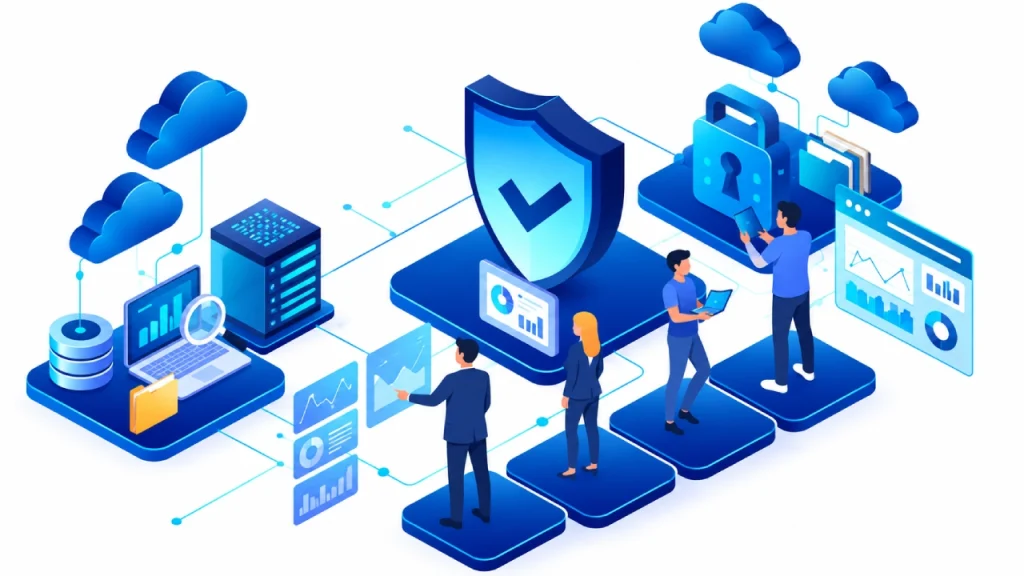
These practices work best when implemented together rather than treated as individual security solutions.
Conclusion
Identity and Access Management is a fundamental part of application security because access decisions directly influence how information and systems can be used.
Strong authentication helps verify identities, while authorization and least-privilege controls determine what those identities can do.
However, IAM should not stop at the login screen.
Organizations need to manage identities throughout their lifecycle, monitor access activity, review permissions, secure machine identities, and establish clear governance policies.
As applications become increasingly connected through cloud platforms, APIs, third-party services, and automated systems, the number of identities requiring access will continue to grow.
A well-designed IAM strategy gives organizations a practical way to manage this complexity while reducing unnecessary access and strengthening the overall security of modern applications.
(Source)