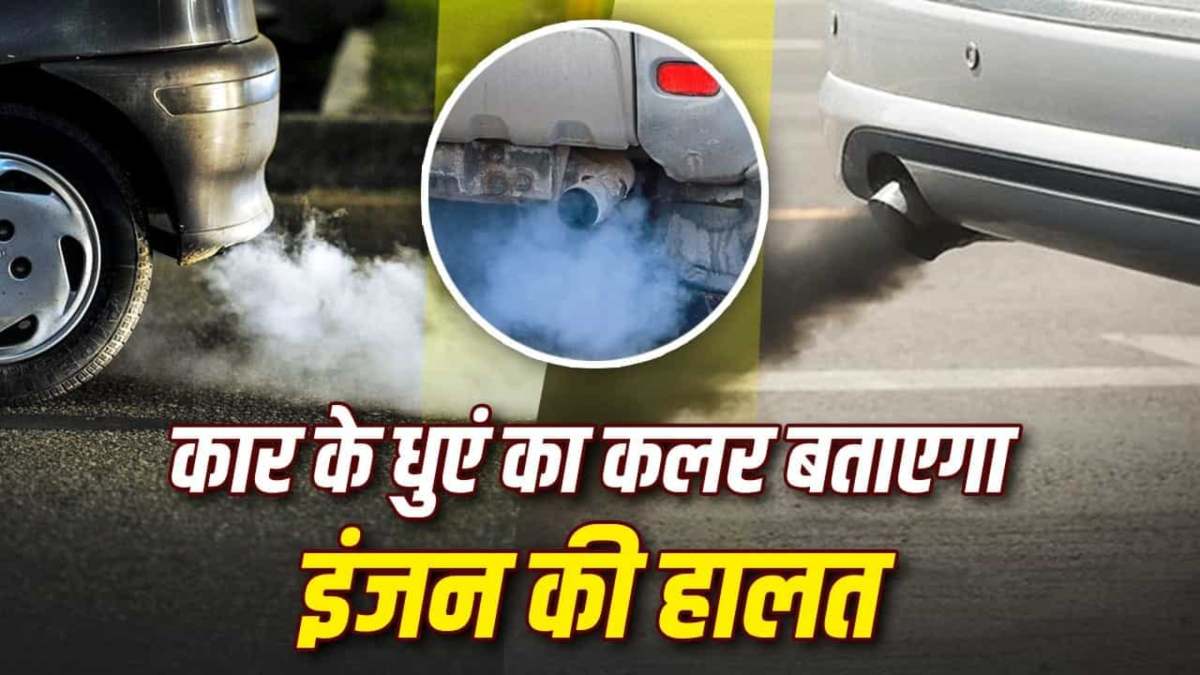
Automobile Desk: The changing color of the smoke coming out of the exhaust or silencer of vehicles is a direct report card of the health of the engine. Often people ignore the smoke coming out of the silencer while driving, considering it a normal thing. However, if there is continuous and strange colored smoke coming out while the vehicle is starting or running, it is a clear indication of a serious fault within the car. On many occasions, smoke from the silencer starts warning of major trouble long before the 'check engine' light on the dashboard comes on.
Apart from burning of fuel in the engine, the color of smoke changes when the balance of coolant, oil or air gets disturbed. From the different colors of the smoke, it can be easily understood in which part of the vehicle the problem is developing. If you understand these signs and get the vehicle serviced in time, then any major damage and huge mechanic bills can be avoided.

Thick white smoke: danger of coolant leakage and engine overheating
It is completely normal for a slight white smoke or steam to be emitted during the first few minutes of starting your car during winter. This is simply the result of moisture accumulated in the silencer evaporating. But if dense and thick white smoke continues to come out even after the car is heated, then it is a serious situation.
The main reason for this is coolant entering the combustion chamber of the engine. When a head gasket is blown, the cylinder head is cracked or the engine block is damaged, coolant leaks and burns with the fuel. Burning coolant produces thick white smoke. If this is ignored for a long time, the engine can quickly overheat and even seize completely.
Blue or gray smoke: burning engine oil
If blue or gray smoke is seen coming out of the exhaust, it simply means that the engine oil is reaching the place where only petrol or diesel should burn. Generally the function of engine oil is to lubricate the parts, not to burn them.
The main reasons for this are wear of piston rings, damage to valve seals or malfunction of the turbocharger. Loose or worn parts can cause Mobil oil to leak into the combustion chamber and burn with the fuel, producing blue smoke. In this situation the engine oil level of the vehicle falls very rapidly. If not repaired on time, the internal parts of the engine get heavily damaged.
Black smoke: high fuel consumption and incomplete combustion
Black smoke coming from the silencer is a sign that the engine is burning more fuel than required. This is called 'rich fuel mixture' in technical language, i.e. the amount of fuel is much higher than air.
There can be many reasons behind this, such as the air filter being too dirty or blocked, due to which the engine does not get enough air. Apart from this, leakage in fuel injector, malfunction of MAF sensor or spark plug not working properly can also be the reason. Due to black smoke, the mileage of the vehicle suddenly drops and there is a huge loss in pickup.
Light gray smoke: turbocharger or PCV valve malfunction
The brown or light gray color of the smoke is often difficult to identify, as it appears to be a mixture of blue and white smoke. This problem is usually seen more in vehicles with automatic transmission or turbocharged engines. Jamming of the positive crankcase ventilation (PCV) valve is a major reason for this. When the PCV valve gets stuck, pressure in the crankcase increases, causing oil to leak out and burn. Apart from this, such smoke is also produced due to damage to the fluid seal of the turbocharger or transmission fluid entering the engine.