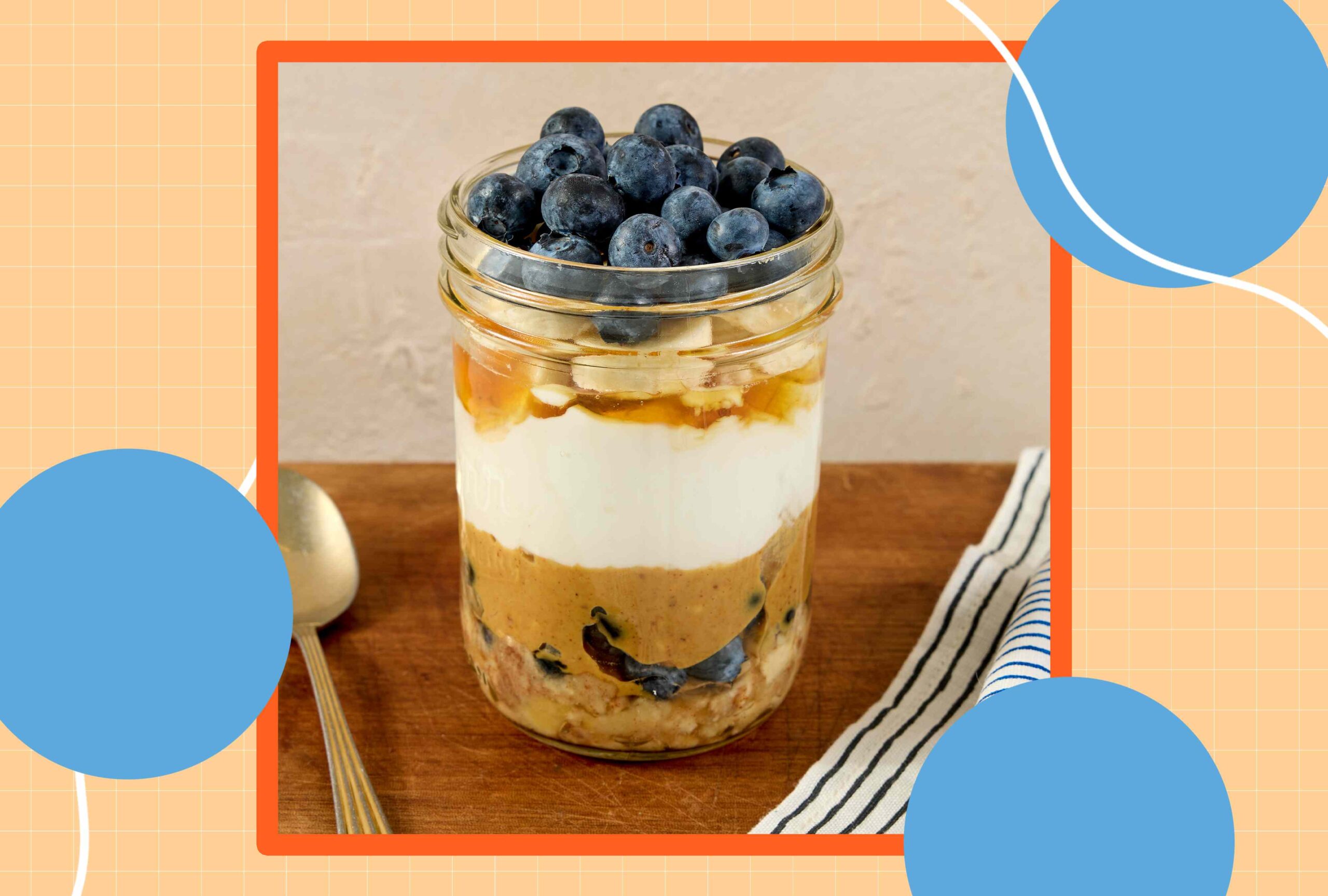
Eating to feel full and satisfied can be as simple as these four food pairings.
Reviewed by Dietitian Madeline Peck, RDN, CDN
Key Points
- Pairing carbs with protein, fiber and healthy fats helps keep you full and energized longer.
- Adding protein to meals like salads or oatmeal boosts satiety and supports fullness.
- Pair chocolate with nuts for a satisfying sweet snack.
The time and energy it takes to plan, prepare and eat three meals a day can make feeding yourself feel like a full-time job. And if you’re not pairing the right foods together, you may have to make even more meals and snacks. Even as a dietitian, I don’t have the energy for that.
What makes a meal filling goes beyond calories. The balance of protein, carbohydrates, fat and fiber is key for creating a satiating plate. Carbohydrates provide energy, fiber slows digestion to make that energy last longer, protein helps you feel full, and fat adds satisfaction. A meal that contains adequate amounts of these nutrients will keep you full until your next meal or snack. Of course, the actual mechanism of how these nutrients work together is much more complex, but pairing foods together with this simple framework in mind can help you fuel your day more effectively. Here are my go-to pairings to help me feel full and satisfied after eating.
1. Greek Yogurt + Peanut Butter + Fruit
While berries are a nutritious option, they won’t keep you full on their own. A cup of blueberries, for example, has about 84 calories, 4 grams of fiber and just 1 gram of protein. Pairing the berries with protein-rich Greek-style yogurt and peanut butter, which provides heart-healthy unsaturated fats, makes a balanced meal or snack that’s satisfying and filling. Peanuts have some serious staying power. One review of 27 studies found that people tend to naturally eat less later in the day after eating nuts and peanuts. Together, a 1-cup serving of plain, nonfat Greek-style yogurt with a tablespoon of peanut butter on top has around 28 grams of protein and 8 to 9 grams of mostly unsaturated fat.
If I’m preparing a snack, I might make a dip with peanut butter and Greek-style yogurt for apple slices. Or, if I’m making breakfast, I might have a bowl of yogurt with a cup of berries and a drizzle of peanut butter on top. Either way, the three ingredients work together to promote fullness and satisfaction.
2. Oatmeal + Eggs
A warm bowl of oatmeal is one of my favorite ways to start any chilly morning, but oatmeal on its own doesn’t always make a very filling meal. Compared with refined grains, oatmeal is more filling thanks to a soluble fiber called beta-glucan. But since ½ cup of dry rolled oats has only 5 grams of protein, my oatmeal still needs a little help if I want it to keep me full until lunch.
While I’ll sometimes scramble an egg and eat it as a side to my oats, most often I just whisk one right into the pot of oats as they cook. Eggs add extra calories, protein and fat to oatmeal and give it a super-satisfying, creamy texture. One large egg has 6 grams of protein, which more than doubles the protein in my bowl of oats. Just keep stirring for a minute or two after you add the egg so it cooks all the way through.
3. Chocolate + Nuts
My day is not complete unless I’ve enjoyed a bite of chocolate. But chocolate by itself isn’t very satisfying or filling since a small serving doesn’t come with much protein or fiber. That’s why I like to pair my chocolate with a serving of nuts. For instance, a 1-ounce serving of almonds (about 23 nuts) has 6 grams of protein and 3.5 grams of fiber.
One of the biggest benefits I’ve personally experienced, which research supports, is that pairing a carbohydrate-rich food with a fat-rich food like nuts can help blunt blood sugar spikes for longer-lasting, more even energy. Whether it’s trail mix with walnuts, cashews and chocolate chips or chocolate-covered almonds, the boost of fiber and protein makes my chocolate snack far more satisfying.
4. Greens + Chicken
I often work with clients who eat a salad for lunch and wonder why they’re starving by 2 p.m. Salad’s good for you, right? The missing piece in most sad salads is protein. Without it, the combo of greens, veggies, croutons and a drizzle of dressing adds up to too few calories and gets digested too quickly.
Leafy greens and other vegetables rich in water and fiber add volume, antioxidants and many micronutrients for very few calories. Foods with low energy density and high volume, like salad greens, can help curb hunger. But they are more filling when paired with a protein-rich food that provides additional calories. Because a 2-cup serving of romaine lettuce has just 16 calories, adding protein-rich toppings helps make the full feeling last. A 3-ounce serving of chicken breast adds 24 grams of protein to your salad, which can help reduce how much you want to eat in one sitting and help you feel fuller longer by triggering the release of fullness hormones like glucagon-like peptide-1 (GLP-1). If I don’t have time to cook chicken to go with my salad, rotisserie chicken, precooked chicken strips or even canned chicken can do the trick.
The Bottom Line
Feel more satisfied with these simple, nutrient-dense food pairings. Combining carbohydrates like fruit, oats or chocolate with a source of protein, fiber and healthy fats can help you stay fuller longer and keep your energy steady between meals. Greek-style yogurt with fruit and peanut butter, oats with eggs, chocolate with nuts, and salad greens with grilled chicken are some of my go-to combos, but the same strategy works with whatever foods you most enjoy eating.