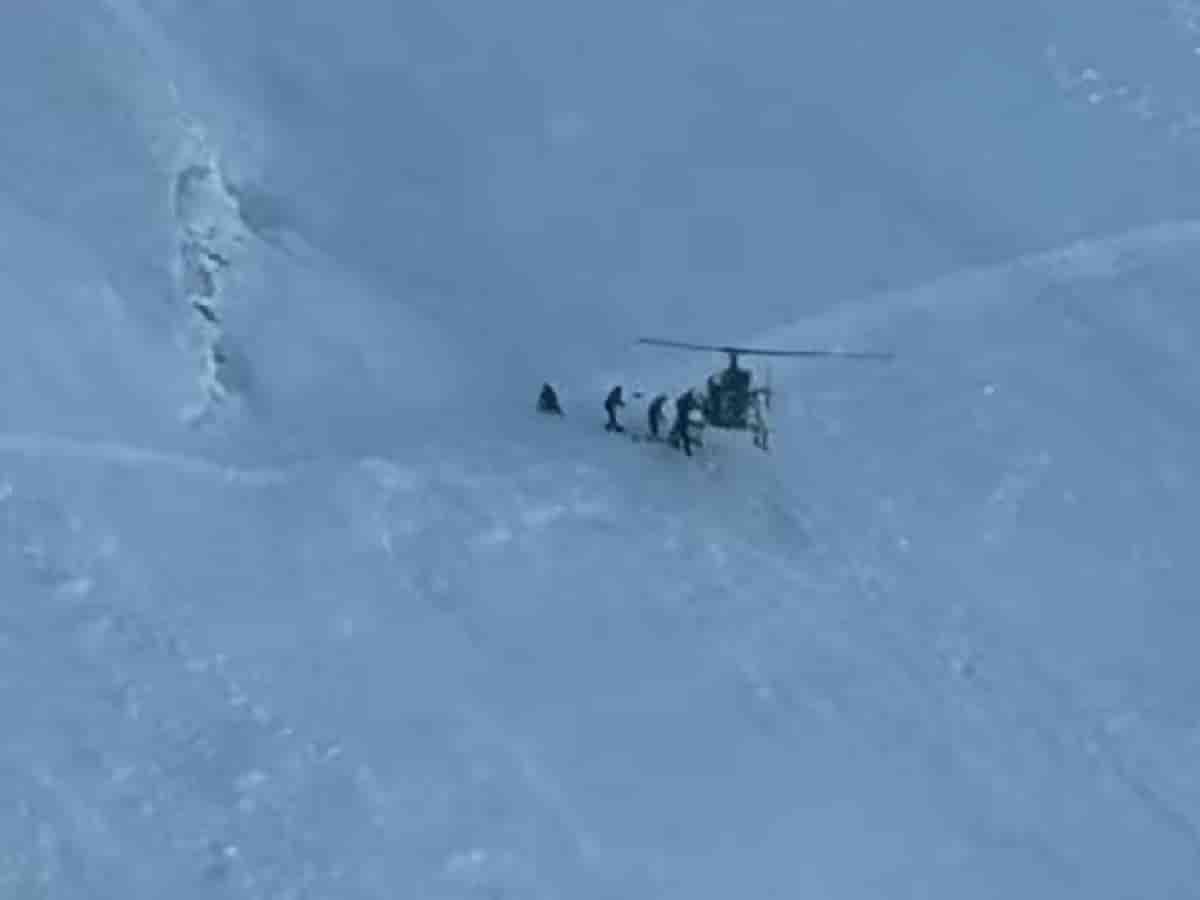
At an altitude of 18,600 feet in Kargil, Ladakh, the brave pilots of the Indian Army have defied death and successfully carried out a very impossible and courageous rescue operation. On the snowy and steep peaks of the Nun-Kun Mountains, where even breathing is difficult amidst the strong winds, Army aviation pilots, displaying their indomitable courage and extraordinary skill, have saved the life of a seriously ill or injured patient. This rescue mission is currently being discussed across the country because the way the pilots risked their lives and completed this operation, it presents a great example of the discipline, technical efficiency and devotion to duty of the Indian Army. A daring rescue operation was conducted under the shadow of death at an altitude of 18,600 feet. It is very difficult to predict when the weather will change in the remote and snowy areas of Ladakh. The Nun-Kun mountain range located in the Kargil region is known for its extremely difficult geographical and strategic conditions. On Saturday, August 29, 2026, in the same area, a person was fighting between life and death, who needed immediate medical assistance. At such high altitudes it was completely impossible for ambulances to reach by normal road or on foot, so the only hope rested on Indian Army helicopters and their experienced pilots. Army aviation pilots accepted this challenge without wasting a moment and flew with their helicopters towards the altitude where there was severe shortage of oxygen and the weather conditions were extremely aggressive. How dangerous this mission was can be gauged from the fact that there was no flat ground or helipad to land at that place, instead there were only dangerous rocks, deep ditches and cold winds blowing at high speed all around. Saved his life by resting one wheel of the helicopter and balancing in the air. The slope at the place on Nun-Kun mountain where the patient was stuck was so steep and narrow that it was technically completely impossible to land the helicopter there in a normal manner. In such a situation, without caring for their lives, the army pilots adopted a very risky and unique method, which in the language of aviation is called 'one-skid landing'. The pilots kept the helicopter stable in the air at very low speed and only one wheel of the machine, i.e. the skid, rested lightly on a small part of the mountain slope. At such altitudes the air pressure is very low, due to which the efficiency of the helicopter engine and the lift capacity provided by the rotor reduces to a great extent. To overcome this technical challenge, the pilots had made a big strategy even before taking off. He had removed all unnecessary equipment and excess weight from the helicopter. Along with this, only that amount of fuel was kept in the helicopter which was necessary to complete this small mission, so that due to less weight, the helicopter could get enough lift and it could keep itself balanced even in that thin air. Fire and Fury Corps praised the pilots on social media. After the successful rescue operation, the prestigious Fire and Fury Corps of the Indian Army shared an official post on the social media platform X (formerly Twitter) and informed about the entire incident. The Army wrote in its message that in an extremely courageous and risky rescue mission at an extremely high altitude of 18,600 feet near Nun-Kun, Indian Army aviation pilots safely evacuated an injured person from a difficult slope where there was not even an inch of land for landing and strong winds were a constant obstacle. The Army further said that the pilots accomplished this operation displaying exceptional accuracy, exemplary courage and iron-like determination. This challenging task also included a technical landing using a skid of the helicopter just touching the slope, which ultimately paved the way to save the patient's life. After this post surfaced, people across the country are saluting the wisdom and bravery of these brave army pilots. What is 'one-skid landing' and why is it extremely dangerous? Normally when landing a helicopter, pilots need a flat helipad or ground on which all of the helicopter's wheels or skids can rest completely. But when geographical conditions are such that the ground is extremely steep, rocky or there is no landing space at all, then pilots are left with only one option – one-skid landing. This technique is no less than a miracle because in this the pilot has to control the rotor throttle of the helicopter with the subtle coordination of both his hands and legs in such a way that only a part of the machine touches the ground and the rest of the heavy structure remains balanced in the air. During such a landing, even a small gust of wind or a slight technical error can cause the helicopter to go out of control and crash and the lives of all the people on board can be in danger. Despite this, the Indian Army pilots demonstrated their excellent training and completed this risky task with great ease and precision. This incident once again proves that Indian Army soldiers are ready to protect the countrymen in every situation, in any corner of the country, be it the snowy peaks of Siachen or the high mountains of Kargil.