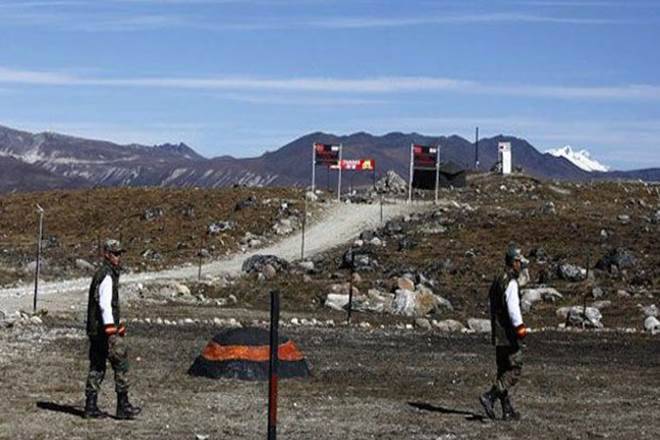
India and China have concluded a second round of Corps Commander-level military talks aimed at defusing tensions along the Line of Actual Control (LAC) in Arunachal Pradesh before severe winter sets in, according to reports.
The closely guarded discussions began on November 8, immediately after Diwali, and lasted nearly 10 days with a brief interval, The Indian Express reported. Lieutenant General Girish Kalia, General Officer Commanding of the Indian Army’s Rangapahar-based III Corps (Spear Corps), led the Indian delegation alongside military officers and an official from the Ministry of External Affairs (MEA).
The talks reportedly sought to establish clear engagement protocols, prevent friction between patrol parties, maintain open communication channels, and stop local stand-offs from escalating in a region where both sides have massed significant troop deployments.
While The Indian Express described the exchanges as cordial, it noted that it remains unclear whether the agreed measures will take effect before harsh winter conditions complicate high-altitude logistics and sustenance.
Also read: Balen Shah in New Delhi: Can India win over Nepal’s Gen Z prime minister?
Talks follow multiple face-offs
The negotiations follow the inaugural eastern-sector Corps Commander-level meeting held on September 6–7 at the Wacha–Damai Border Personnel Meeting point in the Kibithoo sector — India’s easternmost designated meeting point — after tensions flared in Upper Subansiri district’s Taksing area. Earlier in August, National Security Adviser Ajit Doval and Chinese Foreign Minister Wang Yi met in Beijing as Special Representatives for boundary negotiations to steady bilateral ties.
Ground friction in the eastern sector came into sharp focus in late October, when outgoing Indo-Tibetan Border Police (ITBP) Director General Shatrujeet Kapur acknowledged during an event in Alwar, Rajasthan, that Indian and Chinese troops had faced off at multiple locations in Arunachal Pradesh, according to NDTV and The Indian Express.
Responding to Kapur’s remarks, the MEA stated that the LAC periodically becomes disturbed when Chinese forces diverge from established patrolling patterns. The ministry stressed that border peace and tranquillity remain essential for overall bilateral relations, reiterating that unilateral attempts to alter the status quo are unacceptable.
Also read: Bhutan-China boundary talks put India on alert; New Delhi boosts border infrastructure
The McMahon Line dispute
Arunachal Pradesh Chief Minister Pema Khandu subsequently confirmed that frontier “transgressions” continue because the boundary remains undefined and Beijing refuses to recognise the McMahon Line, both reports stated.
Drawn under the 1914 Simla Convention between British India and Tibet, the McMahon Line serves as the de facto boundary in the eastern sector. However, China repudiates the accord — arguing Tibet lacked authority to sign it — and claims Arunachal Pradesh as “Zangnan” or South Tibet, a claim New Delhi firmly rejects.
“The situation is quite normal now and our Armed Forces are guarding the border very well,” Khandu told reporters, attributing patrol overlaps to differing perceptions of the unmarked frontier.
Both reports also quoted former Chief of Defence Staff General Anil Chauhan (retd), who warned that an unsettled boundary, infrastructure development, and force multipliers sustain the risk of friction, underscoring the need for vigilance, credible military capabilities, and strict adherence to bilateral agreements.