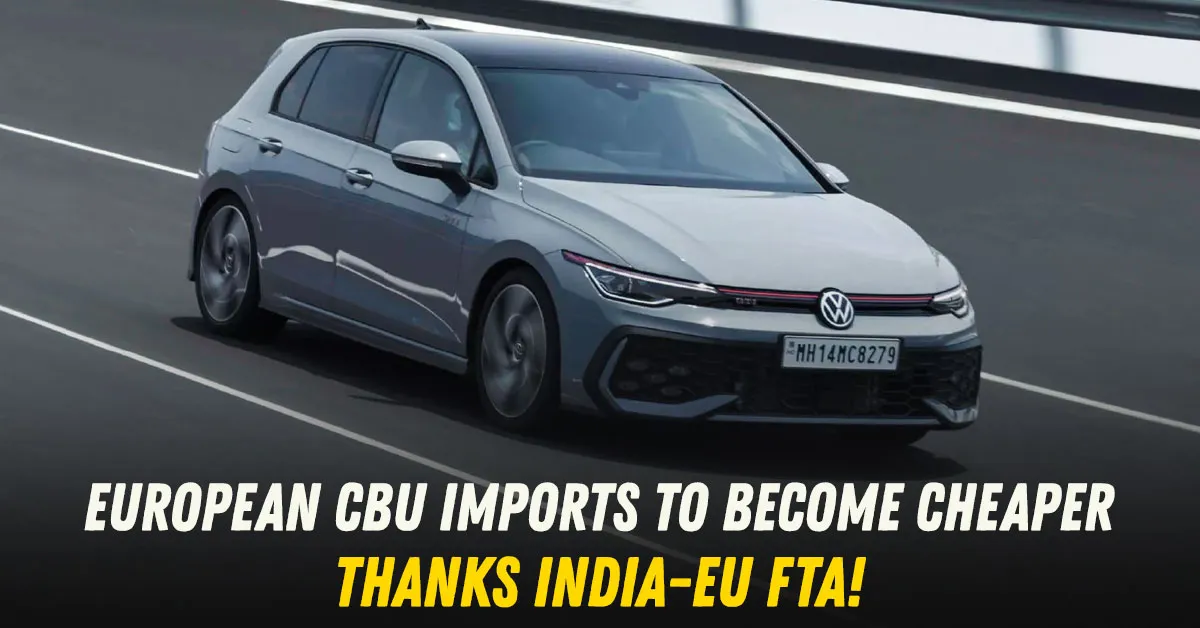
The India-European Union (EU) Free Trade Agreement could sharply reduce import duties on a limited number of European-built cars when it comes into force. In the first year, up to 1 lakh completely built-up petrol, diesel and non-plug-in hybrid cars from the European Union will qualify for lower customs duty, provided they meet the price and origin rules under the agreement.
Cars with a CIF value between €15,000 and €35,000, roughly Rs 16.6 lakh to Rs 38.8 lakh, will attract 35 percent duty within the quota. Cars valued between €35,000 and €50,000, as well as those above €50,000, will face 30 percent duty. The first-year quota is split into 34,000 cars in the lowest eligible band and 33,000 cars each in the two higher bands.
That is a major reduction from current CBU duties of up to 110 percent. But not every European car will suddenly become much cheaper.
The 1 lakh-car allowance applies only to qualifying vehicles imported within the tariff-rate quota. Imports above the quota will continue to face substantially higher duties. The total quota is scheduled to rise to 1.075 lakh cars in the second year, 1.3 lakh in the fifth year and 1.6 lakh from the tenth year.
The tariff also falls in stages, with eligible in-quota cars ultimately reaching 10 percent duty.
This gives European manufacturers such as Mercedes-Benz, BMW, Volkswagen Group, Renault and Stellantis much more flexibility with low-volume models. Cars that are difficult to justify for local assembly could be imported in smaller numbers without the present CBU tax penalty.
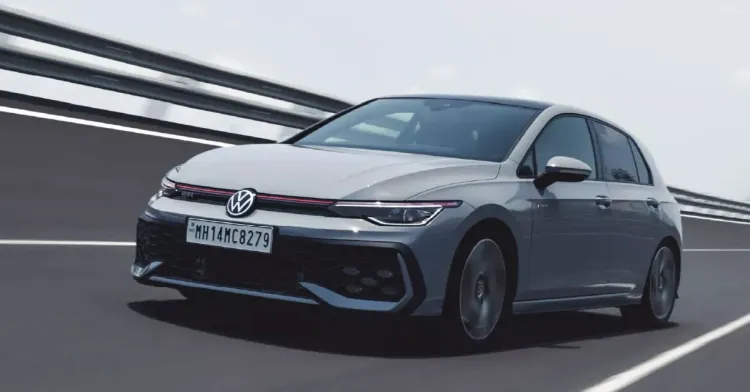
For consumers, that could mean a wider choice of performance cars, special variants, convertibles, large SUVs and other niche models. However, customs duty is calculated on the CIF value, not the final showroom price. GST, compensation cess where applicable, logistics, homologation costs, dealer margins and currency movements will still affect the retail price. A fall in import duty therefore will not translate into an identical percentage reduction in ex-showroom price.
The agreement deliberately keeps cheaper cars outside the first-year concession. ICE and non-plug-in hybrid cars with a CIF value below €15,000 do not qualify.
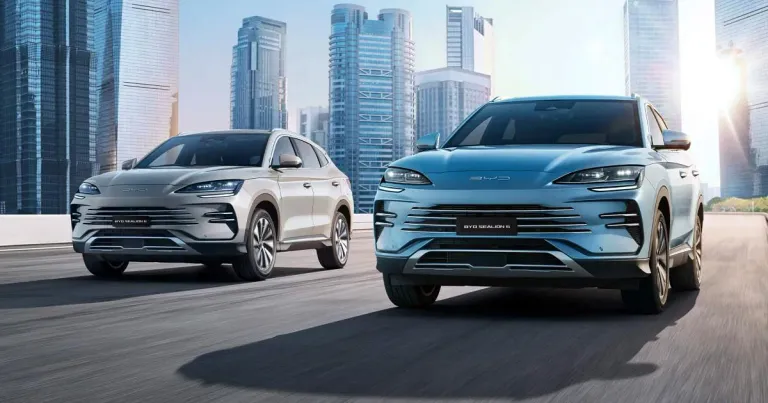
Battery-electric vehicles and plug-in hybrids have a separate timetable. Their concessional CBU quota starts only from the fifth year, initially at 20,000 vehicles, and applies to cars valued above €20,000. The quota is scheduled to rise to 50,000 units in the tenth year and 90,000 from the fourteenth year, while the preferential duty eventually falls to 10 percent.
That delay gives locally manufactured EVs several more years without the same level of tariff competition from European CBUs.
The agreement also includes concessions for completely knocked-down vehicles, which could make local assembly more attractive for models with sufficient sales volume. This is important because many European luxury cars are already assembled locally rather than imported as CBUs.
Negotiations concluded in January 2026, but the FTA still has to complete the formal approval process. The European Commission has submitted the agreement to the EU Council, after which it requires signing, European Parliament consent and the necessary ratification steps on both sides. Current expectations are for signing by the end of 2026 and possible implementation in 2027.
There is also a reciprocal opening for cars built in India. The EU is set to allow 2.5 lakh qualifying ICE and hybrid CBUs in the first year at an 8 percent concessional duty, with the quota rising later and the tariff scheduled to fall to zero.