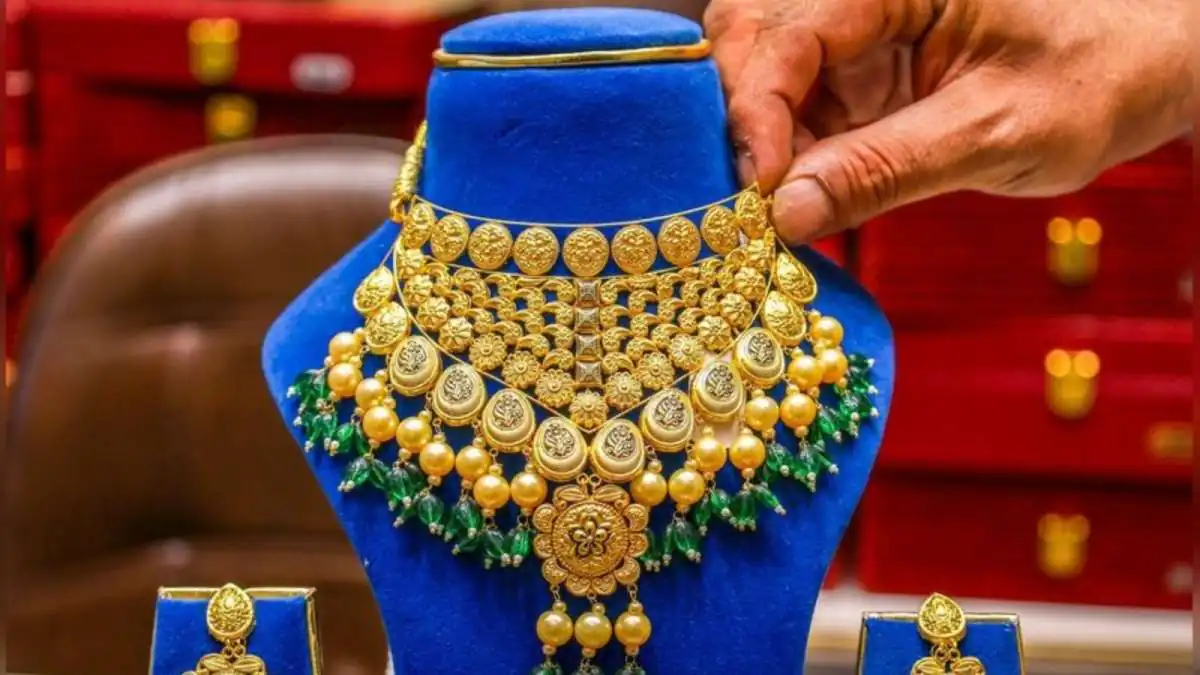
India's demand for imported gold has cooled sharply this financial year. Trade bodies say the main reason is Prime Minister Narendra Modi's call to citizens to avoid non-essential gold purchases for a year.
According to Praveen Khandelwal, Secretary General of the Confederation of All India Traders (CAIT), gold imports between April and October 2026 came to $24.78 billion. In the same period last year they were $41.24 billion. That fall of nearly 40 percent cut the country's import spending by $16.46 billion in seven months. Khandelwal called it a sign of public participation in the government's nation-first approach.
October showed the change most clearly. Gold imports that month fell to $5.51 billion from $14.72 billion in October 2025, a year-on-year drop of about 62.6 percent. That is a big fall for a month that usually comes just before India's festive and wedding season.
From record imports to a sharp reversal
The decline stands out more because gold imports had been rising fast. India brought in gold worth about $71.98 billion in FY26, up from $58.01 billion in FY25. That was an increase of nearly $14 billion in one year.
If current trends hold, Khandelwal expects FY27 imports to settle at around $35-40 billion, which is roughly half of last year's total. Referring to the Prime Minister's recent remarks at an event in Lucknow, he said the figures show how citizens taking part in national economic priorities can produce results that can be measured.
CAIT National President BC Bhartia said the appeal was about more than gold. He said it asked citizens to hold back on personal spending in the larger national interest, and that the public's response showed a growing understanding of the country's economic priorities.
Why this matters beyond the jewelery counter
Gold is one of India's largest import items. Almost every dollar spent on it is foreign exchange leaving the country, and it adds directly to the trade deficit. A saving of $16.46 billion over seven months is large enough to affect the country's external accounts.
The jewelery trade itself has given cautious support. Pankaj Arora, National President of the All India Jewelers and Goldsmith Federation (AIJGF), said gold remains deeply tied to Indian traditions, weddings, family savings and social life. However, he noted that much of the country's gold comes through imports, which costs a lot of foreign exchange. He said buying less gold could help India manage its foreign exchange and trade deficit more prudently.
That leaves the trade in a balancing act. Lower volumes may squeeze jewelers in the short term, but trade bodies are presenting the restraint as a shared national effort.
The key test will come in the months ahead. Wedding-season demand will show whether the trend can last, and whether the FY27 estimate of $35-40 billion holds. These are CAIT's own estimates and its reading of the decline. Final official import data will show how much of the drop came from people choosing to buy less and how much from other market factors.