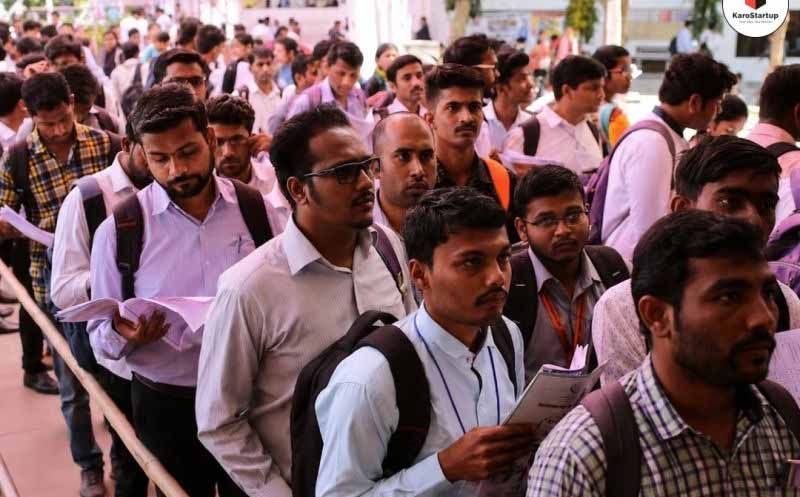
India’s higher education system has expanded enormously over the past few decades. Millions of young people now enter colleges and universities every year with the expectation that obtaining a degree will lead to employment, financial security and social mobility. Yet a degree by itself is increasingly insufficient in a labour market being transformed by technology, artificial intelligence, automation, digitalization and changing employer expectations. India’s challenge is no longer simply to produce graduates; it is to produce graduates who can actually contribute productively to the economy.
This degree-employment gap deserves urgent policy attention. A student can spend three years studying for a BA, B.Sc. or B.Com and still struggle to answer a basic question during an interview: “What can you actually do?” Knowing a subject is important, but the modern workplace also requires the ability to communicate, analyze information, solve problems, work in teams, use technology and learn continuously. India must therefore shift from a degree-centered education system to an employability-centered higher education system.
The first reform should be curriculum modernization. Undergraduate curricula need regular review because the economy is changing much faster than many academic programmes. Universities should consult industry professionals, employers, entrepreneurs, alumni and academic experts when designing and updating courses. The objective should be to ensure that students acquire both disciplinary knowledge and competencies that remain useful in the workplace.
Digital competence is equally important. Artificial intelligence, automation, cloud computing, data analytics and digital platforms are reshaping occupations across sectors. Not every graduate needs to become a computer scientist, but every graduate needs sufficient digital literacy to work effectively in a technology-driven environment. Students should learn how technology can support research, business, administration, communication and problem-solving.
The second major reform should be experiential learning. Students cannot become job-ready by attending lectures alone. Internships, fieldwork, live projects, case studies, laboratory work, simulations and community projects should be integrated into undergraduate education. Practical experience helps students understand workplace expectations and allows employers to assess capabilities beyond examination scores.
“India does not need merely more degree holders; it needs better-prepared graduates. A degree should represent more than the successful completion of examinations. It should indicate that a young person can think critically, communicate effectively, use technology intelligently, solve practical problems, work with others and continue learning throughout life. India’s higher education system must therefore move decisively from certificates to capabilities, from examinations to competencies, and from degrees to careers.”
Industry-academia collaboration also needs substantial strengthening. Universities and employers often operate as separate systems. Educational institutions design programmes and award degrees, while companies independently search for workers with the skills they need. This separation creates inefficiency. Industry should participate in curriculum design, internships, mentoring, guest lectures, professional workshops and live projects. Universities should establish stronger institutional partnerships with businesses, banks, startups, government agencies and research organizations.
The examination system also needs reform. If students are evaluated primarily on their ability to memories information, education will inevitably become examination-oriented. Assessment should increasingly measure application, analysis, creativity, communication and problem-solving. Research projects, presentations, case studies and practical assignments can complement conventional examinations and provide a better picture of student capabilities. Another major issue is career guidance. Many students begin thinking seriously about employment only during their final semester. This is too late. Career counselling should begin early in the undergraduate journey. Students should receive information about career pathways, emerging occupations, professional qualifications, internships, entrepreneurship and postgraduate opportunities. Colleges should strengthen placement and career development centers and establish meaningful links with employers.
Universities should also encourage entrepreneurship. Not every graduate will obtain a conventional salaried job, nor should that be the only measure of success. Students should be encouraged to identify problems, develop solutions and create enterprises. Entrepreneurship education, innovation centers, incubation support and mentoring can help transform graduates from job seekers into potential job creators.
At the same time, employability must not be interpreted as narrow vocational training. Universities have a broader responsibility to develop critical thinking, ethical reasoning, creativity, social awareness and intellectual independence. A graduate should be capable of adapting to occupations that may not even exist today. The goal should be employability with intellectual depth.
Higher educational institutions must also rethink how they measure their own success. Student enrolment, examination results and the number of degrees awarded are important, but they cannot be the only indicators of quality. Graduate employment, entrepreneurship, further education, career progression and employer satisfaction should receive greater attention. If an institution produces large numbers of graduates who cannot find meaningful employment, it must seriously examine the relevance and quality of its programmes.
India’s demographic dividend will not automatically become an economic dividend. Young people become an economic asset only when education equips them with productive capabilities. A large population of poorly prepared graduates can instead result in underemployment, frustration and wasted human capital. The country therefore needs a higher education system that connects knowledge, skills, innovation and employment.
This does not mean abandoning traditional degrees. BA, B.Sc. and B.Com can remain powerful foundations for careers if they are modernized. Universities should create flexible combinations in which students can supplement their core discipline with areas such as data analytics, artificial intelligence, digital marketing, financial technology, entrepreneurship, communication and public policy.
A degree is not enough. India must produce graduates who are knowledgeable, skilled, adaptable, innovative and employable. That is the real test of higher education-and the time for meaningful reform is now.